
If the video above is not available, here are two other ways to view:
Ending Well by Fearing No Evil
061022AM
DSS-44
David–Fearing No Evil DSS-38.doc
David: Ending Well by— Fearing No Evil
Transcript
Let’s open our Bibles to Ecclesiastes, the last chapter. If you don’t know where that is, go to the middle, find Psalms, go to the right, two books, it goes Psalms, and then Proverbs, and then Ecclesiastes. Then hit the last chapter. As you get to Ecclesiastes this morning, you’re looking at God describing what happens as we age. And contrary to television advertising in a lot of other places, there isn’t a lot of stuff here about, getting rid of the wrinkles and keeping fit and toned. It’s a little different. God says, when we age, He calls it difficult times. In fact, He even says it is characterized by being evil days. Old age can become a time when life is hardest. Strength is least, and evil is most pressing. But the good news is that’s not the way it has to be, but that is the way it is for many. David shows us by his life, that ending, well by fearing no evil is possible, but it’s in the context of knowing the Good Shepherd. It’s in the context of following the Good Shepherd. So, we fear no evil. Life is short and time flies and death is inescapable. But without Christ, life becomes a wearying chase for something good enough to keep one’s mind off thinking that all this is going to be over so soon.
.jpg)
In God’s Word, the Bible, two old men sat down and wrote a summary of life. One was the father, the other was the son. Both wrote under the inspiration of God’s Spirit, both suffered through many afflictions. Both knew the Lord in an unusual way. Before you this morning is the account of the son, Solomon. For him, life is looked back upon almost bitterly. He speaks of the emptiness or the vanity of life. His summary is the book of Ecclesiastes. The other looks back and sees a lifelong growth in experiencing God. His name was David. He was the father of Solomon. His summary is still the song that he wrote to his Good Shepherd when he was a youth. And the summary of his life that he ends his life with is what we call the 23rd psalm. When life winds down, when strength gets exhausted, and when the end is in sight for each of us, which summary will more parallel your life? Will it be Solomon’s? Will you look back on life like Solomon did? Will you see it ending with bitterness of heart and seeing everything you did as vanity, will it be an increasing emptiness as you look back? Or will you look back on life like David in the 23rd psalm? Will you end well by fearing no evil? Will you end in hopefulness instead of hopelessness? And will you look back at a lifelong growth of experiencing God? The choice is completely ours this morning, because each day, we’re writing the script that will be the summary of our life.
The key really is all about, in Psalm 23 we’ll see a little later says, it’s all about who we’re following, what path we’re going down, and exactly who it is that we are headed toward. God’s desire is that we know Him and He wants us to start early. He wants us, as the first verse of this 12th chapter says, to remember our Creator in the days of our youth before those evil days come that is described in this 12th chapter. And then after we start early, remembering Him when we’re young, He wants us to never forget Him. And I hope this morning, this will be more than an exercise in reading an odd chapter in a funny book with a lot of strange pictures. But it will be a choice we make, that we this morning, wherever we are in the chronological spectrum of life, that we decide that we want to end well and we want to cultivate those choices empowered by God’s grace through His Spirit that cause us to end well and keep us from fearing evil.
As a youth, David remembered his Creator. In fact, I believe that’s why a weary and exhausted Solomon, who chased every single pleasure the human mind could ever conceive of, at the end of this chapter you’ll notice he comes to the same conclusion. His dad was right. It’s all about the Lord. And even though Solomon, perhaps too late, realized the only way to live and the best way to die is to do so reflecting on the plans that God had for us in the first place. Solomon found out after his restless pursuit of all the world had to offer that nothing but God satisfies and that life and death can be quite empty if God is left out of the planning.
Well, Solomon’s inspired look at the pains and fears and troubles of old age are Ecclesiastes 12. Before us is a remarkable portrait of what we have to face someday. It’s not a nice picture when life is empty and meaningless, but the end of life, David’s style, which is God’s style, is the best life imaginable. Please follow along with me in Ecclesiastes. Note with me the regret filled wisdom of an empty life, as Solomon the wisest man who ever lived remembers what he foolishly neglected. Ecclesiastes 12. Let’s stand together and let’s let God speak to us as He, through the inspiration of His Spirit captures by Solomon’s words, the frailty and potential emptiness that old age may bring to us apart from Christ.
.jpg)
Verse 1. Remember now your creator in the days of your youth before the difficult, that’s the New King James, now if you have the New American or King James, it has even better rendering. It doesn’t say difficult. It says the evil days come. And that should help you understand why David, in the 23rd psalm says, I will fear no evil when I get to that time in life, when I’m near the end. I’m not going to fear evil because they are evil days come and the years… Continuing in verse 1 of Ecclesiastes 12… and the years draw nigh when you say, I have no pleasure in them. Verse 2. While the sun and the light, the moon and the stars are not darkened and the clouds do not return after the rain. Now, starting in verse 3 is his description of the weaknesses of old age beautifully captured. In the day when the keepers of the house tremble, probably the legs, and the strong men bow down probably the shoulders. As you notice that the older people get, the more they get stoop shouldered and they’re mighty broad shoulders begin to bow down, as he says. Continuing in verse 3, and the grinders cease because they’re few, that’s the teeth. And they that look through the windows grow, dim, that’s the eyes. Verse 4, when the doors are shut in the streets and the sound of grinding is low, probably a loss of hearing there. Continuing in verse 4, when one rises up at the sound of a bird, those we call sleeping difficulties unless you get a little, chemical additives so you hear nothing and almost become comatose. Continuing in verse 4, and all the daughters of music are brought low, verse 5, and also, they are afraid of height and terrors in the way. Those are the growing fears that accompany old age. I don’t want to get too far from home, I don’t want to fly, and it’s just all those fears that grow. Continuing in verse 5, when the almond tree blossoms and for those of you with hair, that means it turns white. And the grasshopper is a burden, that speaks of the weakness where even carrying a gallon a milk is too heavy. Even a grasshopper, a little tiny insect is a burden, anything, it’s just weakness comes. And desire fails, that means all the normal appetites of life, it’s just everything. You just don’t really want anything. I don’t want to go out. I don’t want to eat. I don’t want to… it’s just everything fails. For man goes to his eternal home and the mourners go about the streets. That’s speaking of death. Look at verse 6. Remember your creator before the silver cord is loosed. Most commentators think that’s probably the spinal cord, and it speaks of the older you get you start having nerve problems, you know the pain here and the disc pinching that and all that. Or the golden bowl is broken. And that’s how the ancients describe the cavity that the brain sat in. and they called it the golden bowl, that would hold the brain. Or the pitcher is shattered at the fountain. And most think that’s breathing lungs and so you have breathing problems. Or the wheel is broken at the well, which is a 3,000 years ago talk about the circulation system that we have this wheel and a well that keeps the blood going. Verse 7, then the dust will return to the Earth as it was, and the spirit will return to God who gave it. So, there’s no soul sleep, by the way. Did you catch that? You go just right back; spirit goes back to God. Body goes to the dust. Vanity of vanities, verse 8, says the preacher. All is vanity. And moreover, because the preacher was wise, he still taught the people knowledge. Yes, he pondered and sought out and set in order many proverbs. Verse 10. The preacher sought to find acceptable words, and what was written was upright. The words of truth, the words of the wise are like goads and the words of scholars are like well driven nails given by one shepherd. He starts coming back to his dad, David, who followed his Shepherd. Verse 12 and further, my son. And this is Solomon, writing to Rehoboam, his son. He said, don’t be like me. And further my son be admonished by these, of making many books there’s no end. And much study is worrisome to the flesh. Verse 13, let us hear the conclusion to the whole matter. All this life fleeting and going by, here’s a conclusion. Fear God and keep His commandments for this is man’s all. For God will bring every work into judgment, including every secret thing, whether good or evil.
Let’s bow before the Lord. We bow before You, Father in Heaven, thanking You for Your Word, which we read, which we hold, in which we can make a choice this morning to respond to. This is what is before each one of us, sooner or later. And yet it doesn’t have to be hopeless vanity. It can be joyous anticipation. I pray that this morning we would learn through Your Spirit from Your Word how to end well by fearing no evil, no matter what lies ahead on the path. That’s the choice and the privilege we have in You Oh Christ. In whose name we pray. Amen.
You may be seated. So, when your life winds down, when your strength gets exhausted, when the end is in sight for you, which summary will be yours? Solomon’s? Emptiness, vanity, hopelessness, despair, bitterness. Thinking over all the stuff you don’t have any more and everything you didn’t get and wanted. Or will it be like David? He said, hey. I followed the Shepherd all the way to this spot and He’s taken me home, and I’m going to dwell in His house and He’s even going to go with me through the Valley of the Shadow of Death, so I fear no evil. David ended well and feared no evil because he remembered his Creator. In fact, he sang to Him from many quiet and remote hillsides as he sat under the glistening stars. And probably his favorite song and probably the best known song in the Bible is where I want you to turn next. Go backward to the 23rd psalm, because we’re going to center in starting at verse 4, in Psalm 23. And even though you have it memorized, it’s just such a blessing to look at those words and to ponder them. Because it certainly, though he was a youth, such a profound content in his 23rd psalm.
David pictures life as a long walk behind a Good Shepherd. He pictures life in the direction of all, of life is heading toward home. What a perspective. He looks at life as, Jesus is the Good Shepherd, he’s one of the sheep, and he’s following behind his Shepherd. And his Shepherd is heading toward home. And all his responsibility is, to do, is just keep staying behind his Shepherd. What a simple philosophy of life. Maybe that’s why he remembered all the way through, whether he was in battle or whether he was on the run. And he looked forward to spending the night with the Shepherd in the Shepherd’s house, safe and secure. So basically, fearing no evil is looking at life as walking behind the Shepherd, looking at the end of life as secured by the Shepherd, and looking at eternity as being spent with the Shepherd. That’s David’s view, summary, marching orders for his life in the 23rd psalm.
But look at the fourth verse because this is the truth that David lived by as he breathed his last. [It’s] so precious, verse 4. Yea, he says in verse 4, though I walk through the Valley of the Shadow of Death I will fear no evil for You are with me. Your rod and Your staff, they comfort me. David had remembered his Creator in the days of his youth, and he reaped a harvest of promised blessing. Now, David came to this conclusion and life direction when he was a young person. So, if you are in your mind young this morning, you would do well to come to a similar decision in your life. That life is no more and no less than making sure I’m behind the Shepherd and following Him and where He’s going is home, and that’s where I want to be. That’s remembering our Creator. David is a great example, the benefits of right choices is a young person, but whether young or not the truth remains, David ended well and didn’t fear evil. And the grace of God is that it doesn’t matter where you come in to the pathway. His grace is sufficient to take us all the way home. But if you’re young, Psalm 23 tells us there’s a great benefit to starting, as Ecclesiastes 12:1 says and as David modeled, remembering your Creator when you’re young and not forgetting Him.
.jpg)
Death to David was not an unknown, verse 4 says. It was not a mystery. It was an appointment. As we look at David’s final recorded moments in the scripture, we see David sees death as an appointment with his Good Shepherd. Now we know in the 10th chapter of the Gospel of John, Jesus identifies Himself by saying, I am the Good Shepherd. And so, Jesus ties back and says, the one that David way back a thousand years ago said that the Lord is my Shepherd, He says, I am the Lord and I am the Shepherd. There’s a wonderful tying together, the more you read this book between the old and the new and the threads. And just mesh back and forth. And you can see all the truths of the New Testament concealed in the Old Testament, and all those truths revealed in the New Testament. And David is a prime example of that as he looks at Jesus, the Lord, as a Shepherd, whom we know as the Good Shepherd. But looking at verse 5, even the greatest enemy death was disarmed before David. Notice what he says, he could dine, that’s a wonderful picture of fellowship with the Lord, even in the presence of death. The end of all we know as far as the earthly part of life. He says, even as I see the end of everything as I know it looming in front of me, he said, I can sit down and fellowship with the Lord. Verse 5. You prepare a table before me in the presence of my enemies, even the greatest enemy death. You anoint my head with oil. Even at that point of being near the Valley of the Shadow of Death, almost heading through the gates of Heaven, even then he says, You’re anointing my head with oil. You’re giving me all I need. You’re pouring out on me Your Spirit’s power. You are just giving me the fullness, the sufficiency I need. It’s just so wonderful.
Don’t divorce this passage from the fourth and the sixth verse. The fourth verse is the shadow, the Valley of Shadow of Death. The sixth verse is walking into Heaven. The fifth verse is between those two. That means not only all through life, we don’t have to fear any evil, but that means at the end of life we can sit down and happily dine with the Lord. While all the hundreds of little children were running around and doing all their games here on Wednesday night, Bonnie and I slipped over to stand next to the founding pastor’s wife. The founding pastor of this church, Willard Heck’s wife is in St. Francis. And she was there without her glasses on, barely able to breathe, in her hospital bed, real dark in the room. And Bonnie and I walked in and she looked and thought Bonnie was the nurse and she looked at me and thought I was the doctor. And she said, where’s my pill? I said, pills have I not, but I’ve got something better. And she heard that voice and she knew who it was and she just closed her eyes and said, oh, pastor. It was so sweet. And then she started preaching to me. She said, isn’t it a beautiful day? I looked, you couldn’t see out the window. It was totally blocked. She wasn’t moving. She was just stuck in bed. I thought, you think it’s a beautiful day? You haven’t been out of this room for two weeks. But I didn’t say that out loud. And she said, oh, isn’t this a beautiful day? The Lord is giving me all I need and more. And then she started asking us to read verses that were favorites, to sing hymns that were favorites, and she barely able to breathe, would come in and out on every other word of the songs. You know what we saw? We saw verse 5. We saw a table prepared before her in the presence of her greatest enemy death, and she feared no evil and she was willing to exhaust her breath to sing to God. That’s. That’s the blessing.
Verse 6. Surely goodness and mercy shall follow me all the days of my life. And the closer we get to death, we can look back and see a lifetime of God’s mercy and goodness following us, always pursuing us. And every time we slowed down in life and we’re still to know that He was God, His mercy and goodness overflow us. Most of the time we’re traveling too fast through life and we got so much going we never take time to slow down and to let His goodness and mercy overflow our lives. But when we do, then we feel the blessing of His presence. Look at verse 6 at the end, and I will dwell in the house of the Lord forever. So, life is going through life pursued constantly by God’s goodness and mercy and following this Good Shepherd and at the end we get home. And maybe that’s why Ruth was able to rejoice so much and the Lord is sustaining her and she’s doing better each day, but someday she’s going to do the best and she’s going to get home. That’s what she said. She said, I’m just waiting. She said, I want to go to Heaven but I’m just waiting till the Lord wants me to go to Heaven. But I’m, I want to go now, but I’m waiting. You ought to go up and hear her preach. It is great. What a blessing. By the way, the one thing she was worried about is she wanted a few tracts, so we had to bring, she asked me to bring my favorite tracts, so I brought one of each of my favorite tracts. She wanted them on the nightstand so that the nurses she was witnessing to when she got done, she could tell them to take a tract. Now, those are divine priorities when you’re nearing the end of life.
.jpg)
David had reservations in Heaven, Psalm 23:6 tells us. Heaven was where his God lived. Heaven was a place that God had prepared for him and he was following his guide through life into the valley, through the shadows, and safely home. And many times, over the years, I’ve stood at bedsides like this week and repeated those precious words. I remind the family and the one going home that death is an appointment. It’s an appointment for all who know Jesus is a Good Shepherd. It’s an appointment for Jesus to come and take us personally home through that valley because we have an appointment already set by Him. It says in Hebrews 9:27, and as it is appointed unto men once to die but after that the judgment. We have an appointment. For all on this Earth have an appointment with death, but our appointment is not with death. Our appointment is with the Good Shepherd to take us through the valley so that only the shadow of death comes on us. We never get the full blast of the horrors of death if we are believers. Our body, yes, it dies, but we do not feel that horrible enemy of death because Jesus has defeated death. And so, Psalm 23:4 says, only its shadow comes across us and we’re delivered from what the lost are going to feel and the horrors and that’s why they scream and yell and carry on at death.
And when a loved one dies, whether we make it there in time or not, the Good Shepherd always makes it to their bedside. He always makes it to that critical moment. He arrives exactly on time to take His beloved by the hand and walk them safely home. And that’s why, as we saw last week, the fear of death is destroyed. Jesus destroyed him that had the power of death, that is the Devil Hebrews chapter 2 tells us. But fearing death, as we saw in Hebrews 2, was something we were all born with. And as Paul reminds us in Romans 7, it’s part of our flesh that we will struggle with through every day of our life. We will never cease struggling with our flesh. Read Romans 7. The man who wrote half the New Testament struggled as a believer Romans 7 style. So, when you struggle, don’t despair, it’s part of our spiritual heritage. But the more we focus on the character and promises of God the more peaceful the ride to the end of life becomes like David is talking about here.
From our early American history, we have some great choice little things because there are so many believers who were so profoundly able to communicate. And there’s an old book called, the Autobiography of John Todd. Now you don’t know John Todd, never heard of him, but he did have one page in his autobiography that stands out to me. And I first read this when I was in New England, and I’ll just read this one page to you from his autobiography. In October of 1800, John Todd was born in Rutland, Vermont. Soon afterward, his parents moved to Killingworth, Connecticut. When he was six years old both of his parents died. A kindhearted aunt in North Killingworth agreed to take John and give him a home. He was brought up by her and lived in her home until he left to study for the ministry. In middle life, his aunt became seriously ill and feared she would die. In great distress she wrote a letter to John. It was a pitiful letter in which she asked what death would be like and would it mean the end of everything, or is there beyond death a chance to continue living, loving and growing? In other words, she was not well taught in her local church, she didn’t even know about Heaven and the Lord’s plans. And so, John wrote her as his beloved aunt, this letter. This is a pastoral letter to a dying aunt.
He said to her, it is now 35 years since I was a little boy of six left quite alone in the world. You, beloved aunt, sent me word that you would give me a home, that you would become a kind mother to me. I will never forget the day when I made the long journey of 10 miles to your house in North Killingsworth. I can still remember my disappointment when instead of coming for me yourself, you sent Caesar to fetch me. I well remember my tears and anxiety as I perched high on your horse and clung tight to Caesar as I rode off to my new home. Night fell before we finished the journey and it grew dark. I became so lonely and afraid. Do you think she’ll go to bed before we get there? I ask Caesar anxiously. Oh no, he said reassuringly. She’ll stay up for you. And when we get out of this here woods, you’ll see her candle a shining, in the window. Presently, we did ride out into the clearing and there sure enough was your candle. I remember you were waiting at the door. That you put your arms close about me. And that you lifted me a tired and bewildered little boy down from the horse. You had a fire burning on the hearth, a hot supper waiting on the stove, and after supper you took me to my room. You heard me say my prayers, and then you sat on my bed until I fell fast asleep.
Dear aunt, you probably realize why I am recalling all of this to your memory, because someday soon God will send for you to take you to your new home. Don’t fear the summons, the strange journey, or the dark messenger of death. God can be trusted to do as much for you as you were kind enough to do for me so many years ago. At the end of the road, you’ll find love and a welcome awaiting you, and you’ll be safe in God’s care. I shall watch you and pray for you until you’re out of sight and then wait for the day when I shall make the journey myself and find my Savior and you waiting at the end of the road to greet me.
John Todd counseled his wonderful aunt from God’s Word, because that’s what God has promised us. In fact, turn a little bit forward to Psalm 116. That’s going to be further in our study. The 116th psalm contains one of the most beautiful expressions of what the end of life is for a believer. And we’ll begin looking at that this evening but let me just remind you of the 15th verse. You probably heard this verse and some of you didn’t know where it was. And the whole psalm by the way, I’ll give you a little preview for future study, the 116th psalm is the psalm Jesus Christ sang to His disciples and with them as they left the Last Supper and began walking toward Gethsemane. This is what Jesus was singing. It’s a beautiful psalm. It’s all about dying. Isn’t it interesting that Jesus sang this psalm as He prepared to die? But look at the 15th verse, and I don’t want to get into it because it’s so beautiful I’ll get carried away with it. But I’ll just read the 15th verse. Precious in the sight of the Lord is the death of His saints.
That makes me ask a question, how can we end well by fearing no evil? How can we, today? And we’ve talked about David did it, Solomon didn’t. John Todd and his aunt did. Obviously, Jesus did because He sang this at the end. But how can we? Let me just give you one thought to hold onto this morning. We can end well by fearing no evil. If we think of the wonder of entering Heaven. I think sometimes we think little of Heaven and so it stays distant, and strange, and fearful, and way out there somewhere, and we think more of Earth. And we think more of and know more experientially the joys of Earth than we do the joys of Heaven. So, just for 14 minutes, which is all we have left, let’s think of the wonder of entering Heaven.
The Bible teaches us that when your appointment with death arrives, the Lord Jesus Himself will wondrously take you by the hand and usher you instantly into Heaven. That’s what the fourth verse, the 23rd psalm says. When we walk through the Valley of the Shadow of Death, we will fear no evil for Thou art with me. Who is the Thou? It’s back in the first verse, the Good Shepherd. So, Jesus Christ himself is the one who takes our hand and takes us through the Valley of the Shadow of Death. At the moment that we are absent from the body, we will forever be in His presence, Paul tells us in 2 Corinthians 5. Jesus Christ who has guided us through the Valley of the Shadow of Death will continue to guide us as He takes us by the hand and leads us past the marshaled ranks of angels. Now, a lot of us have not thought about everything the Bible says about what happens, and you’ve been to many funerals, and you’ve been to many hospitals, and you have heard or seen many people die, but a lot of times we just, that’s it, we just close and put that file away. I often think about what they’re going through.
I thought of this when Carol Locke called on that December day and she said, your friend Don has died with his head down on the table. He just boom, put his head down on the table, was gone. And as she told me that, I just started playing this tape. I said, I’m thinking about what he’s doing. Past the marshalled ranks of Angels, do you remember how you’ll be clothed at that instant? In a white robe. If you recall, when Jesus was transfigured, he pulled back the veil of His flesh. He let us see what He’s really like as God in His eternal divine state. And the scriptures tell us His clothing began to glow so white that it was whiter than anything ever seen on Earth. His face began to shine. In fact, when John saw Him, He was still shining like the sun, in Revelation chapter 1. And you too will have a glowing white robe because you and I will no longer be terrestrial, but celestial. Psalm 104 in verse 2 tells us that Jesus is clothed with light as a garment because you’ll see Him as He is, you’ll look like Jesus and so will I, as white and bright as the day and as pure as light. And what a reward it will be to have that robe draped around our shoulders. And to be invited by Christ to walk with Him through glory.
The scriptures talk about what God’s throne looks like, the center of Heaven, to which all of us will proceed as we come into His presence is raised up. God’s throne sits on the sides of the north. In front of it is a glassy sea. Surrounding it in concentric circles are all the angels. When Daniel saw them, he said there were myriads of myriads. Literally 10,000s x 10,000s. And what does that equal? Hundreds and hundreds of millions of angels. Each of them powerful. One angel flew 185,000 Assyrian soldiers in an instant as they lay in their tents sleeping outside the walls of Jerusalem. They’re very powerful. And hundreds of millions of these super powerful angelic creations stand by God’s throne. And then, we’ll walk past those angels up through the golden streets toward the cherubim because when you get to God’s throne, it’s surrounded by these four cherubim. Individual = cherub one cherub. many = cherubim. When you get closer to God’s throne, creatures with four faces and six wings surrounding His throne. Hovering, they constantly are saying, holy, holy, holy, is the Lord. The seraphim, which means the burning ones, join them. So, these burning holy creatures are speaking about God.
But finally, Christ will lead us up to the throne. It is the nail scarred hand of Jesus holding our hand. It is the nail scarred feet of Jesus walking us to, at last face-to-face, meet and see God the Father. It is that moment that Jesus will confess our name before His Father and the angels. That’s what it says in Revelation 3, in verse 5. And He will introduce us individually. He said, I will confess you to My Father. So, He will introduce us, saying Father, I would like You to meet the one for whom I died, one whom I bring to You as My beloved, as one whom I purchased. I now present to You, My child. And then you will hear as Jesus declares our name to the Father. As Jesus the king of kings and Lord of Lords actually says your name. Talk about the most unbelievable moment of your existence. While seeing Heaven in all of its splendor will be amazing, hearing the millions of voices of the angels and of the redeemed will be amazing, seeing the lightning, hearing the thunder, hearing the chants of the angels is awesome, but the greatest and richest part will be to hear Jesus Christ confess that you are His child and introduce you and me to our Father in Heaven.
What a wonderful entrance into Heaven we will each have to look forward to and fix our hope upon. So, we need to make a choice. We need to make a choice. We want to end, we want to fear no evil as the evil days come near, when the grinders cease, and the keepers tremble, and the strong ones stoop, and the ones looking out the window get dimmed, we have to make a choice. One of the great Bible teachers of a hundred plus years ago, G. Campbell Morgan, he wrote about his own death as he neared the end of his life. And he tucked it into one of his commentaries and if you read through those great expositions he had, you’ll find this little tiny word he wrote. This is what he said about his own death. Remember with the passion burning within you that you are not the child of today. You are not of the Earth. You are more than dust. You are the child of tomorrow. You are of the eternities. You are the offspring of deity. The measurement of your life cannot be circumscribed by the point where the blue sky kisses the green earth. All the facts of your life cannot be encompassed in the one small sphere upon which you live. You belong to the infinite. But if you make only your fortune on the Earth, poor, sorry, silly soul, you are. You have made a fortune, but you’ve stored it in a place where you cannot hold it. Make your fortune but store it where it will greet you in the dawning of the new morning. Since Jesus is going to usher us into Heaven, since Jesus is going to take us to meet our Father, sitting on the throne, we should think about what we’re taking.
That’s what Campbell Morgan was talking about. As he grew to the end of his life, if you read his writings more and more, he was reflecting on who he was taking with him to Heaven. All that we do on Earth is going to follow us to Heaven. We need to think about what we want to send ahead. Some of what we take will burn and we will suffer loss, but some can last the fire and be ours, after it passes through the fire to give as a love gift to the one who loved us and gave Himself for us. A few years back, I remember ordering a little computer memory upgrade from my laptop. That was the old days, everyone does this now, but I remember I got an email and it says you can track your ship. Now, some of you remember the first time you got one of those, it was so much fun. You went out to the FedEx website and you clicked on it and your little number, and you clicked on that, and it said your package has left the warehouse and is on a truck. I just thought that was so much fun, I wanted to see what happened. So, I checked it throughout the day and then it says the truck has arrived at the Philadelphia airport. And then it says, your package has arrived in the sorting facility. And I just kept, it’s just enough to keep you going all day long watching it, and your package is now on the airplane. And then the airplane landed in Memphis. And then the airplane landed in Tulsa. And I remember I was sitting there clicking away tracking the package’s whereabouts, and it said on my screen, your package has now arrived. And I was sitting there and the doorbell rang. And the FedEx man was standing there waiting for me to sign this paper. Now it’s commonplace now. I was amazed. That they could keep track through a little barcode, through a little mark that was placed on the outside of a package that they knew, and it was in chronological timestamps all the way down this chart. That was amazing.
Then I thought to myself, we think nothing of tracking packages, but God says, I have sealed you with My Spirit, I have written My name upon your heart, I have addressed your soul with the very address of Heaven, and when the time comes for you to go home, I’m sending My son to come and pick you up like a package headed home. And He Himself will bring you safely home. And when the time comes for you to go home. I’m also tracking everything you’ve done on Earth, and that part that is eternal is going to follow you, and it’s going to arrive with you in Heaven. That’s why it says 1 Corinthians 3, 2 Corinthians 5, that everything we have on Earth is going to be judged by God, whether it was good or good for nothing. So, I guess the question for each of us this morning should be, are you getting ready to meet Jesus at the door when He rings the doorbell, when the time for your delivery to Heaven comes? Do you know him as your Good Shepherd? Are you trusting Him to deliver you from all evil? If so, like David, you’ll end well. And then think, what are you sending ahead to Heaven? When you come face to face with Jesus? What will you bring with you to offer to Him as the Lamb of God, to present Him. When life winds down, when strength gets exhausted, when the end is in sight for you, which summary will fit your life? Solomons, will you be bitter? Will you be empty? Will you just feel like life was vanity? It just went by like that. And you look back at everything you don’t have any more and doesn’t work and didn’t do. Or will you be like, David? Will you look back on life that you ended well, that you feared no evil, that you lived and died in hopefulness, that you experienced lifelong growth in God? The choice is completely yours this morning. Every day we’re writing the script. That will be our life summary, but the best way to live is like David loving, following, and trusting the Good Shepherd.
There’s a wonderful conclusion to this message in your hymn book in front of you, and we have exactly two minutes to get to number 364. Now, you already know this by heart, but I want you to actually see the words. 364. Because really what I’m talking about is loving Jesus so much that you can’t wait to see Him. Like Ruth Hack said, as soon as she discovered I wasn’t the doctor, she looked at me and squinted a little bit and said, I can’t wait to go home. You know why? Life for her is reduced to staying behind the Shepherd and follow Him headed home. What she was looking forward to having 20 years ago when she was quite well. And she looked forward to Him a few weeks ago when she was sitting in her normal spot right back by the sound booth, and she’s still looking forward to him now. Why? Because 364. Look at the first stanza.
My Jesus, I love Thee. I know Thou art mine. If you love Jesus. You know that He is yours and you are His. And look at the resolve. For Thee all the folly of sin I resign. My Gracious Redeemer, my Savior art Thou. If ever I love Thee, my Jesus is now. Great hymn. You can read all the stanzas But I thought a great way to close would be to sing that as our prayer. So, let’s stand up and I think you know the words, so you can put away your hymn books so you don’t topple over. And I want you just to sing with me those words. My Jesus, I love Thee. I know Thou art mine. And then I want you to think about the next line. For Thee all the follies of sin I resigned. Do you know why some believers aren’t looking forward to Heaven? Because the follies of sin have got their attention, not the Good Shepherd. And this is more at home than that, where they’re headed. This is a good morning to make a conscious choice to say again, Lord, I want to resign the follies of sin. And I want to love You so much. That I stay right behind You and follow You through life, let You take me through the valley, and go home with You forever.
Father, we thank you for sending the Good Shepherd, Your Son, our Savior. Thank you that He’s here this morning, that He lives within each of us who know You personally, whose sins have been cleansed away, whose hearts have been made His habitation in which He can dwell. We have that security. We have that peace. You have sealed our spirits, written upon us the address on our hearts of Heaven. And You’re tracking us and going to bring us safely home in His arms. I pray for anyone who isn’t secure in that hope this morning. We read in Your Word that when Your Word was preached throughout the Gospels and the epistles that people were struck in their heart and they believed that they responded that they turned in faith from their sin to You. Lord, if there’s anyone here this morning who has never yet embraced You and allowed You to seal them to right across them Your name. And to have their soul addressed to Heaven, then You are listening for them to cry out to You. For whosoever shall call upon the name of the Lord shall be saved. I pray that we will live heading to Heaven, fearing no evil because we are going to end well with You our Good Shepherd, in whose name we pray, the name of Jesus. And all God’s people said, amen.
Psalm 23:4
Notes
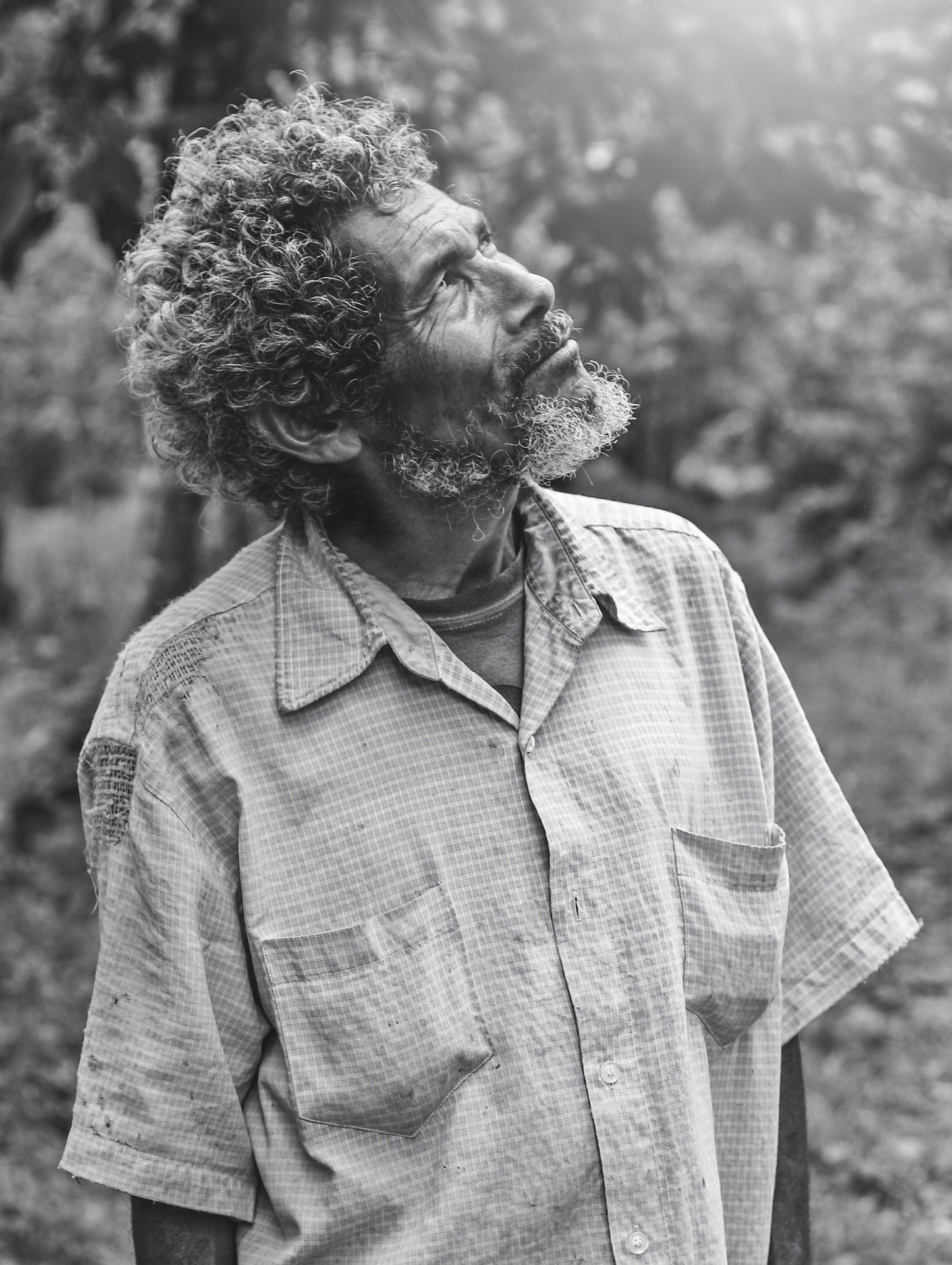 Please open with me to Ecclesiastes 12.
When God describes what happens as we age, he calls it difficult times or even “evil” days. Old age can become a time when life is hardest, strength is least, and evil is most pressing—but that is not how it has to be! David shows us by his life that ending well by fearing no evil is possible through our Good Shepherd Jesus Christ.
Life is short, time flies, death is inescapable—but without Christ life becomes a wearying chase for something good enough to keep their mind’s off thinking this all may be over soon.
In God’s Word the Bible, two old men sat down and wrote their summary of life. One was the father, the other his son.
Both wrote under the inspiration of God’s Spirit. Both had suffered through many afflictions. Both knew the Lord in an unusual way.
For one life is looked back upon almost bitterly, speaking of the emptiness or vanity of life. His name was Solomon. His summary is a Book called Ecclesiastes.
The other looks back and sees a life long growth in experiencing God. His name was David, father of Solomon. His summary was still the song he wrote to his Good Shepherd called Psalm 23.
When life winds down, strength gets exhausted, and the end is in sight for you–which summary will fit your life?
• Will you look back on life like Solomon? Ending with bitterness, seeing all as vanity, and ending in emptiness?
• Or will you look back on life like David? Ending well by fearing no evil, in hopefulness, with life long growth in experiencing God?
The choice is completely yours this morning–you are each day writing the script that will be your life’s summary!
The key is who you are following, where are you headed, and whether or not you have started down the right path.
God’s desire is that you know Him; He wants you to start early and remember your Creator when you are young—and then never forget Him.
As a youth, David remembered His Creator. In fact I believe that’s why a weary and exhausted Solomon—who had chased every pleasure the human mind could conceive, came to the conclusion that his dad was right.
Solomon, perhaps too late, realized that the only way to live and the best way to die–is to do so reflecting on the plans that God had for us in the first place.
Solomon found out after his restless pursuit of all the world had to offer–that nothing but God satisfies, and that life and death can be quite empty when God is left out.
Do you remember Solomon’s inspired look at the pains, fears, and troubles of old age? Ecclesiastes 12 is a remarkable portrait of what we have to face someday. It is not a nice picture when life is empty and meaningless; but it is the best and most exciting time imaginable when life is full of God.
Please follow along with me in Ecclesiastes noting the regret filled wisdom of an empty life, as Solomon the wisest man who ever lived–remembers what he foolishly neglected.
 Stand as we read Ecclesiastes 12:1-14 (NKJV)
Remember now your Creator in the days of your youth, Before the difficult [“evil” in KJV, NAS] days come, And the years draw near when you say, “I have no pleasure in them”:
2 While the sun and the light, The moon and the stars, Are not darkened, And the clouds do not return after the rain;
3 In the day when the keepers of the house tremble, [probably legs] And the strong men bow down; [probably shoulders] When the grinders cease because they are few, [teeth] And those that look through the windows grow dim; [eyes]
4 When the doors are shut in the streets, And the sound of grinding is low; [probably hearing loss] When one rises up at the sound of a bird, [sleeping difficulties] And all the daughters of music are brought low;
5 Also they are afraid of height, And of terrors in the way; [growing fears] When the almond tree blossoms, [white hair] The grasshopper is a burden, [weakness] And desire fails. [appetites gone] For man goes to his eternal home, And the mourners go about the streets. [death]
6 Remember your Creator before the silver cord is loosed, [nerve problems] Or the golden bowl is broken, [brain problems] Or the pitcher shattered at the fountain, [lung problems] Or the wheel broken at the well. [heart problems]
7 Then the dust will return to the earth as it was, And the spirit will return to God who gave it.
8 “Vanity of vanities,” says the Preacher, “All is vanity.”
9 And moreover, because the Preacher was wise, he still taught the people knowledge; yes, he pondered and sought out and set in order many proverbs.
10 The Preacher sought to find acceptable words; and what was written was upright—words of truth.
11 The words of the wise are like goads, and the words of scholars are like well-driven nails, given by one Shepherd
12 And further, my son, be admonished by these. Of making many books there is no end, and much study is wearisome to the flesh.
13 Let us hear the conclusion of the whole matter: Fear God and keep His commandments, For this is man’s all. 14 For God will bring every work into judgment, Including every secret thing, Whether good or evil.
PRAY
When life winds down, strength gets exhausted, and the end is in sight for you–which summary will fit your life?
• Will you look back on life like Solomon? Ending with bitterness, seeing all as vanity, and ending in emptiness?
• Or will you look back on life like David? Ending well by fearing no evil, in hopefulness, with life long growth in experiencing God?
David ended well and feared no evil because he remembered his Creator.
He sang to Him from many quiet and remote hillsides as he sat under the glistening stars. One of David’s songs is perhaps the most well known song in the world. We call it the 23rd Song or Psalm. But it may really have been David’s 1st song. It is certainly his most beloved song.
FEARING NO EVIL
Though he was but a youth the content of Psalm 23 is so profound. David pictures life as a long walk behind a Good Shepherd heading to spend the night with the shepherd, in His house, safe and secure.
Life is walking behind the Shepherd, the end of life is secured by the Shepherd, and eternity is spent with the Shepherd.
Now turn again to the fourth verse of Psalm 23 and see the truth lived out by David as he breathes his last.
Psalm 23:4 Yea, though I walk through the valley of the shadow of death, I will fear no evil; For You are with me; Your rod and Your staff, they comfort me. David had remembered His Creator in the days of his youth—and he reaped a harvest of promised blessing.
For any young person listening today, David is a model of how to please God when young. He is also a great example of the benefits of right choices as a youth. But whether young or not, the truth remains that David ended well fearing no evil. And Psalm 23:5-6 explains how David was so secure, so serene and so blessed.
Death to David was not an unknown, it was not a mystery—it was an appointment. As we look at David’s final recorded moments is that David sees death as an appointment with his Good Shepherd, who we know is Jesus.
Even the greatest enemy—death, was disarmed before David. He could dine (a wonderful picture of his fellowship with the Lord) even in the presence of death, the end of all we know of this earthly part of life.
Psalm 23:5-6 You prepare a table before me in the presence of my enemies; You anoint my head with oil; My cup runs over. 6 Surely goodness and mercy shall follow me All the days of my life; And I will dwell in the house of the Lord Forever.
David had reservations in Heaven.
Heaven was where his God lived; Heaven was a place God prepared for him and he was following his guide through life into the valley, through the shadows and safely home,
Many times over the years I have stood at bedsides in hospitals, emergency rooms, and hospice arranged homes—and shared these same words.
Death is an appointment for all who know Jesus, with their Good Shepherd.
Jesus comes to take us through the valley of death’s shadow.
We have an appointment already set by Him (Hebrews 9:27) and neither we nor He shall ever be early or late.
Hebrews 9:27 And as it is appointed unto men once to die, but after this the judgment
When a loved one dies whether we make it there in time or not—the Good Shepherd always makes it. He arrives exactly on time and takes His beloved by the hand and walks them safely home.
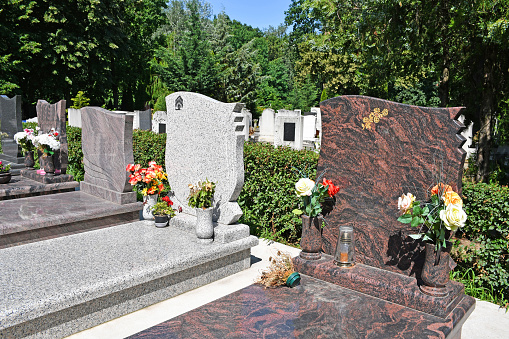
THE FEAR OF DEATH IS DESTROYED
Fearing death, as we saw last time in Hebrews 2, was something we were born with; as Paul reminds us in Romans 7—it is part of our flesh that we all struggle with through every day of life.
But the more we focus on the character and promises of God—the more peaceful the ride to the end of life becomes. From our early American history comes this touching letter in the Autobiography of John Todd.
In October 1800 John Todd was born in Rutland, Vermont. Soon afterward his parents moved to Killingworth, Connecticut. When John was six years old, both his parents died. A kind-hearted aunt in North Killingworth agreed to take John and give him a home. He was brought up by her and lived in her home until he left to study for the ministry.
In middle life his aunt became seriously ill and feared she would die. In great distress she wrote John Todd a pitiful letter in which she asked what death would be like. Would it mean the end of everything, or is there beyond death a chance to continue living, loving and growing? Here is the letter John Todd sent his aunt in reply:
It is now thirty-five years since I as a little boy of six was left quite alone in the world. You sent me word that you would give me a home and be a kind mother to me. I will never forget the day when I made the long journey of ten miles to your house in North Killingworth. I can still remember my disappointment when instead of coming for me yourself, you sent Caesar to fetch me.
I well remember my tears and anxiety as perched high on your horse and clinging tight to Caesar I rode off to my new home. Night fell before we finished the journey, and as it grew dark, I became lonely and afraid. “Do you think she’ll go to bed before we get there?” I asked Caesar anxiously. “Oh, no,” he said reassuringly. “She’ll stay up for you. When we get out of this here woods, you’ll see her candle shinin’ in the window.”
Presently we did ride out into the clearing, and there, sure enough, was your candle. I remember you were waiting at the door, that you put your arms close about me and that you lifted me–a tired and bewildered little boy–down from the horse. You had a fire burning on the hearth, a hot supper waiting on the stove. After supper you took me to my room, heard me say my prayers, and then sat beside me till I fell asleep.
You probably realize why I am recalling all of this to your memory. Someday soon God will send for you to take you to a new home. Don’t fear the summons, the strange journey or the dark messenger of death.
God can be trusted to do as much for you as you were kind enough to do for me so many years ago. At the end of the road you will find love and a welcome awaiting and you will be safe in God’s care. I shall watch you and pray for you till you are out of sight and then wait for the day when I shall make the journey myself and find my Savior and you waiting at the end of the road to greet me1.
This evening we are going to look at Psalm 116, but for just a moment let me remind you of one verse in that special Psalm.
“Precious in the sight of the LORD Is the death of His saints” (Psalm 116:15, Emphasis added).

HOW TO END WELL BY FEARING NO EVIL? THINK OF THE WONDER OF ENTERING HEAVEN
When your appointment with death arrives, the Lord Jesus Himself will wondrously take you by the hand and usher you instantly into heaven. At the moment you are absent from the body you will forever be in His presence! Jesus Christ, who has guided you through the valley of the shadow of death, will continue to guide you as He takes you by the hand and leads you up past the marshaled ranks of the angels!
Do you remember how you will be clothed? In a white robe! If you will recall, when Jesus was transfigured, He pulled back the veil of His flesh to let us see what He’s really like as God in His eternal divine state. Scripture tells us that His clothing began to glow so white that it was whiter than anything ever seen on earth. His face also began to shine. In fact, when John saw Him He was shining like the sun! And you, too, will have a glowing white robe because you will no longer be terrestrial, but celestial!
Psalm 104:2 tells us that Jesus is clothed “with light as with a garment.” Because you will see Him as He is, you will look like Jesus—as white and bright as the day, and pure as light. What a reward it will be to have that robe draped around your shoulders and be invited to walk the shining paths of glory!
The Scriptures talk about what God’s throne looks like. It is raised up, and sits in the sides of the north; in front of it is a glassy sea; surrounding it in concentric circles are the angels. When Daniel saw them, he said there were myriads of myriads—ten thousands of ten thousands. What does “ten thousand times ten thousand” equal? Hundreds of millions of standing angelic beings! How powerful are angels? Just one angel slew 185,000 Assyrian soldiers in one night! They are very powerful—and hundreds of millions of these super powerful angelic creations stand by God’s throne.
So then, you will walk by the marshaled hosts, the ranks of the angels, up through the golden boulevards of glory, up towards the cherubim.
When you get closer to God’s throne, you will see creatures with four faces and six wings surrounding His throne. Hovering, they constantly say, “Holy, Holy, Holy is the Lord.” The seraphim, which means “burning ones,” join them. So these burning, holy creatures are speaking about God. Finally, Christ will lead us up to the Throne; it is the nail scarred Hand of Jesus holding our hand; it is the nail scarred feet of Jesus walking us to at last face-to-face meet and see God the Father.
It is at that moment Jesus will confess our name before His Father and the angels (Revelation 3:5). He will introduce us saying,
“Father, I would like You to meet one for whom I died—one whom I bring to You as My beloved, as one whom I purchased. I now present to You, My child …”
Then you will hear Jesus, the King of Kings and Lord of Lords, actually say your name! Talk about the most unbelievable moment of your existence! Seeing Heaven and all it’s splendor is amazing; hearing the millions of voices, thunders and chants of the angels is awesome–but the greatest and richest part will be to hear Jesus Christ confess that you are His good and faithful servant!
What a wondrous entrance into heaven we each have to look forward to and fix our hopes upon!
MAKE A CHOICE TO END WELL BY FEARING NO EVIL
G. Campbell Morgan, a great Bible teacher in Britain a hundred years or so ago, wrote of this moment also, and he said:
“You are to remember with the passion burning within you that you are not the child of today. You are not of the Earth, you are more than dust; you are the child of tomorrow, you are of the eternities, you are the offspring of Deity. “The measurement of your lives cannot be circumscribed by the point where blue sky kisses green earth. All the facts of your life cannot be encompassed in the one small sphere upon which you live. You belong to the infinite.
If you only make your fortune on the Earth—poor, sorry, silly soul—you have made a fortune, and stored it in a place where you cannot hold it. Make your fortune, but store it where it will greet you in the dawning of the new morning.”2
Since Jesus is going to usher us into heaven and take us to meet our Father sitting on the throne, we should also think about what we want to send ahead. All that we do on earth is going to follow you to heaven! Some will burn and we will suffer loss, but some can last the fire and will be ours to give as our love gift to Him.
A few years back I once ordered a small computer memory upgrade over the Internet and received an e-mail asking me to track it. I had never done this sort of thing, so I hit the proper key and got this message: “Your package was put in a truck in Philadelphia and headed for the airport at 7:31.” I thought: Oh, that’s great!
I checked later in the day, and this time it said: “Your package has now arrived at the Philadelphia airport.” I tracked that package’s whereabouts each day until finally, as I checked it for the last time, the doorbell rang and the delivery man was actually dropping it at the door.
I then thought to myself, We think nothing of tracking packages, but God says:
I have sealed you with My Spirit; I have written My Name upon your heart; I have addressed your soul with the very address of Heaven.
When the time comes for you to go home—I am sending My Son to come and pick you up and bring you safely home.
Also, I’m tracking everything you’ve done on earth, and the part that is eternal is going to follow you—it’s going to arrive with you in heaven.”
The question for each of us this morning should be:
• Are you getting ready to meet Jesus?
• Do you know Him as your Good Shepherd?
• Are you trusting Him to deliver you from all evil? If so—you will end well!
• What are you sending ahead to heaven?
• When you come face to face with Jesus, what will you bring with you to offer the Lamb of God?
When life winds down, strength gets exhausted, and the end is in sight for you–which summary will fit your life?
• Will you look back on life like Solomon? Ending with bitterness, seeing all as vanity, and ending in emptiness?
• Or will you look back on life like David? Ending well by fearing no evil, in hopefulness, with life long growth in experiencing God?
The choice is completely yours this morning–you are each day writing the script that will be your life’s summary! The best way to live is like David—loving, following, trusting the Good Shepherd.
My Jesus, I Love Thee [#364] My Jesus, I love Thee, I know Thou art mine; For Thee all the follies of sin I resign; My gracious Redeemer, my Savior art Thou; If ever I loved Thee, my Jesus, ’tis now. I love Thee because Thou hast first loved me, And purchased my pardon on Calvary’s tree; I love Thee for wearing the thorns on Thy brow; If ever I loved Thee, my Jesus, ’tis now. I’ll love Thee in life, I will love Thee in death, And praise Thee as long as Thou lendest me breath; And say, when the death dew lies cold on my brow; If ever I loved Thee, my Jesus, ’tis now. —William R. Featherston, 1846-1873
1 -From the autobiography of John Todd.
2 G. Campbell Morgan, The Gospel According to Matthew (New York: Revell, 1929), pp. 64-65.
Check Out All The Sermons In The Series
You can find all the sermons and short clips from this series, David’s Spiritual Secret here.
Looking To Study The Bible Like Dr. Barnett?
Dr. Barnett has curated an Amazon page with a large collection of resources he uses in his study of God’s Word. You can check it out here.