
If the video above is not available, here are two other ways to view:
David – Dying Gracefully
061015AM
DSS-43
David: Ending Well by— Dying Gracefully
I Kings 2
Transcript
Let’s open to 1 Kings Chapter 2, and as you open there, we’re coming to the end of David’s life. When you come to the end of your life, or when you watch someone else come to the end of their life, it is a very important time to just look at the impact that person has had. As you turn to 1 Kings 2, just the first two or three verses, it’s hard to fully comprehend how much lasting impact one single human life can accomplish. Let’s just talk about the one life of the person we’re studying, the one single life of David. How has that impacted the world to this moment?
.jpg)
David’s brief lifetime, 3,000 years ago, as he lived and died, is over. Yet today, millions and millions of people around the world draw comfort from the words that he wrote, sing songs about, and use the words that he wrote. In fact, some of the earliest words that some people memorize, as in the 23rd Psalm, are words that David wrote 3,000 years ago. Now that is an amazing lasting impact. Those words he wrote in the Psalms are read, quoted, and memorized. They’re used in countless funeral services around the world every day.
3,000 years ago, David lived and died, and yet today, not millions and millions, but billions of people are thinking about the city that he founded, Jerusalem. That’s beyond the Word of God. Now we go beyond what believers do, and David’s life has given us a city that some revere, some love, and many want. That was a city he founded and built as the capital city of God’s people. Jerusalem is in most newspapers and TV news reports, and on the web all day long, every day. Yet, that is one thing from one life, way back 3,000 years ago.
In fact, the two final wars on this planet that are described, the one in Revelation 16 and the other in Revelation 20, the two final wars, Armageddon, and then the final war just before eternity begins in Revelation 20, both of them will be fought over the control of David’s city, which is also God’s city, named Jerusalem. So, David’s life has accomplished something that touches most people on Earth every day, and that’s astounding. It’s just one more reason why we ought to look at his life because it was captured in God’s Word, as I’ve said over and over, the most fully explained life in all the Bible.
We are going to look at the conclusion of David’s life in 2 Kings, or I mean 1 Kings chapter 2, just the first two or three verses. But when David’s life comes to an end, it’s a long life, but he didn’t die just because he got worn out, and he didn’t die just because he was in so many wars, and he didn’t die just because he was under so much grief with all the struggles that he went through. Before we read together this last word about his life, I want you to remember that it was not a worn-out body that caused David’s death, nor was it a lack of medical care. It was God’s appointed time. God’s appointment with David arrived 3,000 years ago.
Job, who lived even way before David, in fact, almost 2000 years before David, wrote this: man who is born of a woman is of few days and full of trouble. He comes forth like a flower, and he fades away. He flees like a shadow that doesn’t continue as you open your eyes in such a one and bring judgment to yourself. Who can bring a clean thing out of an unclean? No one. Since man’s days are determined, since the number of his months are with You, You have appointed his limits so that he cannot pass.
David’s limit had come in 1 Kings 2. God had appointed it as Job said, even before David’s time, 2000 years before. David’s appointment with God had arrived. Our lifetime is not set by how carefully we guard our health through diet and exercise. Now, that’ll free up some time for some of you, yet God commands us to be disciplined and not be reckless in our physical lives. In fact, He says, if we’re undisciplined, we’re disobedient. Gluttony, overeating, and total lack of self-discipline are not to be tolerated in the Christian life. They are grievous to the Holy Spirit of God, but they don’t determine our length of days; God does. Nor is our lifetime extended by physicians. Although God commands us to seek proper healthcare. Our length of days is determined by God and God alone. Now we can affect the quality. God has set the quantity, and that is something that we rest in that we know as believers.
But as we look at 1 Kings 2 and the first two verses, we are going to begin this morning to see the elements that David models and what I like to call dying gracefully. Now, we’ve been looking at the ending. He ended well by these purposes we saw last week. We examined all that, but now we’re coming to the very tail end of his life, and he ended well by dying gracefully. Now, I don’t mean that he got all dressed up and he was really poised. I mean that the grace of God was evident in every aspect of David’s dying. As we look at each aspect, there are three this morning. As we look at each of those, the question we have is God’s grace evident in my life in those areas? That’s the whole purpose of looking at his life. Not to just go, oh, he did a good job. But for me to examine myself to see if I’m responding as David responded to the grace of God.
So, look at these first two verses of 1 Kings 2. Now the days of David drew near that he should die. He charged Solomon, his son, saying verse 2, I go the way of all the Earth. Be strong, therefore, and prove yourself a man in verse 3, and keep the charge of the Lord, verse 4, that the Lord may fulfill His Word. David is at the end of his life. Look at how he is talking. He’s not like some people who don’t even want to talk about death. They don’t go to funerals. That’s not one of their things. It’s like it’s never going to happen. They just want to keep it at arm’s length. Not David. David prepared diligently for his end of days, and he talks about it. It’s amazing.
.jpg)
The first element we find as we look at David’s final recorded moments is that David is gracefully unafraid of death. Do you notice that? He talks to his son about it. He’s not afraid. It isn’t like you have to creep in and say, hey, David, are you sure? You kind of look a little ill. No, he says, I’m going the way of all the Earth. I’m dying. He was gracefully unafraid of death. Why?
The first thing we see is that it was because he was saved, he was redeemed, and he was prepared spiritually. He was open and exemplary in his instructions to his son. David is unafraid to initiate a talk about his death. That’s what I want you to see in these few verses we just read. It is David, it’s not his family cowering in the background, saying is there anything we should talk about? No, David’s the one who brings it up. You want to bless your family, say, you know what? I’ve written down my testimony because when I die, I want you to read it. You know what else? I have some songs that have been with me my whole spiritual life and are very dear to me. I’d like you to share those too. That’s not all! See, if we are gracefully unafraid of death, we can talk about it. It’s a real test. If you meet someone who never wants to talk about that, it just repulses them to think about death; they are not gracefully prepared by the Spirit of God.
How did David get gracefully prepared? He knew he was saved. He had taken the time to prepare for his death and then talk about it clearly with his son and probably a lot of others. By God’s Spirit, he talks to us.
Turn now for just a moment to Psalm 31 because we’ve already covered this, but I just want to remind you how David had such a calm assurance, the 31st Psalm. Remember, 71 of the Psalms are David’s life experiences that are breathed out by the Holy Spirit of God as the very Word of God through the life of David. It’s like a stained glass window. David is the glass, but the Spirit of God is the light coming through it. God points out flawlessly the truth he wants us to see in David’s life.
In the 31st Psalm, David had come to the place of spiritual preparation for death. What was that place? He was sure about the destination of his soul. Look at the fifth verse again, and this is a powerful verse we spent a long time on a few weeks ago. But I just want to remind you into your hand, this is what David said in verse 5, I commit my spirit. Now, that’s what he was saying as he was dying, but he said it ahead of time because he knew what the next part of the verse says. Look at the middle of verse 5. You have redeemed me, oh Lord, God of truth. You’re the Redeemer. I’m the one needing redemption. I believe Your truth. You’ve done it. He declares that because of that finished work, that transaction, that awareness he had of his redemption, of his salvation, of the absolute ownership of his soul by God, he says, I just commit to You my spirit. You’re the one who holds my life. David knew he was redeemed. He knew he’d been bought and paid for by God, and because of that confidence, he declares his life is held by God’s hand.
Generations after David is another man, Daniel. In the fifth chapter of his book, he confronts the pagan secular king of the world at that day with these words, he looks at King Belteshazzar, remember the handwriting on the wall scene? He looks at him, and he says, the God in whose hand is your life’s breath. Now, what he was emphasizing there is that God holds the duration of our life. He is the Creator. He’s also the Sustainer. But David went beyond saying what Daniel said to Belteshazzar because he was not a believer. That Pagan, Babylonian king, as far as we know, never came to believe in the true and living God as his grandfather did. But David had. David says, I not only know You hold my life’s breath, but I commit it to You because You have redeemed me. You have purchased me. You own me.
The key to dying gracefully is to be certain about our immortal spirit, that we are safely sealed, that we are kept by God. Our future destiny is in His hands, not a doctor’s, not a terrorist’s, and certainly not in our hands. So, a secured spiritual life, an assurance of salvation, that’s the first element David portrays. That’s the first thing all of us need to think about because maybe if you can’t talk about death, maybe you’re not secure, maybe you’re not assured, maybe you’re not confident living in hope.
It’s interesting, Jesus reflected, in the 31st Psalms, fifth verse, Himself. His dying words, Christ’s were, in Luke 23:46, Jesus cried out with a loud voice on the cross and He said, Father, and then he quotes Psalm 31:5. Isn’t that amazing? The last words of Christ on this Earth at His death were the same words that David clung to. And Jesus said into Your hands, I commit My spirit. Luke records, having said this, Christ breathed His last. Spiritual certainty like David, and it is faith in what Christ’s work on the cross accomplished. Jesus defeated death, and Jesus delivered us who trust in Him.
The writer of Hebrews notes that part of Christ’s work on the cross, listen, was to deliver us who, through fear of death, were all our lifetime subject to bondage. Do you understand that? That if you’re afraid to die, you’re still subject to bondage. That means there are things you won’t do that the Lord wants you to do if you’re afraid to die. Part of the work that Christ accomplished on the cross is to deliver us from the bondage of the fear of death. That’s Hebrews chapter 2.
In fact, let’s turn back there now. Hebrews chapter 2, that’s our text we’re going to read this morning. Hebrews, if you want to back up from Revelation, it’s about seven books from the end of the Bible. Okay. Just go to the back, and then it’s a big one. It has 13 chapters. Hebrews, 13 chapters long. We’re going to look at the second chapter. Verses 14 through 18, because Christ’s work on the cross was to deliver us who come to Him from the fear of death. I want to review again, in Hebrews 2, from 14 to 18, what happened at Christ’s cross. I want to affirm that with you. Okay?
.jpg)
Let’s all stand together for the reading of God’s Word. Whether you found it or not, you listen, and then we’re going to pray together. Hebrews 2 starting in verse 14. Inasmuch then, as the children have partaken of flesh and blood, He Himself, that’s Jesus Christ, likewise, shared in the same. That through death, now listen to this, the end of verse 14. That through death, He, talking about Jesus, might destroy him that had the power of death. That is the Devil. Now, you wonder what was going on, on the cross. Jesus was destroying the Devil. What part of him was He destroying? He was destroying his power over death. He destroyed him who had the power of death. That is the Devil.
Continuing. It doesn’t stop there. Verse 15. This is the implication for us today. And release those who, through fear of death, were all their lifetimes subject to bondage. Now, that’s where we come in. The cross of Christ, His work accomplished for us, had many, many things. In fact, theologians say a hundred different things happened on the cross. You want to know what one of them is this morning? You can’t remember a hundred. Remember, one: Jesus Christ, it says in this 15th verse, released those who through fear of death were all their lifetimes subject to bondage. If you’ve been born again, you’ve been released from the power that Satan held over you to make you fear death.
Continue reading. Verse 16. For indeed, He does not give aid to angels, but He does give aid to the seed of Abraham. Verse 17. Therefore, in all things, He had to be made like unto His brethren that He might be a merciful and faithful high priest in things pertaining to God to make propitiation for the sins of the people. Verse 18, for in that He Himself has suffered being tempted, He is able to aid those who are tempted. Context, tempted in what? This is a general verse for all temptations, but specifically, this section says He came to aid us, so we are not afraid of death. This morning, has Christ delivered you from the bondage of being afraid of death? Can you joyously look people in the eye and say, my times are in His hand, my spirit I’ve committed to Him. I know that I am redeemed. You can triumphantly declare His truth in hope and steadfast assurance.
Let’s bow in prayer. Father in Heaven, thank You for Your Word. Thank You for the work of Christ on the cross. Thank You for one facet that we can look at this morning: ending by dying gracefully because we know that we’ve been delivered from the bondage of fearing death. We know that You are the one who holds our spirits, our immaterial, immortal souls. Oh Lord, I pray that we would learn much from how You want us to live as we examine Your servant David’s life. And that we might make little choices this morning to make sure that we also are going to end well by dying gracefully as He did. In the name of Jesus, You who destroyed him that had the power of death and delivered us from that bondage of the fear of death. In the name of Jesus, we pray, Amen.
You may be seated. If you’ve been born again, Jesus has already released you from the fear of death. But as our text says, He’s a merciful and faithful high priest, and he understands when we struggle. These spiritual truths that once and for all are completed need to be lived out in everyday life. That’s what we need to learn from David’s life. Christ’s work is finished. The power of death is destroyed. The power of sin was paid, and the power of an endless life is yours and mine in Christ.
But we need to ask ourselves, have we come to the place where we’re consciously affirming that in our daily life? Have we come to the place that we know we are His, that we know our soul is held by God? Our spirit is clothed with immortality, and we have an endless life. A little later in Hebrews, if you want to someday keep reading, chapter 7, verse 16 says that we live after the power of an endless life. It is not like a battery that’s going to run down. It’s not like a power cord that’s going to get unplugged someday. It’s not like a power source, like how the generator’s going to run down. You and I exist, once we’re born again, after the endless life power that God has put within us, which is a marvelous thought.
Fannie Crosby, 1820 to 1915, wrote some words that often flow through my heart as I think of this reality. A blind poet who was a hymnodist and a saint triumphantly affirmed her hope. Now, sadly, this isn’t one of the ones that’s in our hymn book, so I’ll just have to read it to you, but it is an incredible statement of her faith. This is what she wrote. It’s a hymn called All the Way My Savior Leads Me, and she says this: all the way my savior leads me. Oh, the fullness of his love. Perfect rest to me as promised in my Father’s house above. Then she talks about her death. She says this: when my spirit clothed immortal wings its flight to realms of day. That’s her poetic way of saying that she just died. This is my song, through endless ages, Jesus led me all the way. This is my song, through endless ages, Jesus led me all the way.
If we know that He delivered us from the penalty of our sins, if we know that He delivered us from the power of sin and death, then we can live in the triumphant certainty of not fearing death. That is to be the hope, that is to be the strength of the Church. That we are not afraid even unto death.
At the Elders’ prayer this morning, it was so precious. We were getting reports on how everybody’s doing in the hospital, the various stages of struggles in life, and near the end of life. It was interesting that they talked about one person. They said that this person, struggling with their health, was just triumphantly sharing their love for Jesus Christ. That only comes when we know for certain that He’s defeated the power of death in him that had bondage over us.
.jpg)
First, David made the most important preparation. He was spiritually certain of his salvation. We would say that he was saved. He knew that his sins were on Christ. He knew that his faith was in the death in his place that another had accomplished for him. He didn’t think he had to achieve and be good enough and work his way up. He knew his sins were on Christ and that Christ’s righteousness was on him. But that’s not where his life was focused on at all. He wasn’t just focused on getting that ready. He had another element of his life he was working on.
I want to look at this because this is one you never hear about. Look at 1 Chronicles 22, because this is the second area we need to prepare for if we’re going to die gracefully. You’ve got the I’m saved part down, but have you got the other part down? Because David also worked in another realm. David, in 1 Chronicles 22:14, describes a second element of his graceful preparation for death, and this is one that’s often neglected, which is why people struggle at the end of their lives. David had surrendered to God the ownership of all of his material possessions before his death. This is really emphasized in the Bible. In 1 Chronicles 22:14, David made sure that none of the normal things that tie most people down to the Earth were tying him down. You can be as saved as possible, which is saved by grace through faith, and still struggle as the end of your life approaches if you don’t get this area nailed down. You can be absolutely triumphantly certain your sins are paid for and that you have eternal life, but ending life here is such a struggle.
Now, let’s examine why that is through what David did. He says in verse 14, indeed, 1 Chronicles 22:14, I have taken much trouble. He says, this has not been easy, but I have taken much trouble to prepare for the house of the Lord. Then he gives his savings book statement, his financials. Look at this: 100,000 talents of gold, a talent’s a hundred pounds. We’re talking about tons. He has a hundred thousand, 100-pound ingots of gold. Wow. It’s a lot. This was a fourth of all the known gold on the planet. It is unbelievable that one man had all this in his possession. 100,000 talents of gold, and that isn’t all, 1 million talents. Wow, that is a hundred million pounds of gold. Wow. A hundred pound talents. A hundred million pounds of gold. Unbelievable wealth. We’ve talked about this, by the way, in the past. Silver and bronze beyond measure. You couldn’t even weigh the bronze for it was so abundant. I prepared timber and stone, so that you may add to them.
What I’m pointing out in this verse is that one of the most amazing elements of David’s life is how he viewed his immense wealth. How did David view his immense wealth? As we studied many months ago, remember I called it David’s legacy, what he left behind, and I told you he was probably the wealthiest single individual that’s ever lived on this planet. Do you know how I know that? When he gave his estate to Solomon, God said, no king on Earth will surpass Solomon. Solomon got 666 talents a year, but 666 a year would take many lifetimes to get a hundred thousand talents like David had. David gave Solomon the bulk of his estate, and he just managed it for him. So, we know that David, by all measures, was probably the wealthiest person to ever live. He very well surpassed all the pharaohs and all the ancient kings in sheer magnitude, but that’s not the key. What amazes me and instructs me is what he did with his wealth.
Look at verse 14. Look at the take in much trouble. He carefully gathered his wealth. He safely stored his wealth. But here’s the element that I want to emphasize. He consciously gave his wealth back to God. Now, think of the spiritual implications of that. The record of that final gifting to God by way of his son Solomon is very touching in itself. If you read 22:14 all the way down through 19 in your Bible, David probably wrote the 30th Psalm right after that bequest. Then he goes into his prayers for Solomon, and it continues. But that careful giving away reminds us that wealth is like stored time from the past.
How did David get all that wealth? His past life. He had been out since he was a youth, fighting God’s enemies, hitting these ravaging, pillaging armies, facing these huge foes advancing the borders. But as he did that, as the king of God’s people, he acquired great wealth for his time that was invested. So, wealth in a real sense is like stored time from the past. My present use of wealth saved from past times is a way to give a part of those years that are now gone back to the Lord. In 1 Chronicles 22:14, David took much trouble to prepare. This was the premeditated murder of any materialistic desires in his heart. Materialism says we measure our worth by our wealth, and materialism says, I always have this voracious desire to have one more of something, and materialism can be murdered in our lives by giving. David had a premeditated desire to murder any materialistic thoughts in his mind. When he gathered all that wealth, he wasn’t looking at it like gathering it for me, for myself. He had in the back of his mind ever since he was a youth.
Do you remember the David and Goliath deal? Way back when he was a young, ruddy teenager, a youth. Do you remember what he did with Goliath’s sword and his armor? Do you remember where he put it? The Scriptures tell us that he put it in the Tabernacle. From the beginning, he stored his treasures. Even as a teenager, he gave them back to God. He didn’t wait till he was 70 years old and barely able to keep himself warm, and dying, and finally saying, okay, I guess I have to give it up now. He had been systematically giving it all to God since he was a youth. This is not an end-of-life kind of glimmer. This was a lifelong habit he had. So, David shows us that he had this desire to store up the time of his life and to measure his wealth, to reflect his great love for God. He was very careful to direct his wealth, even from when he was a youth, while he was alive, into the hands of God.
Now, you notice he’s still possessing it, but it is very clear that it belongs to God. Yes, he’s still guiding it as king, but it was very clear who owned his wealth. He had decided that as a young person. David learned what Jesus spoke so forcefully about in his Sermon on the Mount. In fact, I want you to see, look back at Matthew chapter 6. I want to review this with you because we often pull one verse out of Matthew 6. That verse is for where your treasures are, there your heart will be also. But Matthew 6 is a much broader statement than that one little line. It’s an entire paragraph where Jesus talks in the Sermon on the Mount, Matthew 6, about how our attitudes, starting in verse 19, should be about material possessions. It’s about who owns our material possessions, us or God. That’s what Matthew 6 is all about. It’s not about how much we give at any one moment. It’s about who actually owns it in our minds. By our volition, choices, who really owns our material possessions, us or God?
Look what Jesus says. Starting in verse 19. Negatively, he starts out, do not lay up for yourselves treasures on Earth. Interesting word. Thēsauros. It’s like a thesaurus. It’s a treasury of words. He says don’t stack up treasures on Earth for yourselves. He doesn’t say don’t have treasures. The key to understanding this is for yourselves. We need what we need in life. And so, it’s like this, but don’t stack lifetimes of needs up for yourself. There are some people who can never seemingly come to what they think is enough.
I heard of one person who said we’re going to go full-time in ministry for the Lord as soon as we have enough. The first time they said it was 1 million, then it was 5 million. Who knows where it is now? It’s like we never know quite what is enough. Jesus says, beware of that. That’s what materialism is. Do not lay up for yourselves treasures on Earth, where moth and rust destroy and thieves break in and steal. Verse 20, here’s the positive side, but lay up for yourselves treasures in Heaven. Don’t lay them up on Earth. He says, lay them up in Heaven where neither moth nor rust destroys, where thieves do not break in and steal.
Why? Because it has a spiritual benefit. Verse 21, for where your treasure is, there your heart will be also. Jesus said, it’s like a magnet. Wherever you’ve piled your treasures, your heart just is drawn in that direction. That has a lifelong impact on us. We saw it on David. Where had David directed his treasures? To the Lord’s house, to the worship of God, to the public presence of God in this world, which was what the Temple was, this visible expression of God. Boy, that’s where his heart was, and he was drawn that way. All of his songs were about that. The Lord says, verse 21, where your treasure is, there your heart will be also.
Why is that? Verse 22 of Matthew 6, because the lamp of the body is the eye. If your eye is good, your whole body will be full of light. But if your eye is bad, your whole body will be full of darkness. If, therefore, the light in you is darkness, how great is that darkness? And a lot of people think that’s a new thought he brought up. But no, it’s not a new thought. It’s still talking about this money, wealth, and possessions, and who owns it, because look what he says in verse 24. No one can serve two masters, for either you’ll hate the one and love the other, or you’ll be loyal to the one, and despise the other. You cannot serve God and mammon – physical possessions, power, wealth, and money – you can’t. Either you serve God and give the ownership to Him, or you don’t. This graceful preparation of our own personal wealth before our death is a real challenge to every generation of Christ’s Church, and it has been throughout the ages.
Once, a wealthy Christian plantation owner invited John Wesley to his home. That was in the 18th century. The two rode their horses all day long and only saw a small part of all that man owned. At the end of the day, the plantation owner proudly turned in his saddle and, looking at John Wesley, asked, Mr. Wesley, what do you think? After a painful moment of silence, Wesley looked him right in the eye and replied, I think you’re going to have a hard time leaving all this.
That’s an example of Christian fellowship that’s admonition-based. Wesley thought about how he could encourage this man. Instead of saying, oh, you have a lot of beautiful stuff, he thought about how to spiritually encourage him toward godliness. The plantation owner was attached to the world he was in. Wesley was attached to the world he was going to. It’s very hard for a believer to die when they have wealth that has not been surrendered to Christ’s control. In our passage that we just looked at, Jesus tells us that believers who lay up treasures on Earth spend their life backing away from their treasures and toward Heaven behind them. They’re backing away from their treasures toward Heaven. To them, death is loss.
But Jesus said, that’s not the way we’re to live. Jesus told us that believers who lay up treasures in Heaven look forward to eternity. They’re moving daily toward their treasures, and to them, death is gain. Any believer who spends their lifetime moving away from their treasures has more and more reason to despair. Those who spend their life moving toward their treasures have more and more reasons to rejoice. That makes us ask, how are we doing? How are we doing with that second part of our preparation? The first is make sure you’re saved. The second is make sure that as early as possible in life, you turn over the control and ownership of all physical possessions back to God. That’s the second way that David prepared.
How are you doing with your physical, material, and earthly possessions? Are they surrendered as tools given back to God’s control, as we see in David’s life? Or are they treasures held tightly? David died gracefully because he took so much trouble to surrender the control of his material possessions back to God as tools in his hand.
Now, this struggle with materialism has been with the Church from the beginning. In fact, in the earliest recorded writings of the Early Church, one man, Tertullian is his name, wrote this: So, it is when a man walks along a road, the lighter he travels, the happier he is. Equally, on this journey of life, a man is more blessed if he does not plant beneath a burden of riches. He said that in the year 155. This has always been a problem that we’ve had to deal with. In the Middle Ages. Another man said, let temporal things serve us their use, but the eternal will be the object of our desire. Luther said, I’ve held many things in my hands, and I’ve lost them all, but whatever I placed in God’s hands, those I possess. John Bunyon, while he was in jail at Bedford in England, said, whatever good things you do for Him, if according to His Word, they’re laid up as a treasure in chests and coffers. They’ll be brought out as your reward before men and angels as your eternal comfort. John Wesley, who was just riding on the horse with a plantation owner, said, I value things only by the price they gain me in eternity. He was really to the point, wasn’t he? David Livingstone, whom we talked about much, said, I place no value in anything I possess except how it relates to God’s kingdom. Finally, a modern person.
How about this, the 29-year-old missionary martyr, whose name was Jim Elliot, died when he was 29. We all know his famous words, right? He said he is no fool who gives what he cannot keep to gain what he cannot lose. But we focus on his willingness to go to the mission field. That willingness started when he surrendered all of his material possessions into Christ’s hands, and he relinquished his hold on things as no longer mine. He is no fool who gives what he cannot keep. He wasn’t just talking about dying pierced through with Auca arrows and spears. He says nothing is mine. No physical possession is mine. All belongs to Him.
The application for us remains. What we should do is, and I want you to turn to our last passage. Go back to the Psalms and look at the 23rd Psalm because I want you to see the final element of David’s preparation. If we diligently prepare the materials as David does, others after us may build. God asks of us all to live obediently in this life, but within that obedience come choices, and choices blessed the Lord. In Psalm 23, David speaks of the final element of how he prepared his life to meet the Lord. David’s spiritual preparation impacted his view of death. He was saved or redeemed. That’s the first element. Then he surrendered the ownership of his life and treasures back to God. But there’s one final element that David lived by, and it’s in the last half of the 23rd Psalm.
That last element was that David saw his death as an appointment with his good Shepherd, whom we know today as Jesus. David was looking at death, not only triumphantly, not only materially, but it was an appointment for him. An appointment that he was sure about and that he anticipated and that he longed for. As a shepherd boy, the real foundation for his life was laid. It was not a mystery to David that he was dying. It was an appointment. Even the greatest enemy was disarmed before David.
David says in verse 4 that he could dine. That’s a wonderful picture. I mean in verse 5 of the 23rd Psalm, not verse 4. Verse 4 is death. But verse 5 is he could dine, and that’s a picture of his complete fellowship with the Lord, even in the presence of death, even at the end of everything he knew of in life. He didn’t have a lot of revelation about what Heaven was going to be like. But he says, even when death stares me in the face, I can sit down and eat a meal. I can dine with the Lord in the presence of my greatest enemy, death, because I don’t fear any evil because You’re with me, because You comfort and strengthen me, and because, as the last verse of the 23rd Psalm says, You’re taking me home. That’s what he believed in. He says, I’m going to dwell in Your house. David knew he had reservations in Heaven. It was where his God lived. It was a place prepared for him. He was following his guide through life and into the valley and through the shadow and safely home.
I often use this when I stand with families where a family member is nearing death. I always say, especially after that, they have died. I say we know for sure one thing. We know where in this whole city, Jesus Christ was at this moment. Because Jesus says, look at verse 4, that when we walk through the valley of the shadow of death, we fear no evil for You. Who’s he talking about in Psalm 23:4? He’s talking about the good Shepherd. Who we know from the New Testament is Jesus Christ Himself for You, the good Shepherd, are with me. You are walking me through the valley of the shadow of death so that when that beloved one dies, we know that Jesus arrived just in time to take them Himself through that valley and to walk them through the valley of the shadow of death.
So, that’s why I love to be there at that moment when saints die. Because in a very real sense, it’s one of the times you’re most aware of Christ’s presence as He comes and as they consciously are aware of His coming. He takes them out of the body, ravaged and feverish, and having every problem that it has at death. He lifts the real them out of that body, out of that tent, as Paul called it, out of that clay pot, as Paul called it also. He lifts them out and walks them through the valley of the shadow of death. David looked at death as an appointment. He wasn’t afraid of that appointment because he had given everything in his life to the Lord. He had given everything in his life to the Lord because the Lord had saved and redeemed him.
David died gracefully. You won’t die gracefully if you aren’t sure that you’re redeemed, that He has saved you, that your spirit’s in His hand. You won’t die gracefully. You’ll be backing away from your treasures if you haven’t already given them all to Him and said You own them. They’re not mine. You won’t die gracefully if you don’t realize it’s an appointment. It says in Hebrews chapter 9, it’s appointed unto man once to die. God sets that appointment. I read in Job chapter 15 that God has appointed our days, and David knew that. He knew he had an appointment, and he knew who was coming. That’s why Paul said before, I have a desire to depart because it’s far better, but it’s needful for me to stay with you.
That’s the attitude we ought to have in life. As long as it’s needful, I’m staying here, but I desire to depart. But I’m going to fulfill my obligation as long as it’s needful. I’m going to give the ownership of everything and say nothing is mine, not even my life, not even my length of days, not even my treasures. I’m going to look forward to my Good Shepherd coming and taking me to dwell in His house forever.
Let’s bow for a word of prayer this morning. As I pray, take a moment in your own heart to think about whether you’re going to die gracefully. If you aren’t sure, then you ought to come up. You know for sure where one of the greatest soul winners in our church is standing. He’s standing by the piano with two gold rings on. Picking up a gold ring is nothing compared to receiving Jesus Christ. If you’re not sure you’re saved this morning, you can be sure you could actually have every sin you’ve ever committed, past, present, and will commit in the future, forgiven on the spot by Jesus Christ this morning. Joel said something that Paul repeated. He said, whosoever shall call on the name of the Lord shall be saved. If you’re not ready, if you’re not redeemed, if you’re not saved, you ought to make sure today.
If you are ready in that sense, then right where you’re sitting, you ought to make sure that right now you commit everything you possess, the ownership of it, back to God. Stop looking at all that stuff as yours. Start looking at it all as His. Ask Him every day what He wants you to do with it. Then look on death as an appointment.
Father, I pray that this morning, those who hear Your Word, who have ears to hear, if they don’t know You, that the conviction of their sin and the wondrous drawing of Your Spirit would make them say yes to You today and receive Christ, his forgiveness, his cleansing, his endless life. For those who do know You and have been redeemed, if they have never yet given everything back to You as David did as a young boy, whatever their age, may they start that today. Like Jim Elliot may they say, I can’t keep what’s not mine to keep. It’s Yours. I give it to You. I can’t say it’s mine. Then, for all of us, may we see death as an appointment. May we not fear it. May we not dread it. May we not drag our feet, but may we walk in the light, triumphantly awaiting Your appointment with us. Until then, may we be faithful until You come or call. In the precious name of Jesus, we pray. And all of God’s people said, Amen. God bless you as you go.
Notes
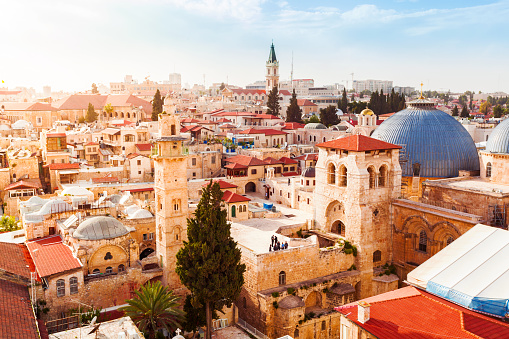
It is hard to fully comprehend how much lasting impact one single human life can accomplish.
Think of just David’s brief lifetime.
Three thousand years ago he lived and died—yet today millions and millions of people read, quote, memorize, gather comfort and hope, and sing the words he wrote in the Psalms.
Three thousand years ago he lived and died—yet today billions and billions of people think about, revere, love, and want the city he founded and built as the capitol city of God’s people. Jerusalem, David’s city, is in most newspapers and TV news reports and on the web daily!
In fact the two final wars on this planet (Revelation 16 and 20) will both be fought over control of David’s city that is also God’s city named—Jerusalem!
So David’s life has accomplished something that touches most people on earth daily! That is astounding, and just one more reason we have spent this year seeing David’s life through the lens of Scripture.
Today we begin to look at the conclusion of David’s life. When David comes to the end of his long and event filled life, it was not a worn out body that caused his death, nor was it the lack of medical care. It was God’s appointed time.
Listen to the words of Job who lived nearly 5,000 years ago, recorded perfectly for us by God in His Word, the Bible. Job 14:1-5
“Man who is born of woman Is of few days and full of trouble. 2 He comes forth like a flower and fades away; He flees like a shadow and does not continue. 3 And do You open Your eyes on such a one, And bring me to judgment with Yourself? 4 Who can bring a clean thing out of an unclean? No one! 5 Since his days are determined, The number of his months is with You; You have appointed his limits, so that he cannot pass.
Our life time is not set by how carefully we guarded our health through diet and exercise (yet God commands us to be disciplined and not reckless in our physical lives); nor is our lifetime extended by physicians (though God commends to us proper health care). Our length of days has been determined by God alone.
As we open to 1 Kings 2:1-2 we will begin to see the elements David models in what I am calling, “Dying Gracefully”.
Now the days of David drew near that he should die, and he charged Solomon his son, saying: 2 “I go the way of all the earth; be strong, therefore, and prove yourself a man.
The first element we find as we look at David’s final recorded moments is that David is gracefully unafraid of death because he was saved, redeemed, and thus prepared spiritually. He was open and exemplary in his instruction to his son. David is unafraid to initiate talk about his death. He had taken time to prepare for death, and then he talked about it clearly with his son (and probably many others) and by God’s Spirit even to us!
How did David come to this place of spiritual preparation for death? He was sure about the destination of his soul.
Remember what we saw back in Psalm 31:5?
 Psalm 31:5 Into Your hand I commit my spirit; You have redeemed me, O Lord God of truth.
David knew he was redeemed—bought and paid for by God. Because of that confidence, he declares his life is held by God’s Hands.
The key to dying gracefully is to be certain that our immortal spirit is safely sealed and kept by God. Our future destiny is in His Hands, not a doctor’s, not a terrorist’s, and certainly not in ours. So a secured spiritual life is the first key to dying gracefully.
Jesus reflects this certainty as he went to the cross. And calmly at His final moment He says in Luke 23:46 those same words of David.
Luke 23:46 And when Jesus had cried out with a loud voice, He said, “Father, ‘into Your hands I commit My spirit.’ ” Having said this, He breathed His last.
Spiritual certainty like David’s is faith in what Christ’s work on the cross accomplished. Jesus defeated death; Jesus delivered us who trust in Him. The writer of Hebrews notes that part of Christ’s work on the cross was to deliver us who come to Him from the fear of death.
Please turn with me back to Hebrews 2:14-18 and this morning review again what happened at Christ’s cross.
Stand and read.
Hebrews 2:14-18 Inasmuch then as the children have partaken of flesh and blood, He Himself likewise shared in the same, that through death He might destroy him who had the power of death, that is, the devil,15 and release those who through fear of death were all their lifetime subject to bondage.16 For indeed He does not give aid to angels, but He does give aid to the seed of Abraham.17 Therefore, in all things He had to be made like His brethren, that He might be a merciful and faithful High Priest in things pertaining to God, to make propitiation for the sins of the people.18 For in that He Himself has suffered, being tempted, He is able to aid those who are tempted.
Pray
If you have been born again, Jesus has released you from the fear of death.
Christ’s work is finished, the power of death is destroyed, the price of sin is paid, the power of an endless life is yours and mine in Christ.
Have you come to the place in your spiritual life that you know that you are His? That your soul is held by God? That your spirit clothed immortal will make its flight to realms of Glory? That is dying gracefully
Fanny Crosby’s (1820-1915) words often flow through my heart as I think of this reality. That blind poet, hymnist and saint triumphantly affirmed her hope in Christ as resurrection and life!
All the Way My Savior Leads Me
All the way my Savior leads me; Oh, the fullness of His love! Perfect rest to me is promised In my Father’s house above.
When my spirit, clothed immortal, Wings its flight to realms of day, This my song thro’ endless ages: Jesus led me all the way;
This my song thro’ endless ages:
Jesus led me all the way.
So first, David made the most important preparation, he was spiritually certain of his salvation. As we turn back to I Chronicles 22:14 we will find the second element of David’s graceful preparation for death–David surrendered to God the ownership of all his material possessions before his death. By that I mean David had made sure that none of the normal things that tie most people down to the earth were tying him.
1 Chronicles 22:14 “Indeed I have taken much trouble to prepare for the house of the Lord one hundred thousand talents of gold and one million talents of silver, and bronze and iron beyond measure, for it is so abundant. I have prepared timber and stone also, and you may add to them.
One of the most amazing elements of David’s life is how he viewed his immense wealth.
As we studied many months ago in the message called “David’s Legacy—what he left behind” we saw that David was perhaps the wealthiest person who has ever lived. He very well may have surpassed all the Pharaohs and other ancient kings in sheer magnitude of wealth. But that is not the key. What amazes me and instructs me is what David did with his wealth.
He carefully gathered it, safely stored it and very consciously gave it away to God. The record of that final gifting to God by way of his son Solomon is very touching in and of itself. But seen in the light of all that David experienced and then captured in the Psalms we see a pattern.
I am often reminded that wealth is like stored time from the past. My present use of wealth saved from the past is a way to give part of those years now gone—to the Lord. Look at 1 Chronicles 22:14 again. Note that David took much trouble to prepare. This was the premeditated murder of any materialistic desire in his heart.
He wanted his stored up time of his life, measured by his wealth to reflect his great love for God. So he was very careful to direct his wealth while he was alive, into the hands of God.
David had learned what Jesus spoke so forcefully about in His Sermon on the Mount. Money is the monitor of our heart. At any time in life, our view of our money reflects the condition of our heart. The entire section of Matthew 6:19-24 is all about one area of life. Who owns our material possessions—us or God.

Matthew 6:19-24 “Do not lay up for yourselves treasures on earth, where moth and rust destroy and where thieves break in and steal;20 “but lay up for yourselves treasures in heaven, where neither moth nor rust destroys and where thieves do not break in and steal.21 “For where your treasure is, there your heart will be also. 22 “The lamp of the body is the eye. If therefore your eye is good, your whole body will be full of light.23 “But if your eye is bad, your whole body will be full of darkness. If therefore the light that is in you is darkness, how great is that darkness! 24 “No one can serve two masters; for either he will hate the one and love the other, or else he will be loyal to the one and despise the other. You cannot serve God and mammon.
This graceful preparation of our personal wealth before our death is a real challenge to each generation of Christ’s Church throughout the ages. Once, a wealthy Christian plantation owner invited John Wesley (1703-1791) to his home. The two rode their horses all day, seeing just a small part of all the man owned.
At the end of the day the plantation owner proudly asked, “Well, Mr. Wesley, what do you think?” After a moment of silence, Wesley replied, “I think you’re going to have a hard time leaving all this.”
The plantation owner was attached to the world he was in. Wesley was attached to the world he was going to.
It is very hard for a believer to die when they have wealth that is not surrendered to Christ’s control.
Jesus told us that believers who lay up treasures on earth spend their life backing away from their treasures. To them, death is loss.
Jesus also told us that believers who lay up treasures in heaven look forward to eternity; they are moving daily toward their treasures. To them, death is gain.
Any believer who spends their life moving away from their treasures has more and more reasons to despair. Those who spend their life moving toward their treasures have more and more reasons to rejoice.
How are you doing with all of your physical, material, earthly possessions? Are they surrendered as tools given back to God’s control? Or are they treasures held tightly?
David died gracefully because he took much trouble to surrender the control of all his material possessions to God as tools in God’s Hands.
Is the passing of time causing you and me to despair or rejoice? God’s ownership of everything is the reference point for all of us who serve the Lord. Century by century the greatest servants of God in Christ’s Church have said nearly the same thing about their wealth. They have each battled with materialism and put it to death by conscious obedience to Christ’s claims upon their lives and material possessions—whether little or much. Listen to their voices affirming Christ’s words and David’s.
And so it is that when a man walks along a road, the lighter he travels, the happier he is; equally, on this journey of life, a man is more blessed if he does not pant beneath a burden of riches. ~Tertullian (155-230 AD)
Let temporal things serve your use, but the eternal be the object of your desire. ~ Thomas A Kempis (1380-1471)
I have held many things in my hands and I have lost them all. But whatever I have placed in God’s hands, that I still possess. ~Martin Luther (1483-1546)
Whatever good thing you do for Him, if done according to the Word, is laid up for you as treasure in chests and coffers, to be brought out to be rewarded before both men and angels, to your eternal comfort. ~ John Bunyan (1628-1688)
I value all things only by the price they shall gain in eternity. ~ John Wesley (1703-1791)
I place no value on anything I possess except in relation to the kingdom of God. ~ David Livingstone (1813-1873)
And finally, from modern times, we often miss something in the 29 year old missionary martyr Jim Elliot’s (1927-1956) famous words, “He is no fool who gives what he cannot keep to gain what he cannot lose.” We focus on his willingness to go to the mission field. That willingness started when he surrendered all of his material possessions into Christ’s Hands, and thus relinquished his hold on things as no longer MINE!
God’s kingdom and control over all of life was the reference point for David and these saints mentioned. Paul in Acts 13:36 (David’s Epitaph) reminds us that David wanted to fulfill God’s purposes and did. So David and these heroes of the faith saw all else in light of the kingdom. They were compelled to live as they did not because they treasured no things, but because they treasured the right things.
David had paid a high price to prepare materials for the advancement of God’s Kingdom. In his lifetime he was generous with his wealth. He gave, encouraged and supported many in his realm. But behind all that he did was this long term strategy to be involved in what God was doing that would extend beyond his lifetime. He distilled down moments of his life into wealth that would be used as he directed in the promotion of God’s goals. He amassed building materials for Solomon.
An application for us remains–if we diligently prepare the materials, others after us may build. God asks all of us to live obediently in this life. But within that obedience come choices and David’s choices blessed the Lord and brought an endless reward. The fact that David wrote and sang these 71 plus worship Psalms for the Lord is so powerful.
David’s whole life was involved with worship and praise, singing and teaching of God’s wonders.
So should ours.
So how can David’s spiritual preparation impact our view death? In I Kings 2 we saw that David calls death “the way of all the earth”—it was a reminder to even young Solomon that death is universal and inevitable.
David was saved or redeemed, the first element of his life we see at death. Then he surrendered the ownership of his life and treasures back to God. There is one final element that made David unafraid to end well and die gracefully. Death was the way out of earth for him and into the dwelling God had prepared for him. It was early in his life, most likely as a shepherd boy that the real foundation for dying gracefully was laid.
Turn with me there to the last half of the 23rd Psalm. Death to David was not an unknown, it was not a mystery—it was an appointment. The third element we find as we look at David’s final recorded moments is that David sees death as an appointment with his Good Shepherd, who we know is Jesus.
Even the greatest enemy—death, was disarmed before David. He could dine (a wonderful picture of his fellowship with the Lord) even in the presence of death, the end of all we know of this earthly part of life.
Psalm 23:4-6 4 Yea, though I walk through the valley of the shadow of death, I will fear no evil; For You are with me; Your rod and Your staff, they comfort me. 5 You prepare a table before me in the presence of my enemies; You anoint my head with oil; My cup runs over. 6 Surely goodness and mercy shall follow me All the days of my life; And I will dwell in the house of the Lord Forever.
David had reservations in Heaven. It was where his God lived, and a place was prepared for him and he was following his guide through life into the valley, through the shadows and safely home,
Many times over the years I have stood at bedsides in hospitals, emergency rooms, and hospice arranged homes—and shared these same words.
Death is an appointment for all who know Jesus, with their Good Shepherd. Jesus comes to take us through the valley of death’s shadow. We have an appointment already set by Him (Hebrews 9:26) and neither we nor He shall ever be early or late.
When a loved one dies whether we make it there in time or not—the Good Shepherd does make it. He arrives exactly on time and takes His beloved by the hand and walks them safely home.
So David was not afraid of death, he spoke openly about his appointment with His Good Shepherd Jesus who was coming to get him. But such hope and confidence does not removed from us the pains associated with death—just the fear is removed by faith and trust in Jesus.
All the Way My Savior Leads Me
All the way my Savior leads me; Oh, the fullness of His love! Perfect rest to me is promised In my Father’s house above.
When my spirit, clothed immortal, Wings its flight to realms of day, This my song thro’ endless ages: Jesus led me all the way;
This my song thro’ endless ages: Jesus led me all the way.
Check Out All The Sermons In The Series
You can find all the sermons and short clips from this series, David’s Spiritual Secret here.
Looking To Study The Bible Like Dr. Barnett?
Dr. Barnett has curated an Amazon page with a large collection of resources he uses in his study of God’s Word. You can check it out here.