If the video above is not available, here are two other ways to view:
140622AM
ESH-20
Kingdom Living.docx
Biblical Exercises for Spiritual Health & Fitness in 2014 Series
The Discipline of Disciple-Making: Seeing, Understanding, Entering, Living & Seeking the Kingdom of God
Acts 17-20
Transcript
Let’s open our Bibles to the book of Acts, and as you’re turning there, you see on the screen that we’re in the midst of our Biblical Exercises for Spiritual Health in 2014. And that, a long time ago, started in 1 Timothy chapter 4, and we looked at the Apostle Paul training Timothy how he was to make disciples, disciple train in the church at Ephesus, actually where Timothy was serving at that time. And we got all the way down to 1 Timothy chapter 4 verse 11, and we got to the component of discipleship was training and teaching. And when we got there, we started this journey through the discipline of disciple-making and started in Matthew 28. And I said that Matthew 28 just spilled right into the book of Acts, and we saw the Gospel being presented. We’ve come now to the component probably that’s least understood. And what’s so amazing is what we’re looking at this morning is going to connect together the four Gospels, the book of Acts, and flow right into all of the epistles. It’s the unifying element that we find that ties together the message that Christ gave with what He commissioned disciples to with what the early Church was taught. Now this long title is for a purpose. What we’re looking at is this is the tie, the discipline, back to 1 Timothy 4, disciple-making is the element we’re looking at it. We’re defining disciple-making the way the Bible does. In Matthew 28, making disciples is evangelism. Evangelism. Go into all the world and make disciples, is not to get church members but to lead people to Christ. Because after they’re led to Christ, you baptize them and then you teach them to observe all things that they’ve been commanded. So, the making disciples is in the language of the Great Commission, an evangelism element. And then we’ve come to this because this is the least known element of the plan of salvation, I would say. In fact, if we did a quiz this morning, most people would not have this on their paper. If I said, how do you present salvation most frequently in the book of Acts, it’s presented as seeing, understanding, and then entering, and living, and seeking every day this kingdom of God. That is not normal for us.
So, that’s why we’ve gone to Acts chapter 1. Now, I want you to look in Acts chapter 1, because when we were born again, we became citizens of Heaven. Salvation was when we entered and began to live in the kingdom of God, but we’re still living on Earth now. See, there’s the tension of the Christian life. The instant we were saved, Colossians 1:13 says that we were transferred from the kingdom of darkness and conveyed, that’s the word Paul uses, into the kingdom of God’s dear Son. Salvation is when God takes a person out of their original family—you, of your father, the devil, of the god of this world—and conveys them out of that family and places them into a new family. That’s why it’s called the new birth. Our first birth only gets us Hell; our second birth from above is a conveyance by God into His kingdom. See, that’s how they presented the Gospel.
They said, you were born a pagan, you were born godless, and aliens, and strangers, and enemies of God. All of us were. Many people don’t think so. They think I’m kind of Christian. I’m fourth generation something, and from a very Christian nation, but it doesn’t matter. Every baby born in every hospital or home is born a pagan god enemy. No matter how much they coo and smile, they are, we are. And only if God takes us through regeneration and pulls us out of what we were at birth and conveys us into the kingdom of His dear Son can we be saved. So, that’s why they presented salvation that way. And so, the tension between our citizenship in Heaven—when God puts us into His kingdom—and our stay on Earth, because we don’t get evacuated. The instant of salvation, God doesn’t beam us up, to use the old Star Trek thing. Beam me up, Scotty. No, we stay here on this Earth around people that are still lost, among people that are conveyed into the kingdom. But there’s a tension for us.
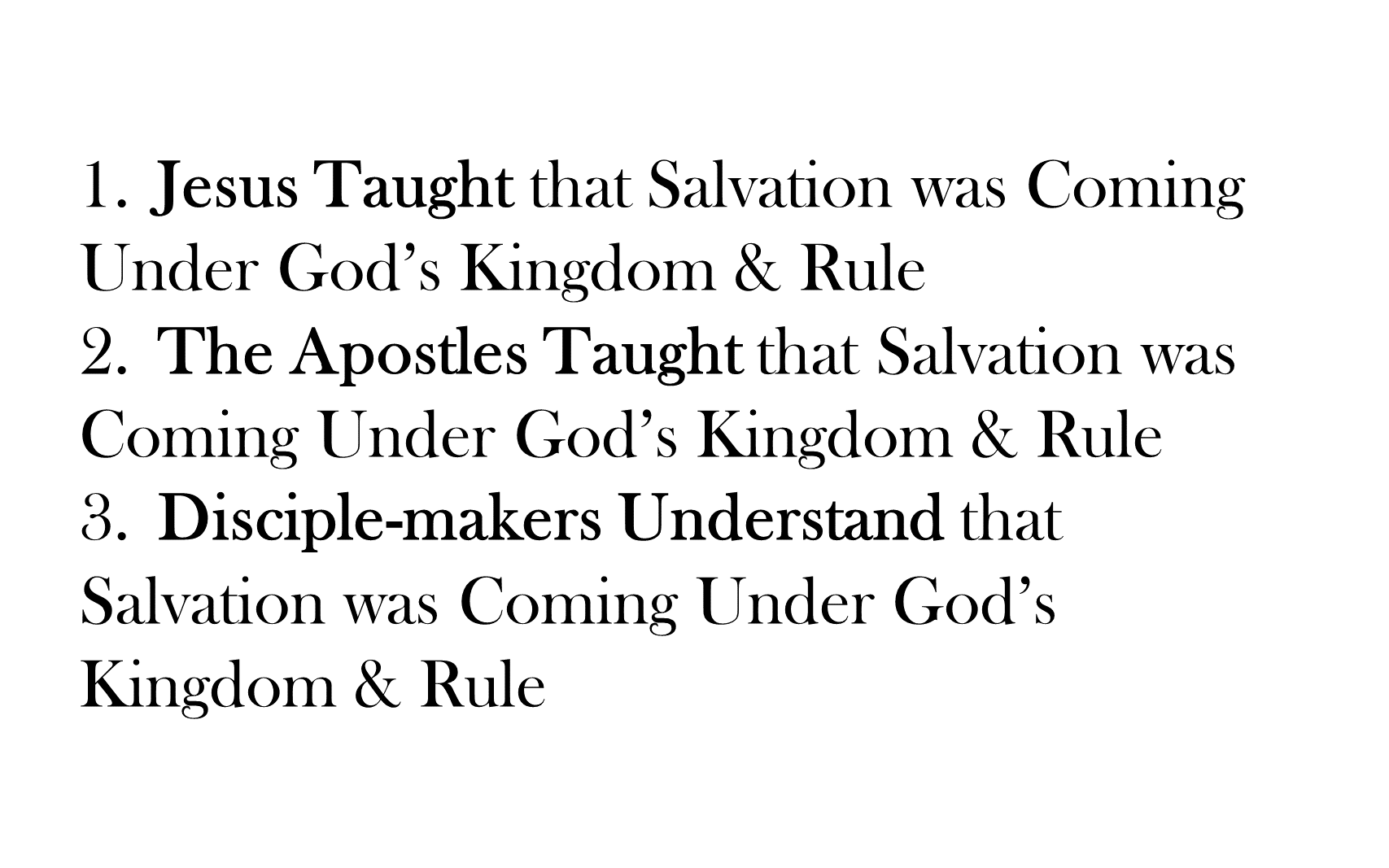
And there are three truths that we can discern from our texts this morning. And I want to show them to you. I’m going to go through them with you. And for some people they like when you walk in some place, you like to look for a hook to hang things on. Here are three hooks to hang. In fact, for some of you that pass out early in the… And I watch you; I can tell, I know who’s who around here because I’ve been watching you for years. Some people, you only get the first three or four minutes, and they’re off somewhere else. I know they are. You can just tell they’re looking off. I don’t know if they’re on the golf course or at the grocery store. Here are the three things. So, if someone asks you at lunch what church was about, number one: Jesus taught. That’s the biggest. Jesus taught salvation is coming under God’s kingdom and rule. Did you know that? Did you know that when people heard Jesus present salvation, they went, are you kidding? No way. I don’t want that. Because they understood what He was saying. He’s saying, you have got to reject your first birth. You have got to confess you are on the edge headed to destruction. You’re sitting in blindness on the edge in mortal, infinite danger of Hell. And you have got to confess and forsake that origin and allow Me to convey you under my rule. Salvation is only for those who are under God’s kingdom rule, and that is something we invite when we call on the name of the Lord, when we ask Jesus Christ to save us, Jesus taught, we’re saved.
Okay, so the apostles heard that, and guess what they taught? Salvation is coming under God’s kingdom and rule, and we’re going to see it all the way through the book of Acts. That’s just how they taught it. They didn’t teach it the way it’s taught nowadays. See, that’s the whole problem. We have a salvation that Peter, and Paul, and John, and Christ—nowadays being promoted as Christianity—that they wouldn’t recognize. They’d go, where did that come from? It came from a gradual detachment that people have to what Jesus taught. And they say, “Wait a minute, the Gospel is, that’s for the Jews. It’s kind of. Isn’t it, it’s kind of kingdom, it’s Israel stuff. Yeah. You can’t, why that stuff’s, I mean, Jesus died in the Gospels, but boy, all the stuff He taught, that’s not for us.” That’s actually believed in evangelical churches across America. Then they look at the apostles, and they say, oh, what they taught in Acts couldn’t possibly have anything to do with us. And so, we have to have a simpler Gospel that doesn’t offend people, and confuse people, and mix people up. And they think, and what they do is they present a form of grace. What is grace? It’s God giving us something we don’t deserve. But it’s always attached to mercy, which is God not giving us what we do deserve. And if someone never knows what they deserve, they won’t ever appreciate what they don’t deserve. And that’s why kind of “The Way of the Master” thing, if you don’t tell them that they were born hopelessly lost and then announce to them that salvation is when you get conveyed into a brand-new family and are born again. Not when you pray something, not when you decide something, not when you have something done to you by water or whatever, but when the miracle of the new birth, the conveyance, Colossians 1:14, from one kingdom of darkness to another, the kingdom of His dear Son. Jesus taught, apostles taught, disciple-makers understand that salvation was coming under God’s kingdom and rule. Did you know that?
That’s why a lot of people try and disciple people who aren’t saved and they go, it’s not working. They don’t understand the Bible. They don’t have any hunger. They don’t hate sin. They’re not repenting of their sins. There’s no change in their life, but they keep on discipling them. What they need is the Gospel. Discipleship, as far as training, doesn’t work if you haven’t been conveyed into the new kingdom, because the kingdom of God is where all this Book operates. It comes with a new heart, and a new spirit, and the power of the Spirit of God to change us.
So, this description of salvation unites the four Gospels with the book of Acts and the epistles through the repeated message of the kingdom of God. Now, look what was preached in Acts. If you step back and look at all 28 chapters, the book of Acts is this: salvation was presented to people living in the Roman Empire. Does that matter? Yeah, because everywhere the New Testament was written from and to, was in the Roman Empire. That’s the backdrop. They already understood the idea of being in a kingdom. They were in Caesar’s kingdom. They knew he was Caesar, and they knew that any resistance was crushed. They’d seen the legionnaires, they knew. And so, to those people, salvation is presented as entering a new kingdom, God’s kingdom. And becoming a subject of a new King, Jesus, is that, remember we saw last week that the people said, they’re saying that there’s a new King. They’re not going to follow Caesar. They’re following a new King. See? That’s the Gospel, and the pagans heard it, and they didn’t want it. They liked their old kingdom, and being under a whole new way of life, which could be called kingdom living. And see, everything that God expects from us, and wants from us, and desires for us, and offers us, He’s written down and preserved. And He, every time we take the time to open this Book and invite His blessing, He speaks to us His Word. Amazing! Jesus taught salvation was coming under God’s kingdom and rule. That’s a summary of the four Gospels.
Now you’re in your Bibles, you’re in chapter 1 of the book of Acts. We’re going to read the first three verses, and as we do, I think you might bump into something. I’m going to read it real slow and emphasize some words. Until I started really excavating the book of Acts, I never noticed the third verse. I know it was there. I know I’ve read it a hundred times, literally, but I didn’t notice what it said until I started daisy wheeling all this kingdom of God stuff through the book of Acts. And I kept going, where did that start? Where did that start? I was backing from chapter 28, and I got to chapter 1, and I went, oh! It started in chapter 1, verse 3.
So, let’s invite the Lord to teach us as we stand together. Stand with me with your Bible. Follow along. I’m going to read it, and you just read your translation, and look at what he says in that third verse: the former account I made, O Theophilus, of all that Jesus began both to do and to teach. Now look up for a second. You know what that means? That’s the book of Acts [Luke]. See, this is a two-volume set. He’s talking about, Luke is talking, saying Acts [Luke] was all about everything Jesus began both to do and to teach. Okay, now look down at verse 2. Until the day, which He was taken up, and through the Holy Spirit had given commandments to the apostles whom He had chosen. Now, verse 3, to whom also He presented Himself alive after His suffering by many infallible proofs, being seen by them during 40 days and speaking of the things pertaining to the kingdom of God. That’s the part I didn’t notice. Do you see it? What did Jesus, what was the last lesson before He ascended to Heaven? He said, disciples, apostles, I want you to understand. And for 40 days, speaking of the things pertaining to the kingdom of God.
Let’s ask Him to teach us about that this morning as we bow. Father in Heaven, thank You for Your Word. Thank You for the power of Your Word, that if we will by faith open our hearts, that You can transform us by the truth of Your Word. You can sanctify us by Your truth because Your Word is truth. We can receive Your engrafted Word, which saves our souls, feeds our souls, and sanctifies our lives. I pray that You would open the eyes of our understanding, that today we will even more be willing subjects to You, our King, as we live out every day of our life, inviting You for Your kingdom to come in our lives. O Lord, teach us the implications. Bless us as we study. In the name of Jesus we pray, amen.
And you may be seated. As you’re seated, it seems that the theme and content of what Jesus Christ asked His disciples to go out and share was a continuation of what He’d already taught and explained. Look at verse 3. He presented Himself, verse 3, alive after His suffering. So, He says, hey, I really rose, and He showed them many infallible proofs. Verse 3 continues, they saw Him during these 40 days. Did you know that after the Resurrection Sunday, Jesus stuck around from that Friday, for a period of enough time to make Resurrection Sunday be culminated 50 days later by Pentecost, and Jesus stayed through within 10 days of Pentecost. He stayed 40 days before His ascension. That’s, there was only 10 days between Christ ascending and the day of Pentecost. And so, it’s astounding, actually, so that means there’s 10 days between chapter 1 and chapter 2 in the book of Acts if you want to do the math.
But what Jesus explained in His teaching was the kingdom of God. That’s what it says in verse 3, the kingdom of God. Now, you know what? First thing, some people come up with a little hangup. They say, oh, what’s the kingdom of Heaven? Because Matthew uses the term kingdom of Heaven. Mark, Luke, and John, and Acts use kingdom of God. Basically, Jesus is saying what He says in Matthew: unless you’re born again, you’ll not see the kingdom of Heaven. Mark, and Luke, and John say, unless you’re born again, you won’t see the kingdom of God. He was using kingdom of Heaven, Matthew was, as he was writing that Gospel, because it was targeting an audience—Jews. And Jews related to kingdom of Heaven. They knew what that meant. Pagans, who didn’t know any background, Old Testament understanding, they understood God and kingdom. And when you put those together, they understood, so it’s the same thing. So, basically, after verse 3, the apostles began to teach that salvation was coming under God’s rule. You say, how do you know that? It says it in those verses.

Let’s go there. Let’s go to Acts chapter 8 and verse 12, and I’m going to show you how many times they describe entering God’s kingdom as what the New Testament believers presented as they swept across every town of the ancient Roman world. And wherever they lived, and worked, and traveled, and most of all, wherever they were serving God, everywhere at any time they could, they presented a kingdom message.
Now, it gets a little confusing nowadays, and we’re going to get a little bit more into this when we get into chapter 19 of the book of Acts. But a lot of times people, when they talk about a kingdom message, they’re talking about some power evangelism. It is powerful, and it is evangelism, and it is a kingdom message, but it’s the Gospel. And the Gospel of God is the power of God unto salvation to everyone that believes. And so, they went out, and if we watch this kingdom message in Acts, we realize that this message is nothing less than a continuation. It’s just what Jesus began to preach. There’s no disconnect between the Gospels and Acts, and there’s no disconnect between the Gospels, Acts, and the epistles. And so, there’s no disconnect between us and what Jesus taught during His three-and-a-half-year ministry; it’s the same message.
See, some people artificially carve it all up in a Jeffersonian way. Remember how Jefferson didn’t like parts of the Bible, so he cut them out? And he actually has the Jefferson Bible, which is everything that he approved of, his imprimatur. That’s not the way you look at the New Testament. God sent Jesus Christ, as John the Baptist his herald says, repent, the kingdom of God is coming. Jesus said, the kingdom of God is here. It’s Me, and I’m the King, and I’m going to die for you. And if you want in on it, you have to enter My kingdom. Now, look how he said, look at chapter 8 verse 12, because this is fascinating. And when they had believed Philip as he preached the things concerning the kingdom of God. Woo. What’s the Gospel that Philip taught in the city of Samaria? Look at how it’s described. He preached the things concerning the kingdom of God and the name of Jesus Christ. He said, Jesus is the One that you enter the kingdom of God through. He is the Door. His life as the Good Shepherd was given for you. If you will eat Him, if you’ll drink Him, if you’ll partake of Him, if you will follow Him (there’s so many metaphors and pictures of salvation and the Gospel message), then you will enter the kingdom of God and have endless life. Philip just talked to them about the kingdom of God. Philip, who came straight from the Jerusalem church, Philip, who was an apostolic-affirmed early servant of Christ’s Church, declared the truths that Christ’s kingdom were a part of the message of salvation.
And people that embrace Christ, look what it says at the end of verse 12, and both men and women were baptized. They affirmed with that outward act of the inward transformation that Christ had done to them. Now, remember we covered last week you don’t need to be baptized to go to Heaven. You never have to be baptized. You’ll get there disobediently, but you don’t have to be baptized. So, on Fellowship Sunday, if you haven’t been baptized, you can continue to disobey the Lord and not be baptized. Okay? That’s what, I’m following up on Dan’s announcement. But those who wanted to show that they were in the kingdom, that they had been born again, that they’d been conveyed from the kingdom of darkness into the kingdom of His dear Son, they testified that through their obedience in baptism.
Okay, look at the next one. It’s up there. It’s Acts chapter 14. So, turn to the right, verse 22. Now Paul is winding down his first missionary journey. Paul has gone and proclaimed the Gospel in places, he’s bravely gone where no one had gone before, and he’s preaching the Gospel out there in the Roman Empire among the pagans. And Paul, strengthening the souls of the disciples, exhorting them to continue in the faith, and saying, we must through many tribulations enter the kingdom of God. Now what’s fascinating about that is Paul here describes both the beginning and the end result of salvation as the kingdom of God. He says, when you get saved, you enter the kingdom of God. And when you enter the kingdom of God, you’re going to go through many tribulations until you enter the kingdom of God, which is Heaven. So, you see, it’s like we’re transferred from the kingdom of darkness into the kingdom of His dear Son—that’s the kingdom of God. But we are fitted as vessels and are preparing to go to the ultimate place of God’s rule, which is Heaven. But he says, look at this. He says, you will through many tribulations enter the kingdom of God. It’s that we have to suffer many afflictions for being a part of God’s plan, of His kingdom, of His work.
Now, Paul would probably not have been welcomed in many modern churches. In fact, Paul would not have been allowed to preach this kind of stuff in a lot of churches because they only want positive stuff, and it’s the health, wealth, and prosperity Gospel that you get saved, and everything’s going to get better and better and better. And you’re going to get healthier and healthier and healthier, and richer and richer and richer. And you’re just going to be able to tell God everything you want, and you’re going to get it if you have enough faith. And if you don’t come and give me some money, buy my book and you’ll learn how to have more faith, and have a big car. And usually these proponents of health, wealth, and prosperity are very opulent and displaying, trying to affirm their Gospel. Paul says, no, you come to Christ, you’re going to go through many tribulations, Acts 14:22, as you enter the kingdom of God.
Keep going. The next one is chapter 19 verse 8. And this is fascinating because in 19:8 it says, and he went into the synagogues. This is the launch of Paul’s ministry in Ephesus, and we’re going to come back to this and cover the whole passage. He spoke boldly for three months in the synagogue. How did Paul in Acts 19, founding the church the letter to the Ephesians was written to, how did Paul present the Gospel? See, that’s what I think is fascinating. Look at what it says in verse 8: he reasoned and persuaded concerning the things of the kingdom of God. He said, you’re in the wrong kingdom. Your kingdom that you were born into is headed for destruction. You need to be transferred, conveyed to this kingdom. You can’t convey yourself. I can’t convey you. Joining the fellowship won’t convey you. Getting baptized won’t convey you. You have to cry out to the King Himself and ask Him to save you, which means uproot you, transform you, and place you by the new birth of regeneration into His kingdom. Do you understand how Paul, have you ever heard anybody presenting the Gospel like 19:8, reasoning and persuading people with the things of the kingdom of God? That just is foreign to us, and maybe that’s why some of the people we share the Gospel with never get conveyed. You understand that. We have a multitude of people that say, “Oh, sure, that sounds great to me. Yeah. Oh, who wouldn’t want that?” But there’s no supernatural change because we present a human Gospel, that they do something, that they try harder and try and believe harder. Instead of saying, hopelessly, cast yourself at the feet of the King and say, I ask for Your grace and mercy. Don’t throw me into Hell. Give me what I don’t deserve. Allow me into the kingdom of Your dear Son. See, that’s what Paul was doing for three months.
We’ll keep going to chapter 20. This is the other end of His ministry. Now he’s done with three years of ministry in Ephesus. In chapter 20 in verse 25 you see right up there Paul now is saying this, and indeed, now I know that you all, among whom I have gone preaching the kingdom of God, will see my face no more. Paul summarizes his entire three-year ministry in Ephesus as saying, I was preaching to you the kingdom of God. When you read the book of Ephesians, it’s what Paul taught them about the kingdom of God. The kingdom of God is how Paul describes salvation, the Gospel, and the work of Christ forming His Church. Paul distilled down His nearly three-year ministry in Ephesus as preaching the kingdom of God. Think of the content of those epistles as you read them as being about the kingdom of God.
Now go to the next one, the end. See, this is where this started with me. I was finishing up reading the book of Acts again, and I get to 28, and I looked at verse 23, and it says, so when they had appointed him a day, this is Paul, he’s finally made it to the Italian Peninsula headed to Rome. He’s sailed in this shipwreck and all that stuff, and he’s staying in this rented house. And they appointed him a day, and many came to him in his lodging, to whom he explained, verse 23 says, and solemnly testified of the kingdom of God, persuading them concerning Jesus both from the Law of Moses and the Prophets, from morning till evening. Paul, when he got together a group of people and share the Gospel, he talks about the kingdom of God. Now keep going, the end, verse 31, because Paul at the end of his public ministry on those missionary journeys, as he’s sitting in Rome, he’s starting to write the epistles back from his imprisonment to Ephesus and Colossae and Philippi. He describes his message as being about the kingdom of God. Verse 31, preaching the kingdom of God and teaching the things which concern the Lord Jesus Christ, verse 31 says, with all confidence. The last time we hear about Paul in the book of Acts, his last words are describing what he taught, and affirmed, and preached as being things about the kingdom of God and the implications that has on humans for salvation.
Now go back to chapter 19. That’s where we’re starting this morning. You say, starting? Oh yeah, we’re on a trip here. There are 22 Gospel presentations in the book of Acts. This, for those of you that are counting, is number 18. Okay? So, we have in verses 8 through 20, the eighteenth presentation of 22. Now that should be cause for hope. In fact, I told first service, if I had a dollar for every time someone came up to me and said, how much longer are we going to be in the book of Acts? How long? How long is this discipleship? If I had a dollar for every one of those, I could get one of those Hummers too that all the Prosperity Gospel people have. But we’re going through examining what salvation is, and what we find is it’s never described in exactly, precisely the same way because every person is uniquely called, and convicted, and drawn out of the kingdom of darkness. And each one is conveyed into the kingdom of His dear Son, and God does it. And what we see is all the different things He does.
And this one in Acts 19 right here, this is how it’s described. Salvation is entering God’s kingdom. So, if you have never entered God’s kingdom, the Scriptures say, you’re not saved. Following God’s way. Jesus said, follow Me, I am the Way. And the early believers all the way through the book of Acts are called followers of the Way. They entered God’s kingdom, which means they’re following God’s way, which people follow instead of their own way. See, that’s what repentance is. It’s a change of mind that I don’t want to go that way anymore. It’s, boy, it’s headed to destruction. It’s headed to the blackness of darkness, suffering the vengeance of eternal fire. I don’t want that. O Lord, I want You to convey me into Your kingdom. I want You to save my soul. I want You to wash me, cleanse me, regenerate me. And then when I’m saved, I don’t want to follow my own way. I want to follow Yours. So, that’s how the Gospel describes salvation. Now look at chapter 19 starting in verse 8, and I want to read through this because it’s so interesting. You have to look in your Bible because it’s too big a passage, so follow along, starting in verse 8. And he went into the synagogue and spoke boldly for three months, reasoning and persuading concerning the things of the kingdom of God. So, that’s how he started. But when some had hardened and didn’t believe and spoke evil of the Way. See, the kingdom of God wasn’t just a thought; it was a Way. It was going somewhere, following Someone. See, it’s a Way; it’s the Way of Christ. And so, they spoke evil of the Way before the multitude, so Paul departed from them, withdrew the disciples, and he reasoned daily in the school of Tyrannus. Verse 10, and this continued for two years, so that all who dwelt in Asia heard the word of the Lord Jesus, both Jews and Greeks.
Now verse 11, this is fascinating. Now God worked unusual miracles by the hands of Paul. Now that should start you thinking, unusual. These were extraordinary. Oh, what were they? Unusual miracles by the hands of Paul. Verse 12, so that even handkerchiefs—I have one. Now if I was a big time Benny Hinn type, I would sell this. And if you got it, you’d get healed because that’s what they do nowadays. Why? Because look at what verse 13 says. So that even handkerchiefs, or verse 12, even handkerchiefs or aprons were brought from his body to the sick, and the diseases left them and the evil spirits went out of them. Now what is this? This is, verse 11, this is unusual, but it happened. Actually, that word handkerchief wasn’t that nice little white cotton thing I had in my pocket. It was a sweat rag, literally, that’s the Greek word. Paul, as he labored in his leatherworking shop making tents, he would have a rag, and he’d wipe his hands, or he’d wipe his brow, or he’d do both. And he’d set that over there, and he’d get back to work, and all of a sudden, he’d look, and it was gone. Someone had snuck in, grabbed that rag, and took it to their aunt who was dying of something and dreadfully ill, and they put that on her. And she’d sit right up and go, wow, I haven’t felt this good in my life! And they, people all over Ephesus—that was a huge city, you ought to see the excavations today, that was a massive city—and people all over Ephesus were hearing about this leatherworker that lived in town, right there working. And you could come in and watch him. And some people got so bold, when Paul went to lunch, he took off his apron and would set it down at the place he worked and would go off to talk over the Scriptures with people at lunch. He’d come back and he’d go, oh, another apron gone. And it, someone had hauled it off to heal their mother or something. But you know what’s interesting?
Look down at verse 12, and all of these supernatural miracles were going on around Paul. Now, let me ask you, if you look down at verse 12, what chapter of Acts is this in your Bible? Say it out loud, 19. Okay? So, in chapter 19, the Apostle Paul has these supernatural signs and wonderous power that even handkerchiefs, aprons healed people. When is the last time Paul has that power? It’s in the Bible. It’s in chapter 28. The very last time Paul has that power that he can make disease leave people. He can make evil spirits, just take a cloth and touch them, and they’re better. Chapter 28, about the year AD 58. For the next six or seven years of Paul’s life, he doesn’t have that power. He doesn’t? He wrote half the New Testament! He was led to Lord by Christ Himself! Why, he said all the signs and wonders of an apostle he had. Yes, he did, but they were unusual. They were not for the duration of the Church that. Can you imagine if we really could empower handkerchiefs, if we could really do that, people would be tempted to start charging for it, and they do. It doesn’t work, but they still charge. Someone ought to return them. You ought to return all those handkerchiefs that Oral Roberts sold over the years, that purportedly were him having the power of an Apostle. Paul could not heal Trophimus; he left him sick. He could not heal Epaphroditus; he was sick near unto death. He could not even heal his beloved son in the faith, Timothy. When Timothy was so sick that he couldn’t pastor, and Paul says, you need a little wine for your stomach because you’re so sick all the time, why didn’t he just FedEx him a handkerchief? Have you ever thought about that? That’s not what we’re on today, but I thought since we went by it, I would talk about it.
So, go to verse 13, and some of the itinerant Jewish exorcists took it upon themselves to call the name of Lord Jesus over those who had evil spirits. They said, we don’t have an apron, but we’re going to try this ourselves. And they said, we exorcise you by Jesus whom Paul preaches. And there were seven sons of Sceva, a Jewish chief priest, who did so. And the evil spirit answered and said, Jesus I know, and Paul I know; but who are you? You see, it’s interesting in the demon world, in the spirit world, they know who’s who. They know who has called on the name of the Lord, who has been conveyed because they’re uprooted out of their kingdom and brought into the kingdom of His dear Son, and the very Spirit of God lives within us. Demons can see the Spirit of God. They know who’s who. These demons said, you’re still in our kingdom. You’re not over there.
And look what happens. This is cute. Verse 16, the man in whom the evil spirit was leaped on them, one man overpowered seven of them, and prevailed against them, so that they fled out of that house naked and wounded. Wow! Verse 17, this became known both to all Jews and Greeks dwelling in Ephesus; and fear fell on them all, and the name of the Lord was magnified. Isn’t that amazing? What they saw is genuine spiritual power that God was at work. And it says at the end of verse 17, and the name of the Lord Jesus was magnified. By the way, Paul teaches us the secrets of having a church that honors what God wants done, and the first thing is the name of Jesus will be magnified. You notice the name of Paul wasn’t magnified? Did you notice that the name of the Ephesian church wasn’t magnified? That it was all about Christ and people were drawn and Christ was preeminent and exalted?
And many, look at verse 18, many who had believed came confessing and telling their deeds. They said, wow, we used to be in that kingdom of darkness, and he has saved us out of that. And verse 19, some among them said, and many of those who had practiced magic. Magic. See, anything that has power, and that power is not directly from God, is not from God, it’s from the devil. He’s the god of this world, and he’s trying to always charade as God and confuse people, and he can even have people like the magicians in Egypt and everything else. But they had been involved in that magic, and they brought their books together and they burned them in the sight of all. It was a complete purging of all wickedness in their lives. Anything attached to that old kingdom of darkness, any of those books and any of that stuff that had to do with the darkness, and the magic, and the occult, they burned. And they counted up the value of them, verse 19 says, and it totaled 50,000 pieces of silver. But look at the result. So, the word of the Lord grew mightily and prevailed. God blesses the ministry of the Word that came through purged lives. When those people said, we don’t want anything to do with what we used to do for the glory of the devil. We want everything to do with magnifying Christ and His Word prevailing, and we want lives purged of that stuff. And the Lord just exploded through them. One of the ways that God describes those who believe is they are, as it said at the beginning there, the kingdom of God in verse 8, followers of the Way in verse 9, they were magnifying Christ.
Well, let’s look at the next one because we got to get done. It’s almost time. Go to chapter 20 now. This is, for those of you counting, the nineteenth presentation of the Gospel. So, number 19 of 22, we’re really getting close; that’s hopeful. Salvation is, now look at this, this is hotly contested and it shouldn’t be. Salvation is repentance toward God, faith toward Jesus Christ. It is summarized as the Gospel of grace. What is the Gospel of grace? Grace is God giving us what we don’t deserve. Mercy, a twin of grace, is God not giving us what we do deserve. And you never know you have grace if you don’t realize you have mercy. You got to understand that they’re always connected in the Bible. And that leads—that Gospel of grace, which has repentance and faith, and isn’t a Gospel of grace if it doesn’t have those elements—it leads to people entering the kingdom. Wow! People want to just talk about this. Let’s just talk about a God who’ll forgive you of anything, will love you to the end, and come on, don’t talk about anything else because it’s negative. That’s not the salvation message of the Bible. The salvation message of the Bible is you only get God’s grace because He has already poured out His wrath on Christ for your and my sins. And if you will cry out to the One who bore the wrath of God and ask Him, He will convey you out. But He only conveys those out who have repentance toward Him, because it’s His kingdom, and have faith toward the sacrifice. Remember, the devils believe the Gospel. They do. They believe Christ died; they watched it. They were sneering and jeering. They believe He was buried. They cheered; Paul said that. He said, if the god of this world had known what was going to happen with Christ, he wouldn’t have crucified. Satan did not understand what was going on, and he was egging on the crucifies. Yay, he finally killed Him. They believe all that. They know He rose; they watched it, but they do not have repentance toward God. They do not have faith toward Jesus Christ as their Savior. They have not received this unmerited, undeserved favor, and they are certainly not entering into God’s kingdom as willing subjects. That’s how the Gospel is presented in Acts chapter 20.
Let’s read it. It says, starting in verse 21, testifying to the Jews and Greeks, repentance toward God and faith toward our Lord Jesus Christ, and Paul continues. By the way, this is Miletus, he’s saying goodbye to the Ephesian elders at the other end of his ministry there. And he says, I go bound the spirit to Jerusalem, not knowing that things will happen to me there, except that the Holy Spirit testifies in every city, saying that chains and tribulations await me. But none of these things move me; I do not count my life dear to myself, so that I may finish my race with joy. Now, watch this. I have the verse up here because there’s some interesting things in here. Again, you notice the repentance and faith is here. Then he starts describing his life. He says, I want to finish my race. This is Paul describing his life. This is an interesting word. This is the Greek word agon. We get an English word out of it by putting a Y on the end of it: agony. You know what Paul called his Christian life? That’s why he would not be welcome at the health, wealth, prosperity places. He said, life as a Christian is agonizing. Why? Because everybody in the world is in this kingdom. I have been moved over to this kingdom, but I still live in the same world with them. And they are enemies of God, and when they realize who I belong to, they’re enemies to me because I represent God. He said, it’s agonizing, but I do it with joy. The ministry I’ve received from the Lord Jesus Christ to testify of the Gospel of the grace of God. That’s, the Gospel is that God has shed His grace upon us. While we were still sinners, Christ died for us. And indeed, I know that you all, among whom I have gone. And look at, this is how Paul described what he taught for three years, preaching the kingdom of God. You saints, who came into the kingdom of God, you’re not going to get to see me anymore because he was being taken away.
Real quickly, and I mean real quickly, here we go. Jesus preached, and I’m just going to go through these. Let me show you what Jesus preached in the Gospel. Okay?

Number one, this is His first sermon, Jesus’ first time coming up to the microphone. From that time on, this is after Christ was baptized in chapter 3, He is tempted so far in chapter 4. Now He’s gone out starting His ministry. He began to preach and say, repent. Now notice how Matthew calls it. The kingdom of Heaven is at hand. So, Jesus said, hey, the kingdom of Heaven’s at hand. I’m here. I’m the King. I’m going to suffer for you. Want to enter My kingdom? You got to follow, and believe, and repent, and come to Me. And Jesus went about all Galilee, verse 23, teaching in their synagogues, preaching the Gospel of the kingdom. If you want to partake of the Gospel, you got to enter the kingdom. The kingdom has a King, and you’ve got to willingly submit and become a subject to Him.
So, look at Mark’s version of the same event. Remember I told you, preaching the Gospel of the kingdom of God, and then in quotes, Jesus, the time is fulfilled. The kingdom of—notice—God instead of Heaven. Because this is Romans; Mark was written to the Romans, and Jesus is presented as this Servant, and they would understand the kingdom of God. But look at what Jesus said the entrance ticket is when He preached the Gospel of the kingdom and He said, the time is fulfilled. Here’s the kingdom of God. Do you want to enter it? Repent and believe in the Gospel. That’s salvation, and that’s how Jesus presented it, and that’s not often how it’s presented nowadays.
But continue, the next chapter. Now remember, I said this is all connected. Jesus said, blessed are the poor in spirit, for theirs is the kingdom of Heaven. Okay, we know the kingdom of Heaven is salvation. We know that means eternal life and your Father’s, the house My Father’s preparing for you. So, we go to dwell in His house forever, so that’s Heaven. Who gets there? What’s this? What’s poor in spirit? There are three kinds of people in the ancient world. There were rich people, there were day laborers, and there were beggars. A beggar, which is this word, by the way, was someone who didn’t even have enough food for today, so they sat starving with their handout, and they begged. The middle group were day laborers. They had food left over from yesterday. They ate it in the morning, then they went out to work with a lunch they took with them and worked all day. At the end of the day, they got paid. My daughter, one of my daughters, works in a hospital in Honduras, and one of her jobs is she pays the day laborers, and they work all day long at the hospital. All this a hundred and some people that do everything, and they hold their hand out at the end of the day, and she gives them their pay. I said, what do they do with it? She said, they go right out the front gate, and they’ll buy a chicken, and they’ll buy a little, some eggs, and they buy some flour or whatever, and they walk home, and they make dinner, and they have enough for the next morning, and they take a lunch with them, and they come back to work. That’s the middle group, the day laborers. So, there’s beggars, there’s these day laborers. Then there are the rich, that’s the third group, and the ancient world had all three. The rich were people that didn’t have to work today to eat. They had enough laid up that they didn’t even have to go to work. They could eat, maybe they could eat two days, maybe they could go a whole week. What does that make every one of us in this room? We’re rich! We’re self-sufficient. What did Jesus say? Only people going to Heaven are the beggars, not the people who are self-sufficient, not the people who can earn it themself. If they work hard enough, only those who are absolutely impoverished and from the kingdom of darkness. They say, I can never get out of this, I have sinned against You, I beg You, I’m poor in spirit. Jesus said, you call on Me, you get to go the kingdom of Heaven. And blessed are those who are persecuted for righteousness’ sake. Once you get into My kingdom, you’re going to be persecuted because they don’t like Me, and they don’t like you either. Rejoice, you’re going to Heaven. And if you break and you don’t follow what I have written down during your life, let’s say you say, I’m going to Heaven, but I’m going to live like I want, you’re going to be called least in the kingdom of Heaven. So, there is a connection between how we behave here and what we get there. And Jesus said, but if you do and teach what is in My Word, if you live out My commandments and love Me enough, you’ll be called great in the kingdom of God. And I say to you, unless your righteousness exceeds the righteousness of the scribes and Pharisees, you won’t even go to Heaven. What’s He talking about there? The scribes and Pharisees were out cutting leaves off their plants, counting every tenth leaf and giving them to God, and people said, I could never be that fastidious in my righteousness. And Jesus said, even if you were, that’s not enough to go to Heaven. You got to be a beggar. You got to say, I can’t do it myself. So, that’s how Jesus presents the Gospel. Then He says this. Notice He preaches in 4, repent, enter the kingdom of God. In 5 He says, this is what you look like. You’re beggars, and you’re doing what I want, and you’re trusting Me now.
In 6 He says, the priority is seeking the kingdom of God. That’s seeking salvation, that is willingly entering the kingdom of God by faith and asking, and receiving, and believing that He’s the King and you’re His subject. And His righteousness, the imputed righteousness of Christ, and everything else, that’s all that matters. If you’ve got that, everything else that you need in life will be added to you. Okay?
So, Jesus though builds on this the next chapter. Jesus preached, only people who submit to God’s rule go to Heaven. Now see, that’s in conflict with how the Gospel is presented in some places today. There is this notion that you can pray a prayer, and you can, to the end of your life, become a Muslim, a Jehovah’s Witness, a Mormon, and a transvestite, and anything else you want, and God’s got to save you because you prayed when you were two years old. Mm-mm [no]. That’s not in the Bible, by the way. That’s false. Jesus said only people who submit to God’s rule go to Heaven.
When did He say that? Next chapter, chapter 7. Not everyone who says to Me, Lord, Lord, I’m tithing my plants, is going to enter the kingdom of Heaven. They don’t get saved. Who is saved? Those who do the will of Another. That’s why we are called slaves, servants, slaves of God. What’s a slave? Someone that does the will of another. Only those who do the will of My Father in Heaven. Now you say, oh, so you got to be perfect. Yeah. The Lord says you have to be perfect, but it’s not human perfection. It’s Him perfecting us, and the way He does that is there is in our life a decreasing frequency of sin. If you graph the Christian life, our sin axis is going down, and our obedience axis is going up, and there is a measurable, decreasing frequency of sin in our life and an increasing frequency of righteousness because we want. See, the evidence of salvation is you want to do the will of God.
And then Jesus continues, then I’ll declare to them—the people that went to church and did all the rigamarole—I didn’t ever know you. Depart from Me because the core of your life is not, you’re not in the kingdom. You’re still over there. You’re still in the kingdom of darkness. You’re still living life your way on your schedule, and you have all your appetites that you have that aren’t Mine. You practice lawlessness. Therefore, whoever hears these things of Mine and does them, you talk about simple Gospel, Jesus said simple. If you give up, say, I don’t want to be here anymore, cry out, I’ll move you over here, and you’ll want to do My will.
Okay, it’s time to go. Ooh, it’s past time ago. Let’s start over. Paul affirmed and proclaimed Christ’s message, and basically, he said, we’re in the kingdom and those who practice these things.
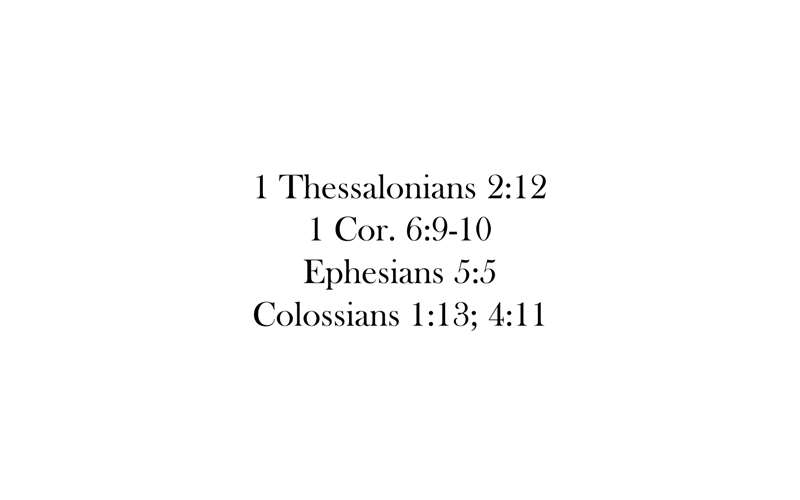
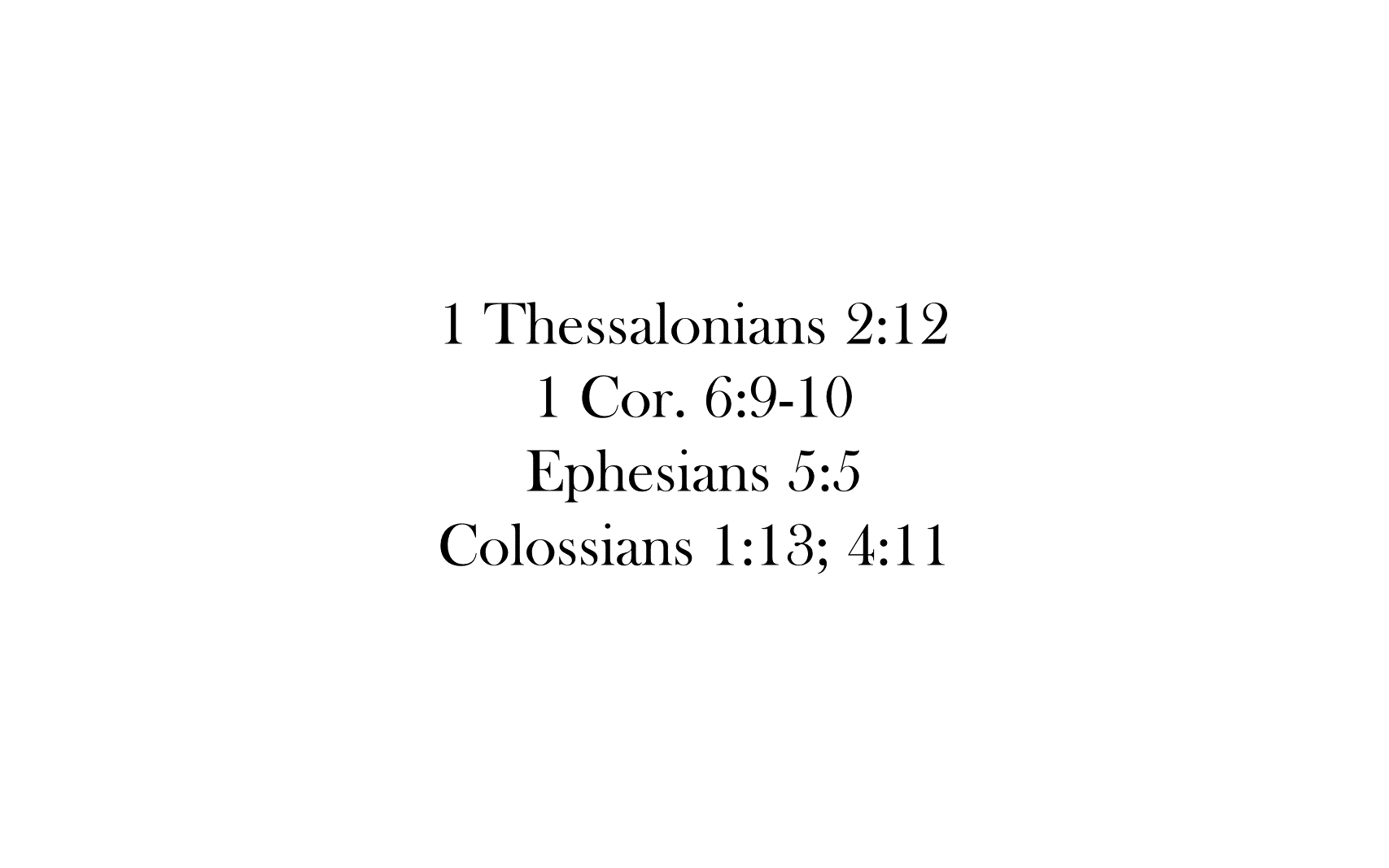
These two verses, 1 Corinthians 6 and Ephesians 5, say that if you are a fornicator or a homosexual, a drunkard, whatever, you can’t inherit the kingdom of God. Colossians says, we’re conveyed from the kingdom of darkness into the kingdom of His dear Son. We become working for the kingdom of God. Paul affirmed all that.


But one last thing. Do you know what else Jesus said? There’s a prayer that reflects those who are in the kingdom, and Jesus said, the way you know you’re in the kingdom, you want to come and ask for help because you realize, You’re the One that moved me over here, and You’re the only One that can keep me over here.

And so, He left this prayer we’re going to end with, and it’s our Father who art in Heaven, focus me on who You are. Thy kingdom come, I want You to control me every day. Your will be done, I want You to lead me through the myriads of life, and that became the prayer of a true disciple who wants God to run their life. So, next time you pray the Lord’s Prayer, you’re praying the prayer that comes from a heart that’s been moved from the kingdom of darkness into the kingdom of His dear Son that says, You are my Father in Heaven, and I want your kingdom. I want to submit to Your ruling my life, and I want to follow Your will, and I want You to supply what I need, and I want You to keep me clean and protect me, and I want to be so empty of myself that You get all the credit for my life.
Let’s stand. I think you know the prayer, and I thought that a great way to end today would be for us to aloud cry out to the Lord and say to Him that we want to submit to His rule as His conveyed-into-His-kingdom followers. So, let’s bow before Him, and repeat after me. Our Father who art in Heaven, hallowed be Thy name. Thy kingdom come, Thy will be done on Earth as it is in Heaven. Give us this day our daily bread. And forgive us our trespasses, as we forgive those who trespass against us. And lead us not into temptation but deliver us from evil: for Thine is the kingdom, and the power, and the glory forever. Amen. And God bless you as you go following the Lord.
Notes
When we were born again, we become citizens of Heaven. Salvation was when we entered and began to live in the Kingdom of God, while still living here on Earth. That tension between our citizenship in Heaven, and our stay here on Earth is what so much of the New Testament is written about.
There are three truths that will transform how we look at our calling here on Earth as believers. These three truths we all need to know if we are to master the discipline of disciple-making. Here are those truths:
- Jesus Taught that Salvation was Coming Under God’s Kingdom & Rule
- The Apostles Taught that Salvation was Coming Under God’s Kingdom & Rule
- Disciple-makers Understand that Salvation was Coming Under God’s Kingdom & Rule
This description of salvation unites the Four Gospels with the Book of Acts & the Epistles through the repeated message about the Kingdom of God. In the pages of Acts, salvation was presented to people living in the Roman Empire (which happens to be everywhere the New Testament was written from and to) as entering a new kingdom: God’s; and becoming the subject of a new king: Jesus; and living under a whole new way of life, which could be called: Kingdom Living.
Jesus Taught that Salvation was Coming Under God’s Kingdom & Rule
Today, join me starting in Acts 1:1-3; and as we walk through this passage we will learn another dimension of disciple-making, which is: “Seeing, Understanding, Entering, Living & Seeking the Kingdom of God”.
Acts 1:1-3 (NKJV) The former account I made, O Theophilus, of all that Jesus began both to do and teach, 2 until the day in which He was taken up, after He through the Holy Spirit had given commandments to the apostles whom He had chosen, 3 to whom He also presented Himself alive after His suffering by many infallible proofs, being seen by them during forty days and speaking of the things pertaining to the kingdom of God.
Pray
It seems that the theme and content of what Jesus Christ asked His disciples to go out and share was a continuation of just what He had already taught and explained in His teachings about the Kingdom of God (the term used by Mark, Luke, John) & the Kingdom of Heaven (the same thing only described with a Jewish term by Matthew).]
The Apostles Taught that Salvation was Coming Under God’s Kingdom & Rule
Entering God’s Kingdom is what the New Testament believers presented as they swept across each town of the Roman world where they lived, worked, traveled, and most of all: served God everywhere and anytime they could. As we watch this “kingdom message” in Acts, we realize that this message is nothing less than a continuation of all that Jesus Christ began to preach and teach as He trained His disciples. The more we learn the discipline of discipleship, the more we will understand how vital this kingdom living component really is to our lives and the lives of those we explain the Gospel to.
Acts 8:12 (NKJV) But when they believed Philip as he preached the things concerning the kingdom of God and the name of Jesus Christ, both men and women were baptized.
Phillip who came straight from the Jerusalem Church, and as an apostolic-affirmed, early servant of Christ’s church, declared the truths of Christ’s Kingdom as part of the message of salvation.
Acts 14.22 (NKJV) strengthening the souls of the disciples, exhorting them to continue in the faith, and saying, “We must through many tribulations enter the kingdom of God.”
Paul here describes both the beginning and the end result of salvation as the kingdom of God, that causes us to suffer many afflictions for being part of God’s team.
Acts 19.8 (NKJV) And he went into the synagogue and spoke boldly for three months, reasoning and persuading concerning the things of the kingdom of God.
Paul started his ministry in Ephesus with the continuation of what Christ preached, what He taught the disciples in those last days before His ascension: the things of the kingdom of God. Paul seemed to use that term to describe what he taught everywhere.
Acts 20.25 (NKJV) “And indeed, now I know that you all, among whom I have gone preaching the kingdom of God, will see my face no more.
Paul distilled down his nearly three-year ministry in Ephesus as preaching the Kingdom of God. Think of the content of the Book of Ephesians as being all about the Kingdom of God.
Acts 28.23 (NKJV) So when they had appointed him a day, many came to him at his lodging, to whom he explained and solemnly testified of the kingdom of God, persuading them concerning Jesus from both the Law of Moses and the Prophets, from morning till evening.
Paul, at the end of his public ministry on those missionary journeys, as he is starting to write epistles back from prison to Ephesus, Colosse & Philippi, describes his message as being about the Kingdom of God.
Acts 28.31 (NKJV) preaching the kingdom of God and teaching the things, which concern the Lord Jesus Christ with all confidence, no one forbidding him.
Again, the last words about Paul is describing what he taught, affirmed, and preached as being things about God’s Kingdom and the implications that has on humans for salvation.
Now, go back with me to Acts 19, as we continue to analyze the messages given in the Book of Acts describing and declaring the way of salvation.
Salvation Is: Entering God’s Kingdom & Following God’s Way, Which People Follow Instead Of Their Own Way
MESSAGE EIGHTEEN (Paul): The next Gospel Presentation is in Acts 19:8-20 where salvation is described as a Kingdom, following a Way, which people follow instead of their own way.
Acts 19:8-20 (NKJV) And he went into the synagogue and spoke boldly for three months, reasoning and persuading concerning the things of the kingdom of God. 9 But when some were hardened and did not believe, but spoke evil of the Way before the multitude, he departed from them and withdrew the disciples, reasoning daily in the school of Tyrannus. 10 And this continued for two years, so that all who dwelt in Asia heard the word of the Lord Jesus, both Jews and Greeks. 11 Now God worked unusual miracles by the hands of Paul, 12 so that even handkerchiefs or aprons were brought from his body to the sick, and the diseases left them and the evil spirits went out of them. 13 Then some of the itinerant Jewish exorcists took it upon themselves to call the name of the Lord Jesus over those who had evil spirits, saying, “We exorcise you by the Jesus whom Paul preaches.” 14 Also there were seven sons of Sceva, a Jewish chief priest, who did so. 15 And the evil spirit answered and said, “Jesus I know, and Paul I know; but who are you?” 16 Then the man in whom the evil spirit was leaped on them, overpowered them, and prevailed against them, so that they fled out of that house naked and wounded. 17 This became known both to all Jews and Greeks dwelling in Ephesus; and fear fell on them all, and the name of the Lord Jesus was magnified. 18 And many who had believed came confessing and telling their deeds. 19 Also, many of those who had practiced magic brought their books together and burned them in the sight of all. And they counted up the value of them, and it totaled fifty thousand pieces of silver. 20 So the word of the Lord grew mightily and prevailed.
One of the ways that God describes us who believe and are saved is that we seek His Kingdom, where He is our King, and we are subject to Him. As John the Baptists said in His first sermon: “repent for the Kingdom of God is at hand” (Mt. 3:2); and Jesus continues in His first sermon (Mt. 4:17), and reinforces in the Sermon on the Mount: “seek ye first the Kingdom of God & His righteousness” (Mt. 6:33); and so this description of salvation continues through the Gospels and into Acts.
Look at how closely tied the Gospel is to the rule of Christ within the lives of believers, described as the Kingdom of God.
Acts 19:8 (NKJV) And he went into the synagogue and spoke boldly for three months, reasoning and persuading concerning the things of the kingdom of God.
This is nothing less than a continuation of Christ’s final lesson at the opening we saw of the Book of Acts in 1:3 (NKJV) to whom He also presented Himself alive after His suffering by many infallible proofs, being seen by them during forty days and speaking of the things pertaining to the kingdom of God.
What exactly would the “things pertaining to the kingdom of God” be? Jesus taught that believers come under the rule of God for their lives. They seek His control over more and more of their lives, until as He said in Mt. 7:22-24, they want to “do the will of My Father in Heaven”.
God’s rule is through Jesus Christ and His Word. Those are the two ways that God is mediating or dispensing His rule. That is the Gospel we preach: believe in Christ, hear His Word, and submit to His rule over your daily life.
Again we see the proclamation of submission to the rule of Christ is at the heart of the Gospel message. Move onward in Acts to the next description of salvation.
Salvation Is: Repentance Toward God, Faith Toward Jesus Christ, & The Gospel Of Grace That Leads To Entering God’s Kingdom.
MESSAGE NINETEEN (Paul): The next Gospel Presentation is in Acts 20:21-25 where salvation is described as repentance, faith, and entering into God’s Kingdom.
Acts 20:21-25 (NKJV) testifying to Jews, and also to Greeks, repentance toward God and faith toward our Lord Jesus Christ. 22 And see, now I go bound in the spirit to Jerusalem, not knowing the things that will happen to me there, 23 except that the Holy Spirit testifies in every city, saying that chains and tribulations await me. 24 But none of these things move me; nor do I count my life dear to myself, so that I may finish my race with joy, and the ministry which I received from the Lord Jesus, to testify to the gospel of the grace of God. 25 “And indeed, now I know that you all, among whom I have gone preaching the kingdom of God, will see my face no more.
Now, look at this amazing continuity we see in the message, from cover to cover in Acts, starting in Christ’s messages. How did Jesus start His ministry? Turn with me to Matthew 4.
Jesus Preached the Gospel of God’s Ruling as King Over People’s Lives
Matthew 4:17,23 (NKJV) From that time Jesus began to preach and to say, “Repent, for the kingdom of heaven is at hand.” 23 And Jesus went about all Galilee, teaching in their synagogues, preaching the gospel of the kingdom, and healing all kinds of sickness and all kinds of disease among the people.
Mark 1:14-15 (NKJV) Now after John was put in prison, Jesus came to Galilee, preaching the gospel of the kingdom of God, 15 and saying, “The time is fulfilled, and the kingdom of God is at hand. Repent, and believe in the gospel.”
Matthew 5:3, 10, 19-20 (NKJV) “Blessed are the poor in spirit, For theirs is the kingdom of heaven. 10 Blessed are those who are persecuted for righteousness’ sake, For theirs is the kingdom of heaven. 19 Whoever therefore breaks one of the least of these commandments, and teaches men so, shall be called least in the kingdom of heaven; but whoever does and teaches them, he shall be called great in the kingdom of heaven. 20 For I say to you, that unless your righteousness exceeds the righteousness of the scribes and Pharisees, you will by no means enter the kingdom of heaven.
Matthew 6:33 (NKJV) But seek first the kingdom of God and His righteousness, and all these things shall be added to you.
What is Jesus saying in Matthew 6:33? That:
Only People Who Submit to God’s Rule Go to Heaven
Matthew 7:21 (NKJV) “Not everyone who says to Me, ‘Lord, Lord,’ shall enter the kingdom of heaven, but he who does the will of My Father in heaven.
Matthew 7:23-24 (NKJV) And then I will declare to them, ‘I never knew you; depart from Me, you who practice lawlessness!’ 24 “Therefore whoever hears these sayings of Mine, and does them, I will liken him to a wise man who built his house on the rock:
Matthew 9:35 (NKJV) Then Jesus went about all the cities and villages, teaching in their synagogues, preaching the gospel of the kingdom, and healing every sickness and every disease among the people.
Jesus trained and sent His disciples at the start of the Book of Acts, as we already saw. That means that the Apostles Heard, Learned & Preached Christ’s Message that God’s Rule Is the Entrance to Salvation. Going on from Acts and into the Epistles:
Paul Affirmed & Proclaimed Christ’s Message that God’s Rule Is the Entrance to Salvation
In Paul’s first epistle to a local church (1 Thessalonians 2:12, NKJV), Paul explains salvation as being called into God’s Kingdom:
that you would walk worthy of God who calls you into His own kingdom and glory
To the Corinthians Paul warned that anyone whose life was an unbroken pattern of slavery to sin would never receive eternal life (1 Cor. 6:9-10, NKJV), with these words:
Do you not know that the unrighteous will not inherit the kingdom of God? Do not be deceived. Neither fornicators, nor idolaters, nor adulterers, nor homosexuals,[a] nor sodomites, 10 nor thieves, nor covetous, nor drunkards, nor revilers, nor extortioners will inherit the kingdom of God.
Paul also explained to the Ephesians the same warning in Ephesians 5:5, NKJV):
For this you know, that no fornicator, unclean person, nor covetous man, who is an idolater, has any inheritance in the kingdom of Christ and God.
To the Colossians that Paul never met, he explains salvation as being placed into God’s Kingdom, and that life is being a fellow-worker for the Kingdom in Colossians 1:13; 4:11, NKJV):
He has delivered us from the power of darkness and conveyed us into the kingdom of the Son of His love, 4:11 and Jesus who is called Justus. These are my only fellow workers for the kingdom of God who are of the circumcision; they have proved to be a comfort to me.
So when Jesus spent those days after the Cross, explaining and teaching the disciples about Kingdom Living, how can we distill that down for us today? One way we could do that is through the most well-known, and most-quoted “Kingdom” passage in the Bible. Remember what we learned about the Lord’s Prayer in Matthew 6?
Jesus Gave the Prayer of Those In God’s Kingdom
Look again with me, now that we understand what the Gospel of the Kingdom of God really means, at the Lord’s Prayer. This prayer is cry to stay each day with the heart’s desire God wants in us, from those who are in the Kingdom of God.
As we turn back to Matthew 6, may I remind you of one of the simplest and yet most profound spiritual exercises that Jesus prescribed for us? The Lord’s Prayer was an exercise designed to keep each of us in step with God’s plan for our lives. Remember that simple prayer?
Matthew 6:9- In this manner, therefore, pray: Our Father in heaven, Hallowed be Your name. 10 Your kingdom come. Your will be done On earth as it is in heaven. 11 Give us this day our daily bread. 12 And forgive us our debts, As we forgive our debtors. 13 And do not lead us into temptation, But deliver us from the evil one. For Yours is the kingdom and the power and the glory forever. Amen.
Christ Wants Us Coming & Asking For Help Each Day
The seven petitions that we are to live by, are found in the natural phrase divisions of this prayer:
God, focus me on who You are.
“Our Father, Who art in Heaven, Hallowed by Thy Name”: Focus me on the reality of Heaven, and the holy scene of constant adoration and worship around the Throne of God in Heaven. Focus my heart, my life, my mind upon You as My King. I bow before You. I adore You. You are the King of My Life. You my God are the Great King of all the Universe. You sit enthroned in Heaven. I bow with all of creation before Him.
As I see You, control me each day.
“Thy Kingdom come”: Control my life is what this petition is all about. Our bowing started when we bowed in the humble repentance of salvation to Him as our Lord, Master, and Savior. I want to live a life of reverent submission. I want to walk in the Spirit, pleasing You my God. I want the life of Your progressive sanctification.
As I seek You to lead me through all the myriads of choices life presents each day.
“Thy will be done on Earth as it is in heaven”: This third phrase bridges the scene of us in Heaven worshipping around the Throne, and us here on Earth growing in our desire to love, serve, and follow our Lord and our God. Lead my steps in your pathway, is My heart cry as the one You redeemed. I need You as my Master to lead me. Show me Your way, and guide me through life.
Then I will trust that You will supply me with whatever I need to accomplish Your will. Then I will know that I need to ask for You to: Cleanse me so I stay in close touch with You and Your plan; and Protect me from everything that seeks to keep me from You; and Empty me so You get all the glory and honor for my life.
So as we live each day Jesus left us with the:
The Prayer of a True Disciple
Focus me back upon who you are as God;
Control me as my Master;
Lead me in doing what pleases You;
Supply me with whatever I need to do Your will;
Cleanse & protect me from anything that displeases You;
Empty me so You get all of the credit from my life.
Please stand with me, and invite God to rule over every moment of our days through that prayer Christ left us to pray!
Our Father in heaven, Hallowed be Your name. 10 Your kingdom come. Your will be done On earth as it is in heaven. 11 Give us this day our daily bread. 12 And forgive us our debts, As we forgive our debtors. 13 And do not lead us into temptation, But deliver us from the evil one. For Yours is the kingdom and the power and the glory forever. Amen.