If the video above is not available, here are two other ways to view:
140803AM
ESH-23
Life of Paul.docx
Biblical Exercises for Spiritual Health & Fitness in 2014 Series
The Discipline of Disciple-Making:
Paul: Used by God to Change the World
Acts 28
Transcript
This morning, we are going to open to the end of the Book of Acts, the last chapter. And as we turn there, we’re looking at the Apostle Paul. And it’s probably one of the most poignant, most touching pictures of Paul. We see him sitting as a prisoner at the end of an incredible career. And as far as the biblical record goes, this is Paul’s passing off [of] the scene of the spotlight that he’s had in the book of Acts. From this point onward, we know very little about his life except he stays in prison, he writes the prison epistles, he writes the pastoral epistles, and finally he is executed. But that’s the end of his public spotlight ministry. Acts chapter 28, and we’re going to start reading in about verse 23. But the theme we’re going to look at is right here that God used Paul to change the world. God used Paul.
In fact, if you look in Church History more than any other person, the Apostle Paul’s fingerprints are all over what we call the Church of Jesus Christ in the world today. We follow the polity that the pastoral epistles teach. We use his epistles as the framework of Orthodox Christian doctrine. Even the way we celebrate communion is the way he said this is how the Lord said it’s supposed to be done in the churches. Paul massively, more than anyone else, impacted the Church and thus has impacted the world.

But why? It’s because God wants to use people. God used Paul. He didn’t need Paul. He used Paul. God wants us to be willing servants. God provides everything that’s needed. He just wants to use people. All God wants is willingness mixed with humility. And by the way, when the Lord finds that mix, there’s no limit to what He can do. In fact, in Paul’s life, Paul had such an overwhelmingly powerful personality that before God could use him in the way that we read about in the Book of Acts he had to train him for almost 14 years. I think that’s a little element most of us don’t think about. We think that Paul sprang from the box and became this ultimate machine. It’s not that way. God took him through stages, increments, training, humbling, refining. In fact, he even had to learn the touch of how to disciple people from Barnabas, no less, because Paul needed to be prepared by God. God wants to use us.
Paul is an example of the limitless ways God can, did, and continues to use Paul. As God already told us in 1 Chronicles 16 in verse 9, His eyes are searching today as they always have been looking for those who will seek Him wholeheartedly. Now, God found in Paul a wholehearted servant. And that’s why when we look through the lens of Luke’s inspired account of Paul sitting there in that little house in Rome, at the end of the Book of Acts, we see a servant who wholeheartedly said, God I will do, I will be, I will say whatever You want me to say. Imperfectly at times. Weekly at times. In distress and tears and suffering and everything we read about. But his heart, he said, oh Lord is completely toward You.
Just the fact that we’re reading this account is quite a testimony of what God can do if we invite Him to control our lives. Because from Paul’s conversion to his martyrdom, he never ceased to serve God. Though Paul, like all of us, was born as sinner when he got saved it doesn’t seem like he ever coasted. A lot of believers, they get this spike and then it seems like they coast. They have the camp experience or the retreat experience and everyone hears about it, and then they settle back. Paul never settled back. He never coasted. He just went on, as he in his own words, ran the race, sought the prize, and finished the course.
As we come to the end of Acts, we look at the final [gospel presentation] and remember there are 22 Gospel presentations where the Gospel is explained or Paul’s sermon is recorded and this is the 22nd. It starts in verse 23. And we have an opportunity as we read these verses to look through this scene and look at the most amazing life recorded in the New Testament. Paul’s life, which covers half the New Testament, is the most amazing life. Perhaps the greatest servant of God in the Bible, we’re looking at, for the last time in public in Acts chapter 28, starting in verse 23.
If you’re there, let’s all stand together and remain standing as we read. Starting in verse 23, all the way to the end of the Book of Acts. And then we’ll ask God to just use this porthole looking into Paul’s life to teach us lessons of how God wants to and can use us today.
Verse 23. So, when they had appointed him a day, many came to him in his lodging to whom he explained and solemnly testified of the kingdom of God. Persuading them concerning Jesus, both from the law of Moses and the prophets, from morning till evening. And some were persuaded by the things which were spoken and some disbelieved. Verse 25. So, when they did not agree among themselves, they departed after Paul had said one word. The Holy Spirit spoke rightly through Isaiah the prophet to our fathers saying, go to this people and say, hearing you will hear and shall not understand. Seeing you will see and not perceive. For the hearts of this people have grown dull. Their ears are hard of hearing. And their eyes they have closed. Lest they should see with their eyes and hear with their ears. Lest they should understand with their hearts and turn so that I should heal them. Therefore, let it be known to you that the salvation of God has been sent to the Gentiles and they will hear it. And when he had said these words, the Jews departed and had a great dispute among themselves. Verse 30. Then Paul dwelt two whole years in his own rented house and received all who came to him preaching the Kingdom of God and teaching the things which concerned the Lord Jesus Christ with all confidence. No one forbidding him.
Let’s bow together for word of prayer. Father, I thank you that we have the privilege this morning of reading Your Word. That it’s written down. That it’s preserved for us. That we hold it. That we don’t just have it in a book on our shelf or in some electronic device, but we actually can hold and comprehend and invite You to speak to us through Your Word, so that we can hear, and not just hear to get more facts, but to hear and to do. So, I pray more than anything else that You would apply Your truth to our hearts and lives today. That as we commune with You at the end of this service through the pictures of Your body and of Your blood that we would likewise offer ourselves willingly, humbly like Paul did, and say God, use me. And I pray You would in Your limitless ways. Use us for your glory. In Jesus’ name, amen.
You may be seated. As you’re seated, I want you to note what Paul explains at the end. What he says in verses 28 to 31 is salvation. This is his last time, in public, that we see in the book of Acts explaining to a group of people the great salvation that God sent him to be His ambassador and representative.
And he says, salvation is entering and living in God’s kingdom. Now, that is a phenomenal way to describe salvation, if you ask me. It is unbelievable that Paul would conclude that the curtain would come down on the stage of his public ministry, and he would describe salvation this way.
Paul’s first proclamation of salvation was very similar to his final proclamation of salvation. And here it is. But what is so astounding is it parallels Christ. Do you think about the fact that Paul tracked with Jesus Christ? And when Paul says right here, if you look at the very last verse, preaching the kingdom of God. Paul is saying salvation is so simple. It’s entering and living in God’s kingdom. And this final proclamation is so connected to Christ’s preaching of the Gospel. Jesus often equated salvation as entering the kingdom. In fact, nine times in Jesus’s public presentations, that are recorded in scripture of the Gospel, Jesus talked about entering the kingdom. In fact, in the most famous one Jesus told Nicodemus in John 3:3 that unless a person is born again, they can’t see. And then in verse 5, they can’t enter (John 3:5) the kingdom of God. See, Jesus said being born again is how we enter, how we see, how we become a part of the kingdom of God. So, salvation, the doorway is the new birth but the result is we enter and become a part of the kingdom of God. So, Paul’s tracking.

And here in Acts 28, Paul’s at the end of his public ministry. We have no more detailed accounts of his travels after this. We have no more eyewitness accounts of how he preached the Gospel. Paul’s life right there in the spotlight of the scriptures is coming to a close. So, how does God close the curtain on Paul’s public ministry? Basically, we could say he’s doing the same thing he’s always done. What did Paul always do? He was always proclaiming Christ. If Paul was chained to soldiers, he was proclaiming Christ. If Paul was standing in front of, as we saw last time, the most notable and notorious people of day he proclaimed Christ. If Paul is a prisoner, if he has to stay under guard in a house rented in the most powerful city in the world, Rome, Paul’s proclaiming Christ. Paul is sitting inside a house somewhere in Rome, the most powerful city in the world. Paul is waiting to be brought before Emperor Nero, one of the most depraved and cruel men in history. And what is Paul doing? Proclaiming Christ. Paul is sharing the Gospel with everyone he can. He invites each one of them, look what it says in verse 31, to enter the kingdom of God. How? Through the only door, Jesus Christ. You notice what it says? The things pertaining or which concern the Lord Jesus Christ. In verse 31 of Acts 28, Paul is proclaiming Jesus is the door. If you enter through Him, you’re in God’s kingdom. You come under the wonders of His rule, the power, the freedom, the security, the peace.
Think about it. This unstoppable message that started in Acts 1, by the way… Jesus introduces the kingdom of God in Acts 1 and says you’re entering in the ministry of extending the kingdom, it goes all the way through Acts 28. But the fact that we’re sitting here this morning is astoundingly a reminder that the kingdom of God is going forward to this day. That the devil, that the adversaries, that all the unbelieving cruel leaders like Nero was, can’t stop the kingdom of God going forward. We’re part of that unstoppable work of God.
Think about how each one of us are connected to Acts 28 in some way, through Paul. Nearly every one of us were led to salvation or trained or taught or encouraged through some part of the New Testament Paul wrote. If you think of your favorite verses outside of the Gospels and a few sprinkled maybe in Peter or Jude, everything else comes from the Apostle Paul. He’s still serving God by ministering to us through his words today.
So, as the curtain closes on Paul in the book of Acts, I want you to pause with me and note what God emphasized about his life. And see, I was just talking with a guest this morning as someone introduced me and was telling me about their discipleship of this person. And I said, you know what? I learned more about Paul, in a different way than I’ve ever learned before, in one single week of looking at his life because here’s why. I want to show you Paul’s life in the way that the Bible presents him to us. And it’s very interesting the way God unfolds his life. And basically, there are three parts or three elements that God emphasizes in Paul’s life.
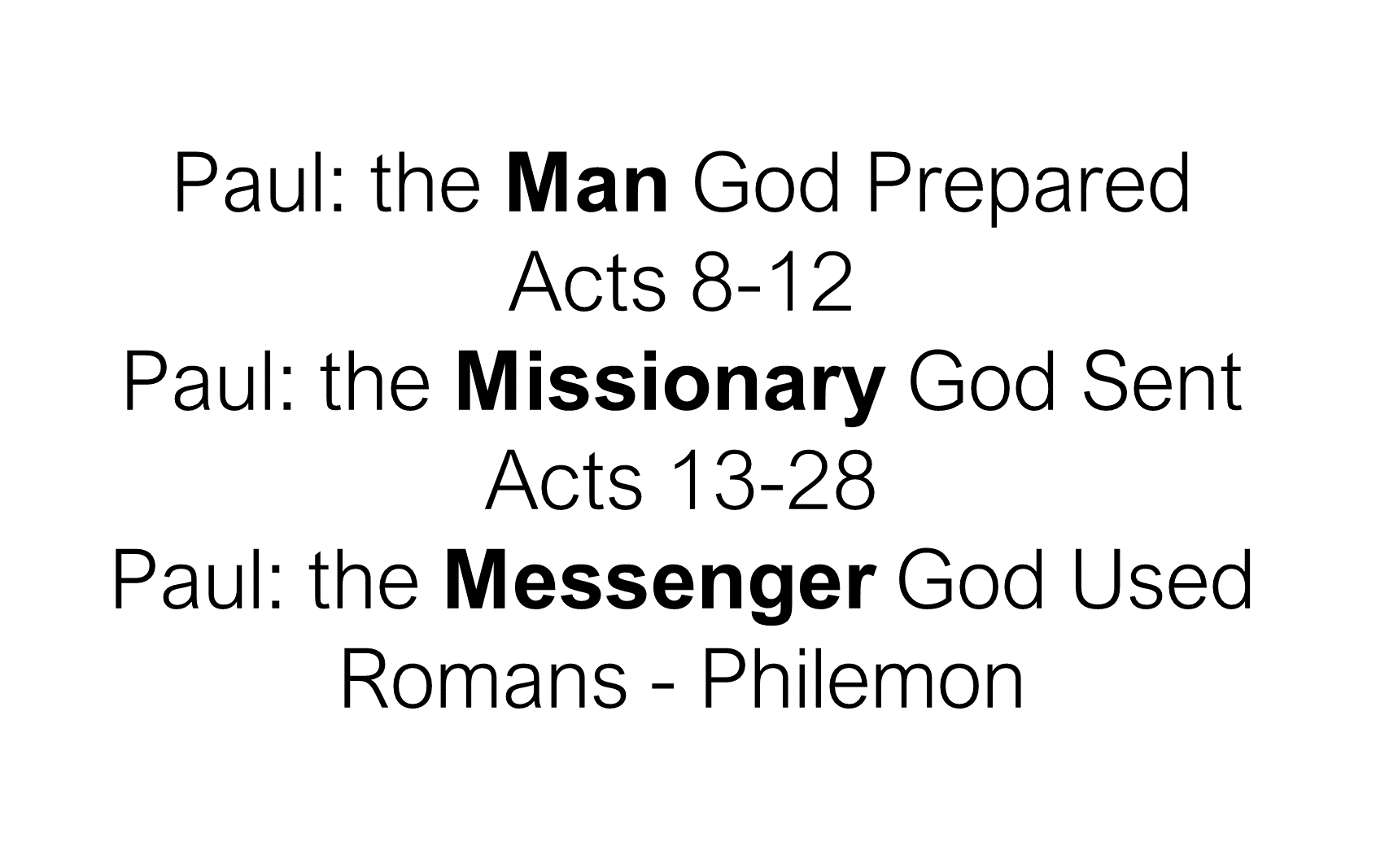
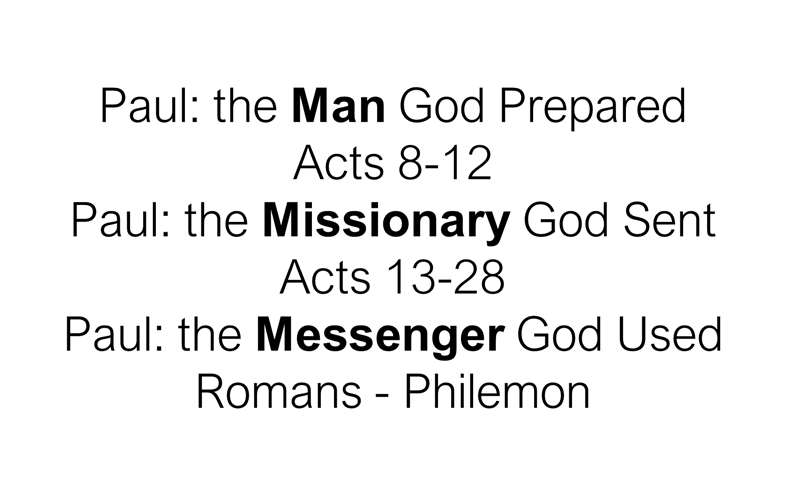
Paul is first of all shown to us as the man that God had to prepare. Then he is shown to us is the missionary that God used. And then He shows us the vast bulk of everything about Paul is, he’s the messenger that God speaks through and He’s still speaking through him today through this book. God used Paul to write half of the New Testament. And every time we open and read and listen, God is using His servant’s life written down, inspired, prompted by the Spirit of God, but through a willing human vessel. The best way to summarize Paul’s life and to get some powerful truths to challenge our lives is to follow the pattern before us in the Bible. Acts introduces us to Paul. And then, the next 13 epistles, by the way from right after Acts starting in Romans all the way through the end of Philemon, that’s Paul territory. That’s Paul’s life message written down. Inspired by God.
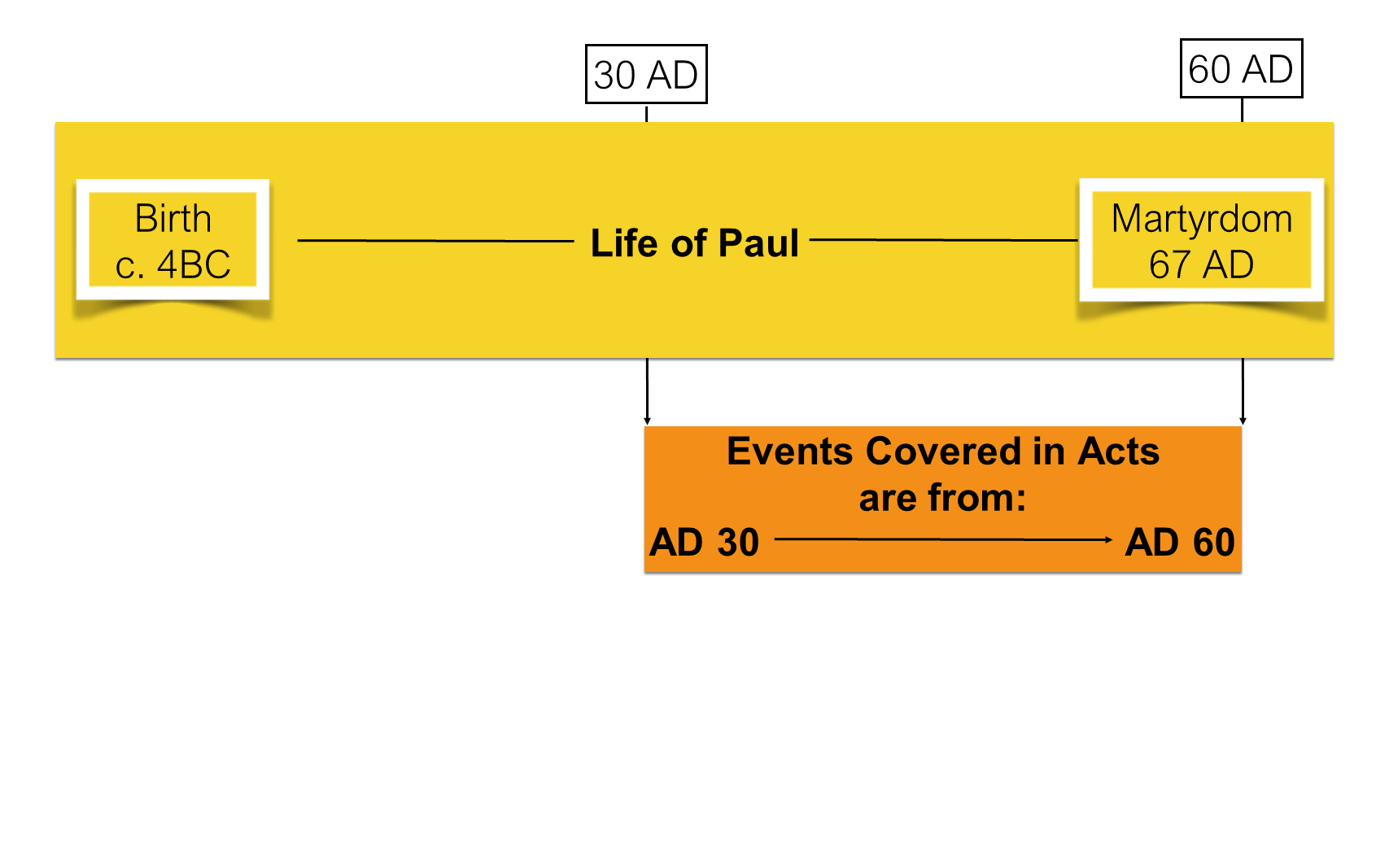
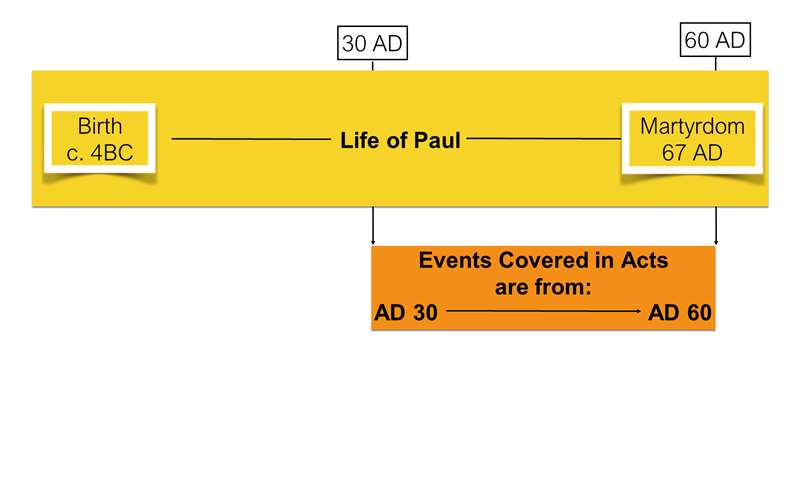
So, if we could take all of these events, if I just summarize half the New Testament in about three minutes, this is what it would be. Most of us know a great deal about Paul. But often we don’t have the time to stop and pull all those pieces together like I got to do this week. From this book of Acts, we can see that nearly the entire life of Paul is laid down in front of us. Basically, if we… and it’s very hard to put on paper or in a chart the life of someone, but Paul was born about the same time as Christ. About 4 BC right here. Paul is martyred before Nero commits suicide. And so, that has to be before 68. So, we say that sometime around AD 67 Paul was martyred. Now, the book of Acts only covers this segment of Paul’s life, these 30 years. Now, Paul is around for a period of time before that. In fact, if he is converted at 33 AD, which is what conservative Bible scholars say, then there’s 37 years of his life that are before Christ. And then, the final years of his life. Those final 34 years here are what we have in the scripture. So, if we were going to summarize all of that just in a snapshot, it would be this.

In Acts 8, Paul is introduced as the adversary of Christ Church. In Acts 9 he’s saved, laying in the dust at Christ’s feet. He’s called personally by Christ to ministry. He’s commissioned. He’s trained in secret alone with Christ in the desert. And then, he’s taken under the wing of Barnabas who disciples and nurtures him. And then, from Acts 12:25 onward, Paul dominates the book of Acts. His ministry is unbelievable. The ministry Jesus left him to do in the world, no one works more tirelessly, no one works more widely, no one has such personal cost than Paul. If you add together all of his travels that are narrated, he walks 3,590 miles. It’s a lot of walking. That’s more than coast to coast, and he does that in 10 years. All that stuff we read in Acts is just 10 years of his life. He sails another, over 5,000 miles. Then he goes to prison for four years. Stands trials. Released for a final journey. He’s captured, imprisoned, and according to Church History he’s executed as a Roman citizen by beheading. So that’s Paul’s life.
Now, let’s look at these dimensions that God gives us of Paul’s life. And basically, they’re this, in Acts 8-12, he’s introduced here, he’s discipled through chapter 12. He is a man God is preparing. Then, those missionary journeys we see. Paul is this missionary that God sends and he never stops. It’s kind of like, you wonder how he fits it all in. But the whole time Paul is this messenger. Sometimes speaking to great groups. Sometimes speaking to individuals. Sometimes sitting quietly, writing. Other times chained in a cell and writing. But he is always God’s messenger that God is using.

First of all: Paul, as the man got prepared. When God saved Paul, I want you to turn there with me. I want you to just track in your Bibles because I think sometimes if we don’t note this, we don’t realize what vast periods of time are in the scripture between verses. In chapter 8, Paul’s introduced in the first three verses but look at chapter 9, that’s when he is converted. And when God saves Paul in Acts chapter 9, the first 22 verses, He was saving the modern day equivalent of an Ivy League scholar, that’s the mental acuity of this guy, with the personal discipline of something like a Special Forces commander. I don’t know if you hear but I listen, Jeff talks about the training that his son Eric is going through, and all this… they have to be in the water until they can hardly stay conscious and they have to forage for food. The one thing that comes as I listen to our American Special Forces training is discipline. You have to totally get your body under control. Paul had the mind of the greatest scholars of the day with the discipline of the greatest person you could ever think of, like a Special Forces or some type of athlete.
But you add to that, what the Apostle Paul rolled into all that was a communicator who could speak and write in such a way it captured people’s hearts and minds. In fact, one time he was speaking in a pagan city, and the people were so moved by what he said. They said, this couldn’t be a human. This is a god posing as a human. And they started sacrificing animals and calling him a Roman god. That’s amazing to think about.
Paul had to be prepared by God and what we see are stages of preparation that God takes him through. Paul was one of those unbelievably gifted, talented package type of guys, but God doesn’t need scholars because God is all wise. He can use scholars that will submit and humble willingly and allow Him to [use them] but He doesn’t need them. You understand that?
God doesn’t need disciplined warriors because God is all powerful and He really doesn’t need our help. But He wants it and He is ordained to use it. But He doesn’t need it. And without it He can accomplish anything because He’s all powerful.
God doesn’t need communicators because God has a voice that’s inescapable. But God can use all those qualities. But He doesn’t need them.
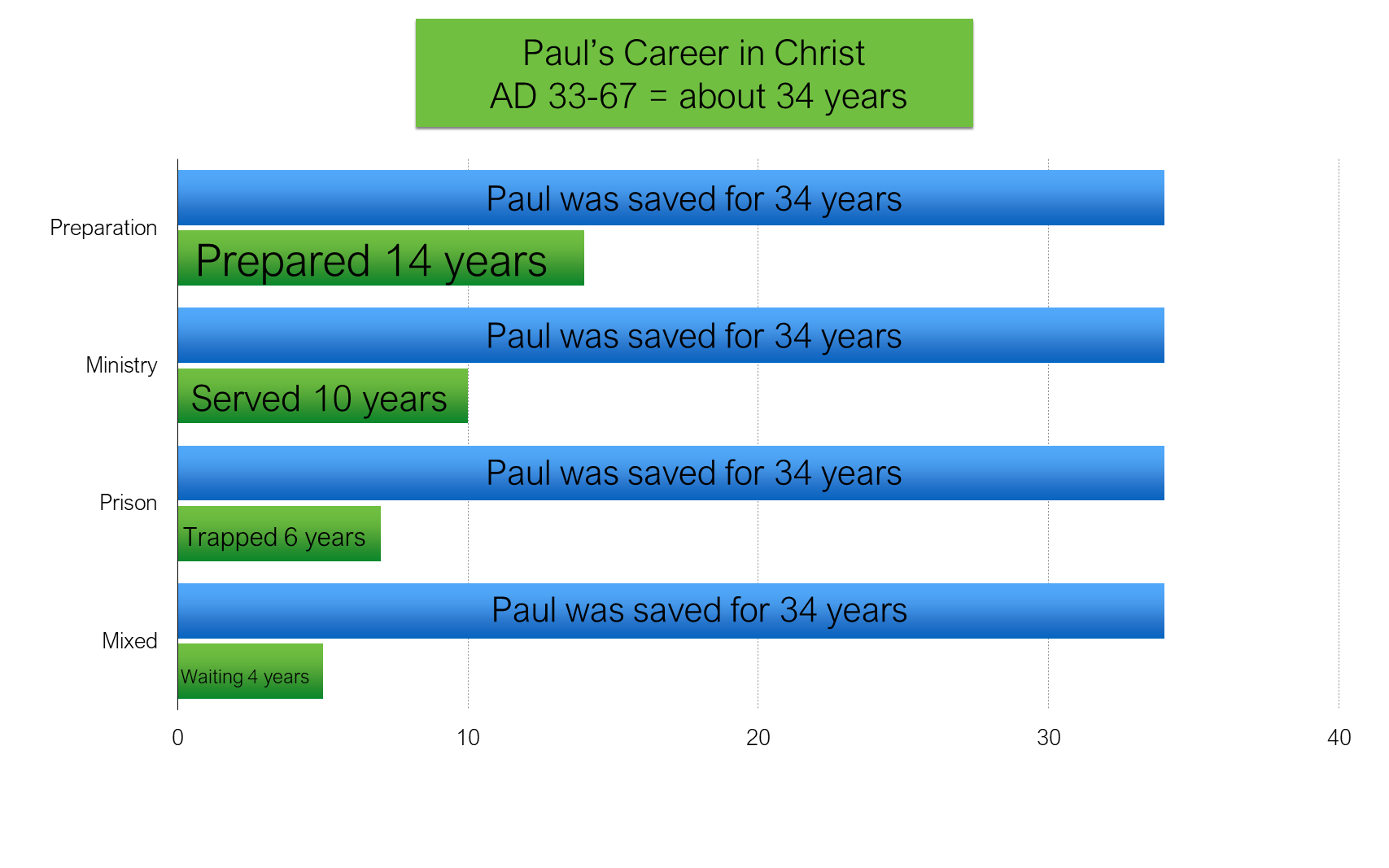
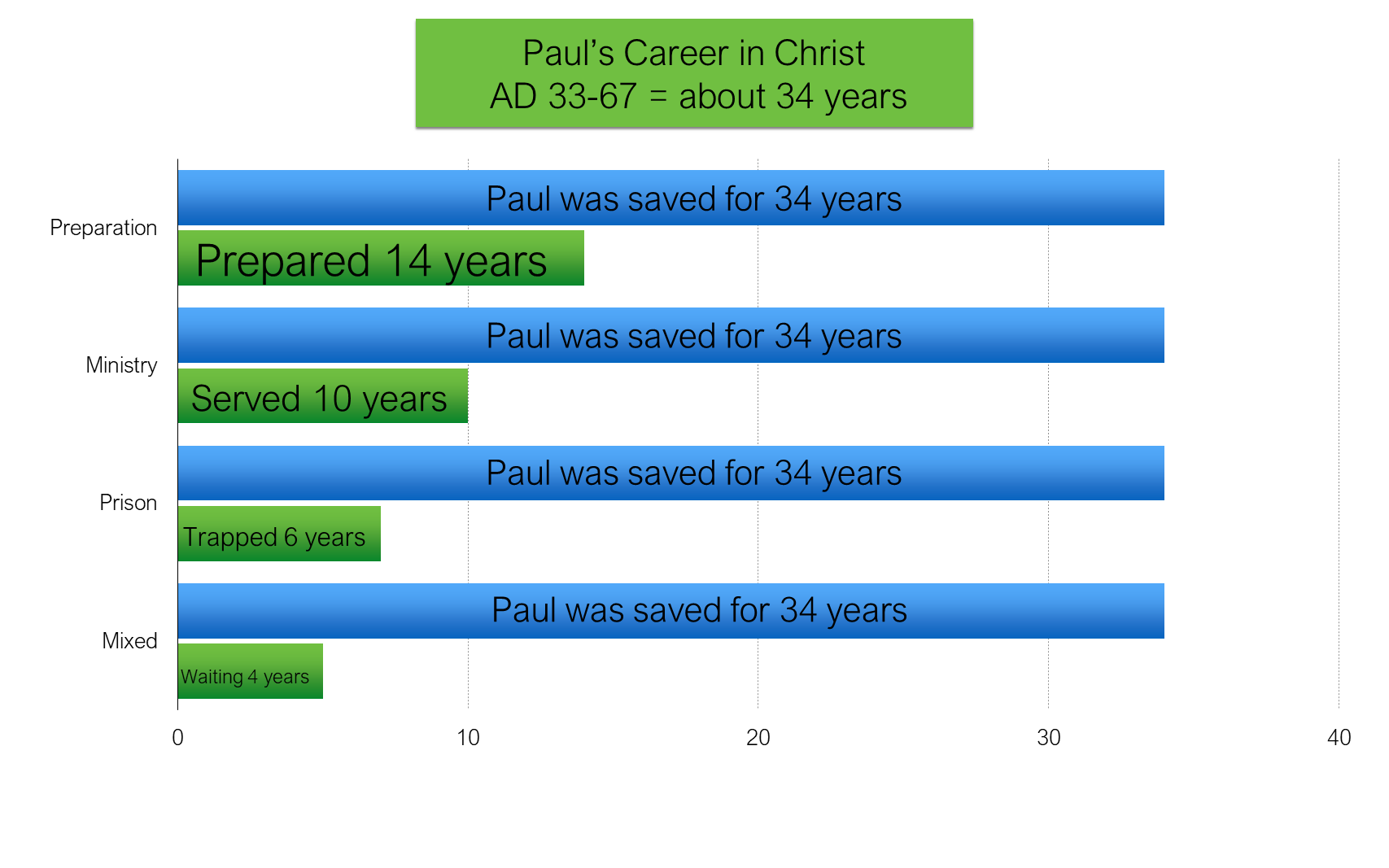
So, to get Paul where he could use him, God had to prepare him. And God’s preparation for ministry is actually the longest segment of Paul’s life. God takes 14 years to prepare Paul for the nearly nonstop 10 years of public ministry.
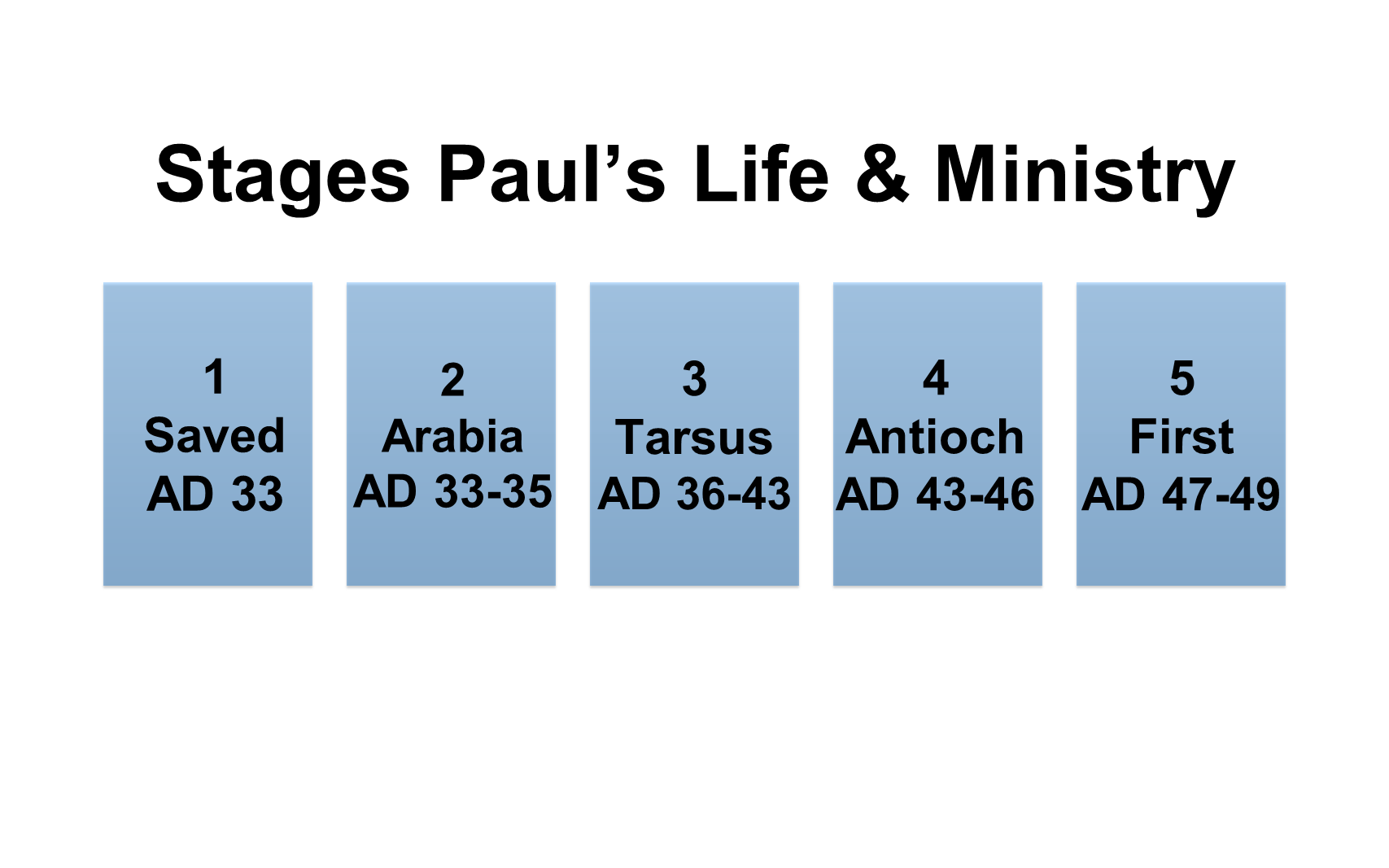
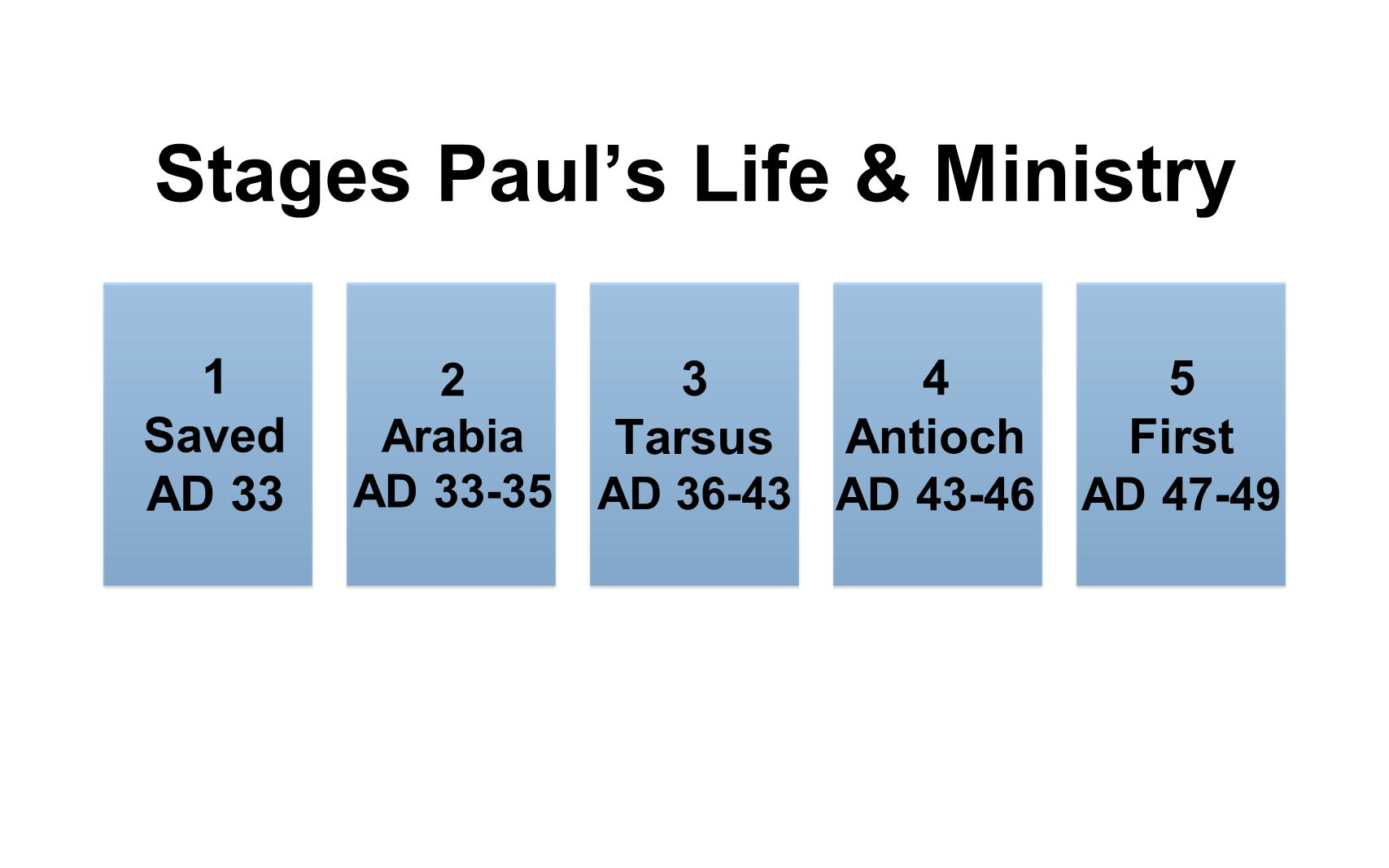
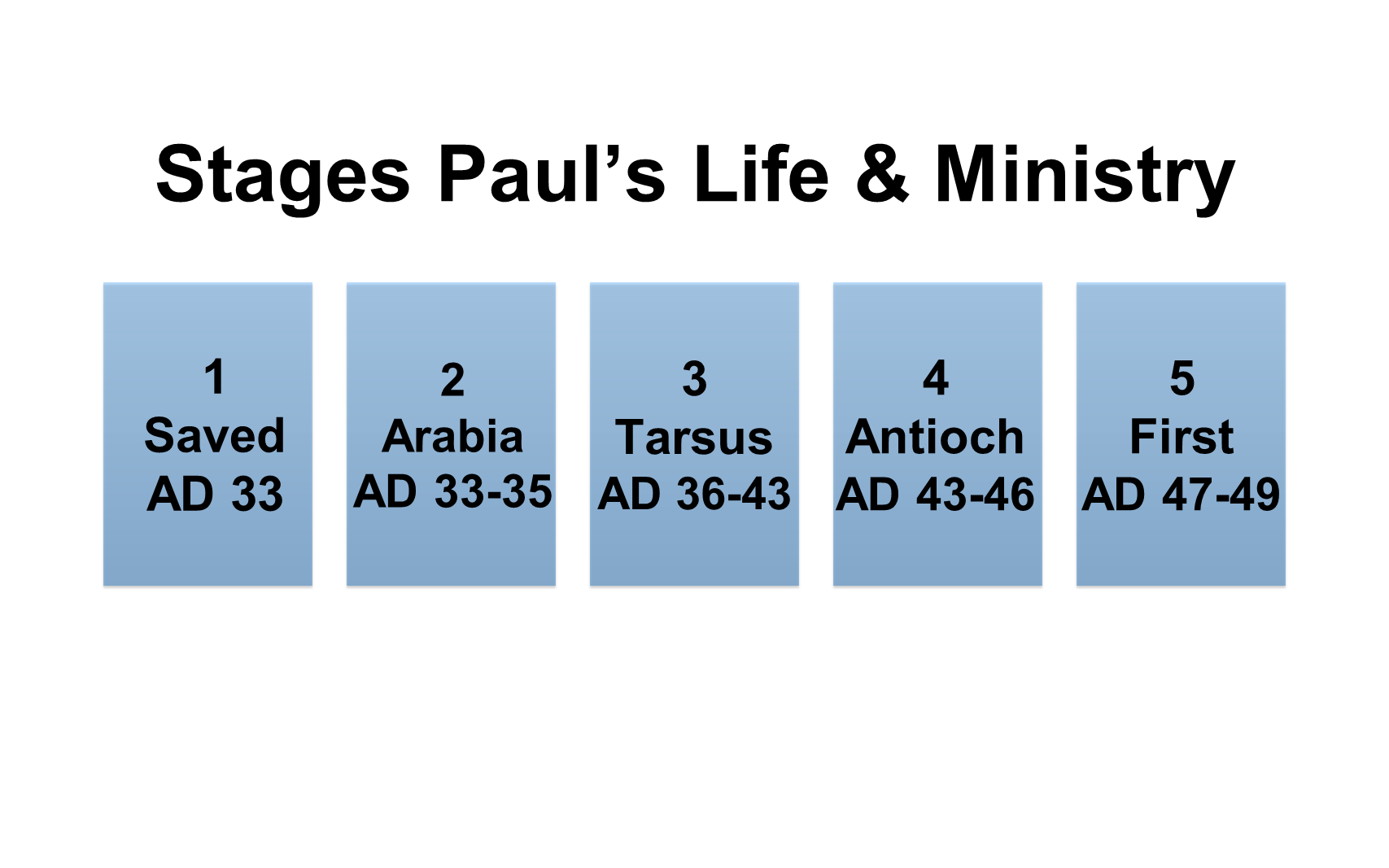
Now, I want to show you something. This onward, that’s Paul’s missionary journeys that you read about in the book of Acts, but God first had to save Paul. Then, we often don’t notice this little second segment. He takes him off to Arabia, that’s Galatians 1:17-18, for almost three years. Paul goes to seminary. I meet people, they’re so zealous for the mission field. They’re just going, Paul didn’t. Paul doesn’t get to the mission field till right there. Paul spends two to three years in training in Arabia. Then he goes home to hone those skills for almost seven years in Tarsus. Do you know that? Do you think about that? Most people nowadays don’t even consider that many people launch without the preparation we see in the Bible, which is astounding. Then Paul still isn’t ready and he has to go to Antioch for two plus years. And that’s where he sits under the ministry of Barnabas and the local church who see him in action and see that God has gotten all those rough edges. I’m sure at the beginning, Paul was converting people the same way he was persecuting. He was going up to them saying, get saved right now. And the Lord says, that isn’t really the way we do it, Paul. I want you to learn the soft touch from Barnabas. So, Paul spends from AD 33, his salvation, 14 years until he is commissioned to go to the mission field.
Now that, that’s a very sobering thought. I want you to think about. This one isn’t very clear, but if you map out the 34 years of Paul’s life in Christ, that he saved, the biggest piece of it is his preparation, 14 years before he launched into that nonstop 10 years of missions. And then he’s trapped in prison for six years after the missionary journey. And then he’s in this no man’s land of getting released and then being hunted and everything else. So, if you look at Paul’s life, the unhindered mission time was only a third of his saved life. The bigger parts are his 14 year preparation time, his being idled in jail, trapped, and then the great uncertainty of not knowing when his time for execution is going to come. It’s amazing to think about Paul’s life in this way.
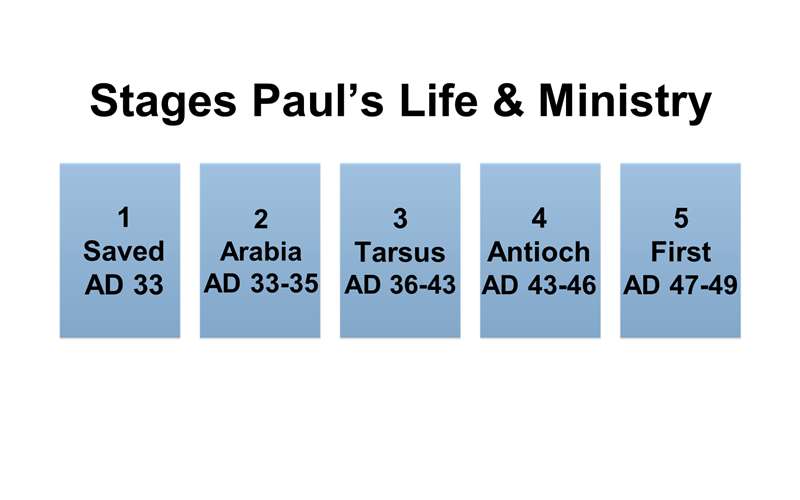
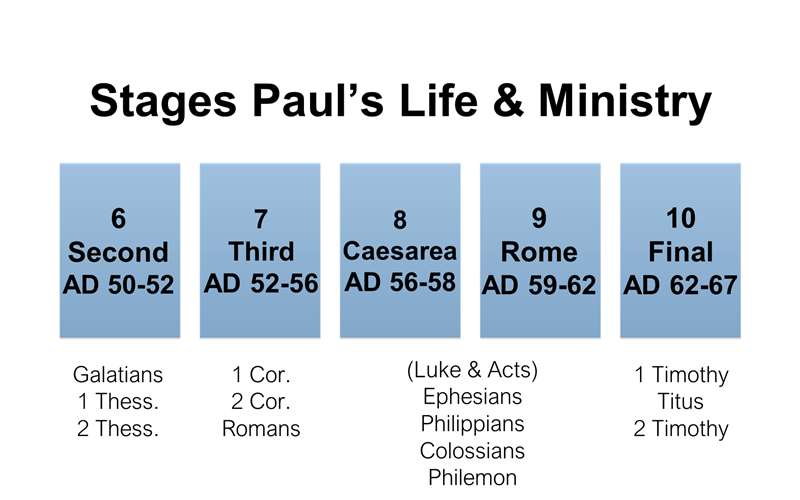
Going through… Saved, this is Acts 9. Arabia, if you’re charting this is Galatians 1:17-18. Going to Tarsus, you go back to Acts chapter 9. In fact, I’ll show you what it says in Acts chapter 9 because he’s trained in Arabia, actually between verses 22 and 23. It says Saul increased, Acts 9:22 in strength. And now look at verse 23. Now, after many days were passed, how many days are there? If you turn to the book of Galatians, look at chapter 1 because we really, sometimes just skip over what it says. He says I did not go up, in verse 17 of Galatians 1, to Jerusalem, to those who were apostles before me but I went to Arabia and returned again to Damascus. Then after three years, I went to Jerusalem to see Peter. See, most Bible scholars believe that between verse 22 and verse 23, or about a third of them believe that it’s between verse 25 and verse 26. So, two thirds believe it’s between 9:22-23 of Acts that Paul goes to Arabia. A third of them believe it’s right there in that space between verse 25 and 26. But wherever it is, Paul’s in Arabia for at least two years and Damascus.
And then if you look at that it says, then he goes in verse 30, when the brethren found out they brought him to Caesarea and sent him to Tarsus. So, in verse 30, this is Acts 9:30, Paul is in Tarsus until he gets to Antioch. Look at the timeframe. Seven years, just like that, there are seven years of his life at home. You wonder how many beatings. All of those beatings and treatments that Paul talks about in 2 Corinthians, they aren’t in the book of Acts, the total number that he comes up with when he describes everything he’s been through, how many times he’s been beaten with rods and all that, many of those most likely occurred while he was in Tarsus and being mistreated.
The next stage he’s discipled in Antioch. If you look in Acts 11. Keep turning over to chapter 11, verse 26. It says, and when he had found him, verse 25 says, Barnabas departed for Tarsus. See, Paul is in Tarsus from chapter 9 till chapter 11. In verse 25, Barnabas departed for Tarsus to seek Saul. In verse 26, when he found him, he brought him to Antioch. So, Barnabas actually comes to Tarsus and takes Paul to Antioch in Acts 11:26-30. And that is the final round of Paul’s training. He’s discipled in Antioch. It’s during this time, God prepared Paul enough so that by chapter 13, if you look at Acts 13:1, 2, 3, the church at Antioch says you’re ready. The Holy Spirit says separate. So that’s a quick overview. And then what does he launch into? He launches into all of these, the first, second, third missionary journey, Caesarea imprisonment where we find him, Rome is where Acts 28 ends, and then his final days.
So, basically, what do we see about Paul?
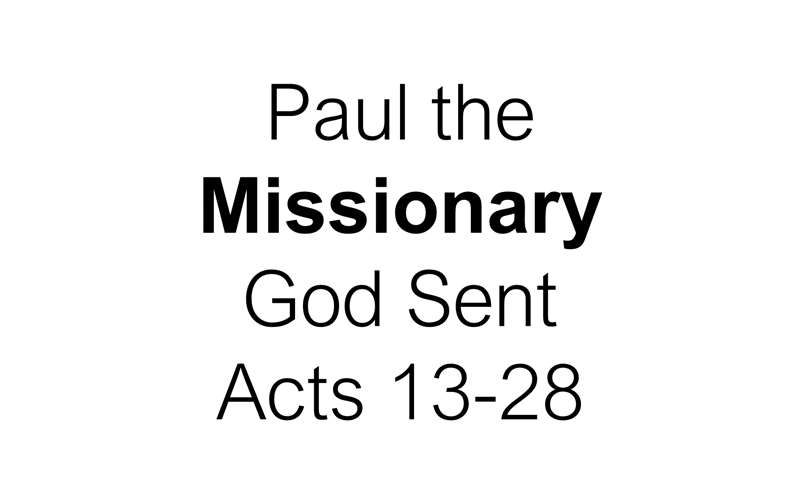
We see, first of all, he’s a man God prepares then he becomes that missionary. That prepared man can finally be launched as that missionary. This is a Sunday school class, only though, I’m afraid some of us need to review this because we don’t think about what an amazing thing [it is].
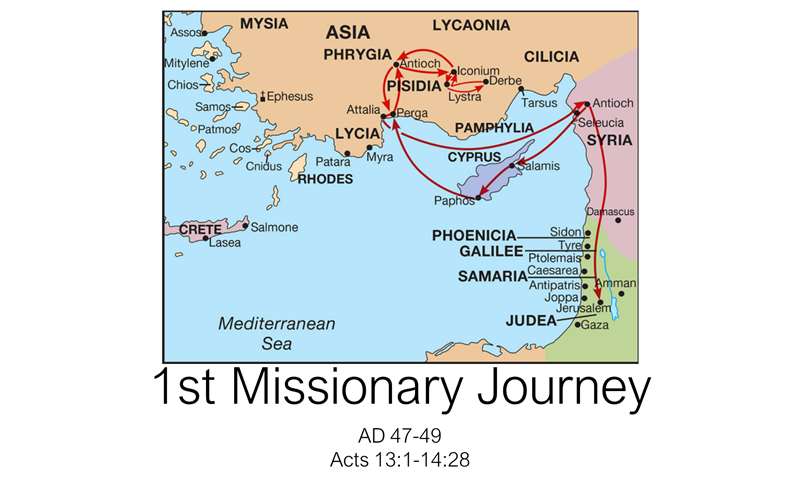
Paul’s in Antioch, which right here is in Syria. Which is, it’s in ancient Syria, actually. It’s in modern day Turkey because the border’s right there, and all this fighting is right near it. But there’s where the church in Antioch [was]. This is Tarsus where he was from. He goes from Antioch and takes this journey going up through the ancient world. He goes to Antioch and Pisidia comes back to Perga, where he is deserted by John Mark. Then he goes on, gets stoned, comes back, and goes back to Antioch. Paul is busy. This whole trip is just two plus years. In fact, most of Paul’s segments of his life are about three year little pieces because there are 10 of them for his life.
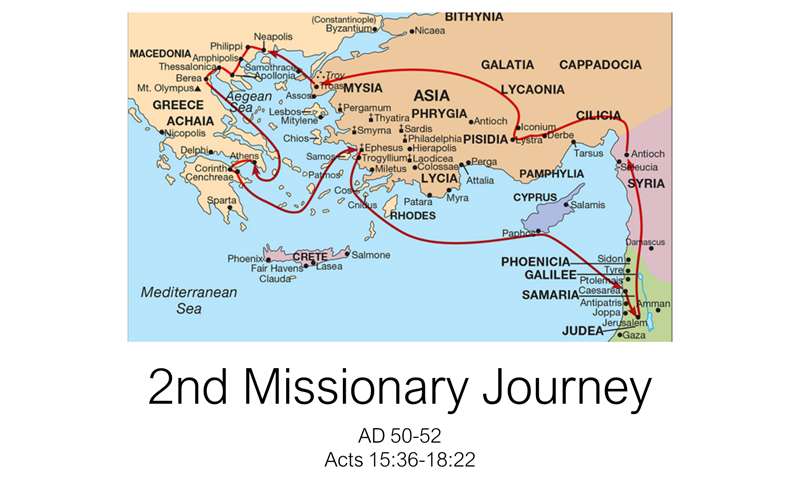
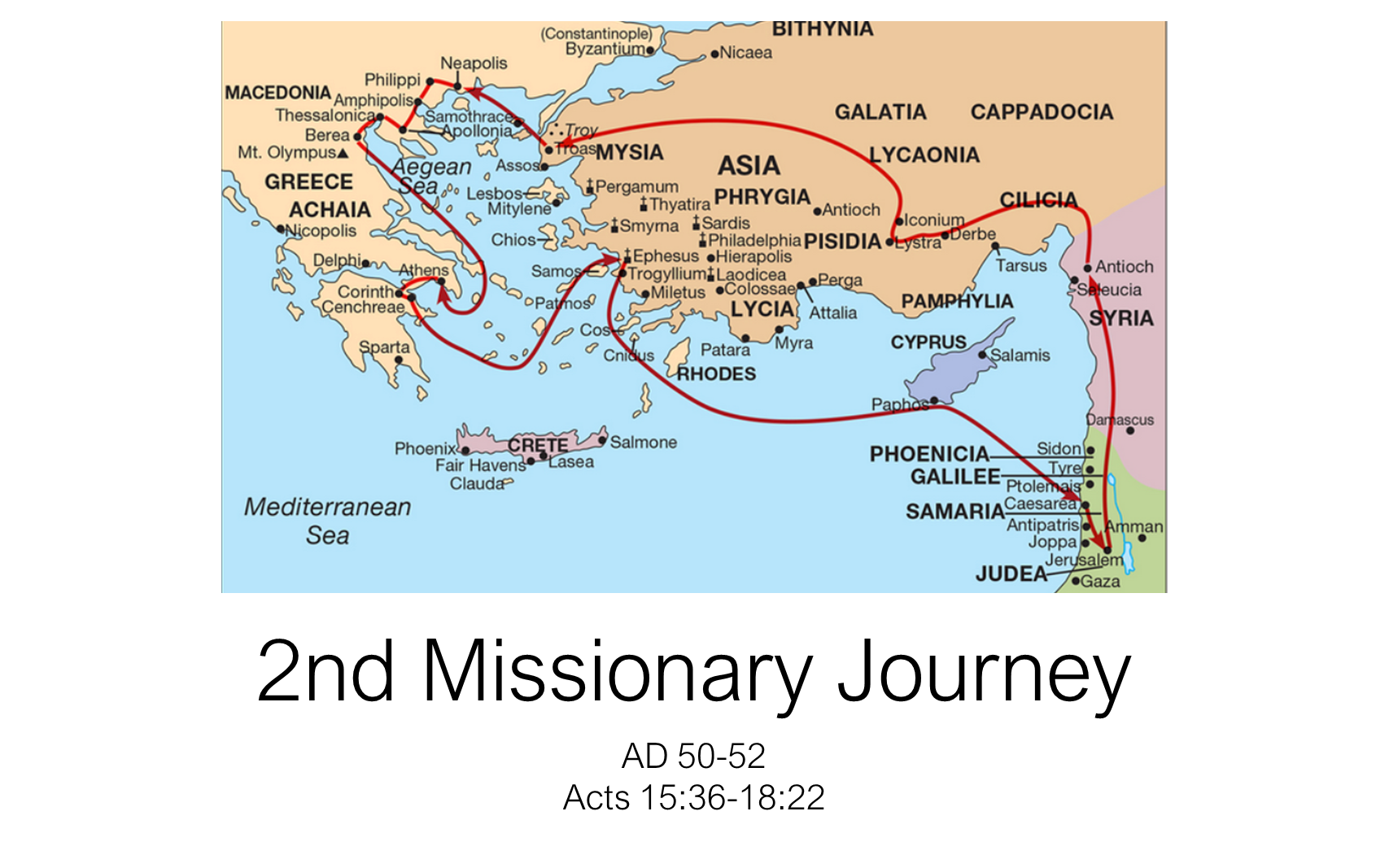
Then he comes back from that and is immediately sent off on his second missionary journey. He reports in Jerusalem. Back to Antioch. He goes through Asia. This is the turning point in his ministry.
We’ll be talking about this when we get back to the Q&A. Do you know how Paul knew God’s will? Did he wait for God to talk to him out loud? No. He operates on what he knew he was supposed to do. Paul is headed off this way and it says the Spirit of God would not let him. And he said, what should I do? And that’s when he had the Macedonian call and he goes this way. But Paul was operating on what he knew God wanted him to do and he just kept doing that until the Lord pointed him in a different direction.
He goes to Philippi and that was the great church in Philippi, he gets beaten there. Goes to Thessalonica, he leaves there under duress. Goes to Berea, then he sails to Athens, does Acts 17, then he goes to Corinth. Then he spends about a year and a half there. Then, he goes to Ephesus. And then, he goes back home, and that’s his second missionary journey.
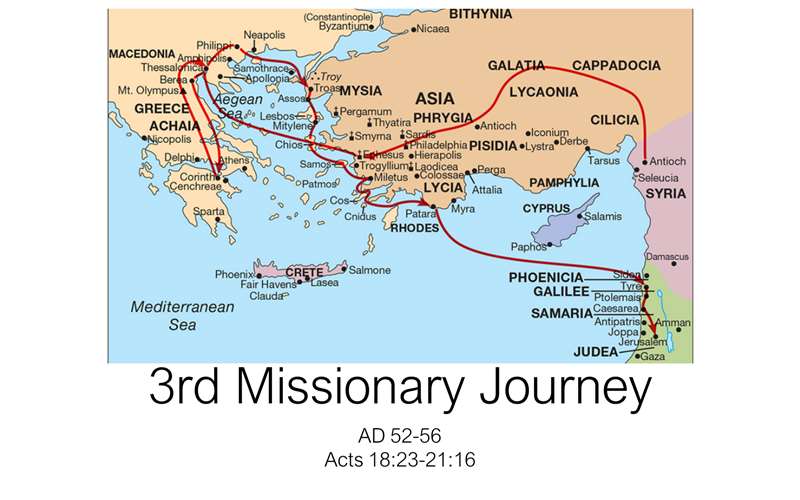
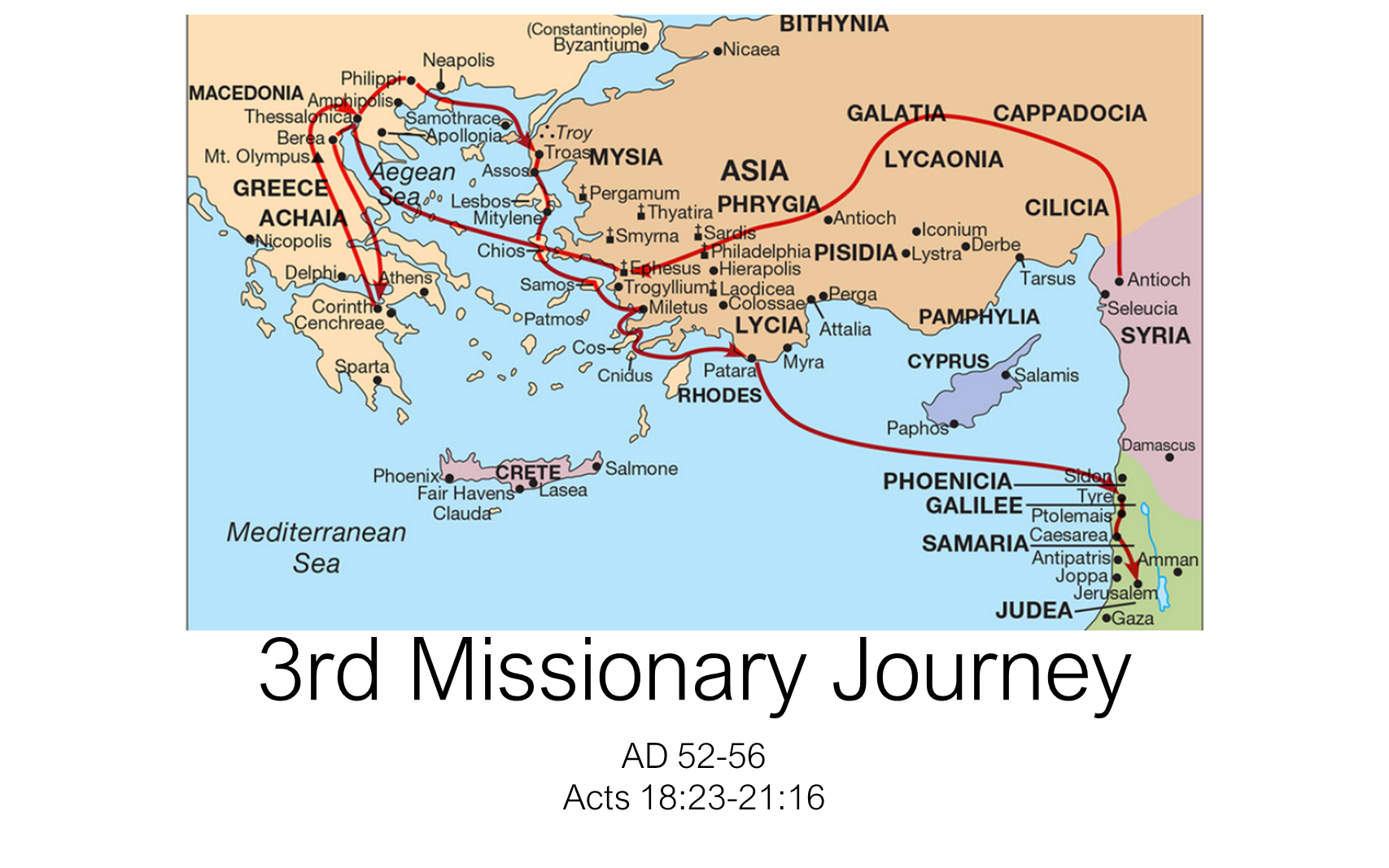
Then, his final missionary journey, you all know. Again, he departs from Antioch. Visits everybody, works heavily, visits back to all the churches, especially helping the problems in Corinth. And then he goes back.
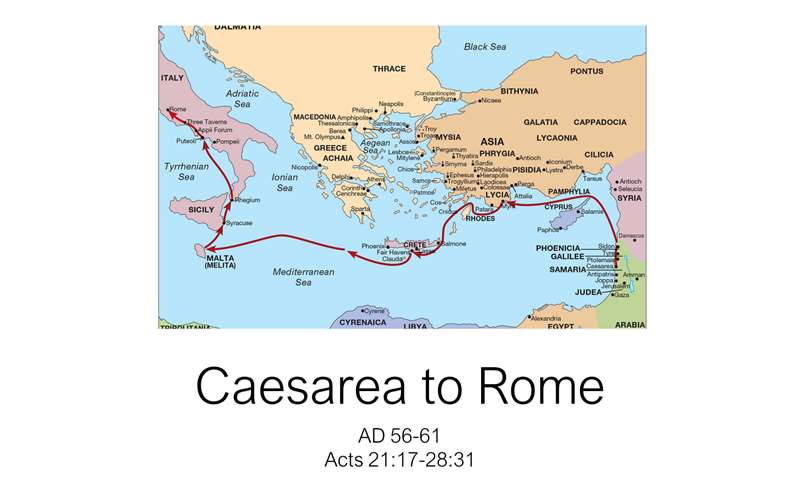
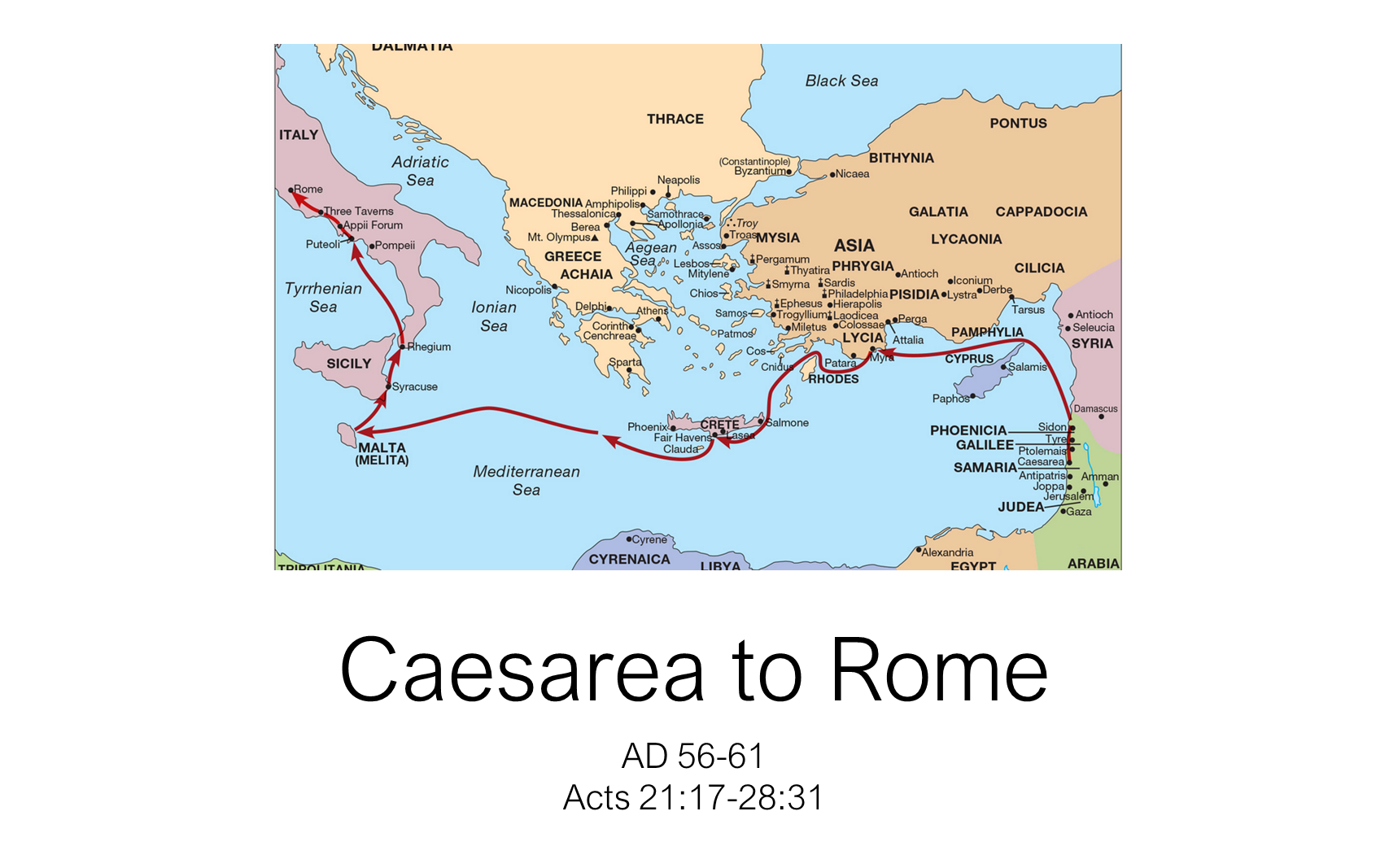
He’s visiting, getting back for the feast in Jerusalem. He gets to Jerusalem. He’s captured. He’s taken to Caesarea. He has kept there for two years. And then, this final voyage, he gets into the big storm, blown all the way, crashes, shipwrecks on the island of Malta. Then, after he does his final miracle in AD 58, Paul’s last recorded miracle, he’s alive for a decade and the Bible doesn’t record Paul [having] any miraculous powers from right there, onward. That’s fascinating. But we’re not covering that right now. It’s just, I just thought I’d tell you that. And he goes to Syracuse, Rhegium, and the Port for Rome, walks into Rome. And what we just read is, Paul in this little rented house. So those are the missionary stages of his life.
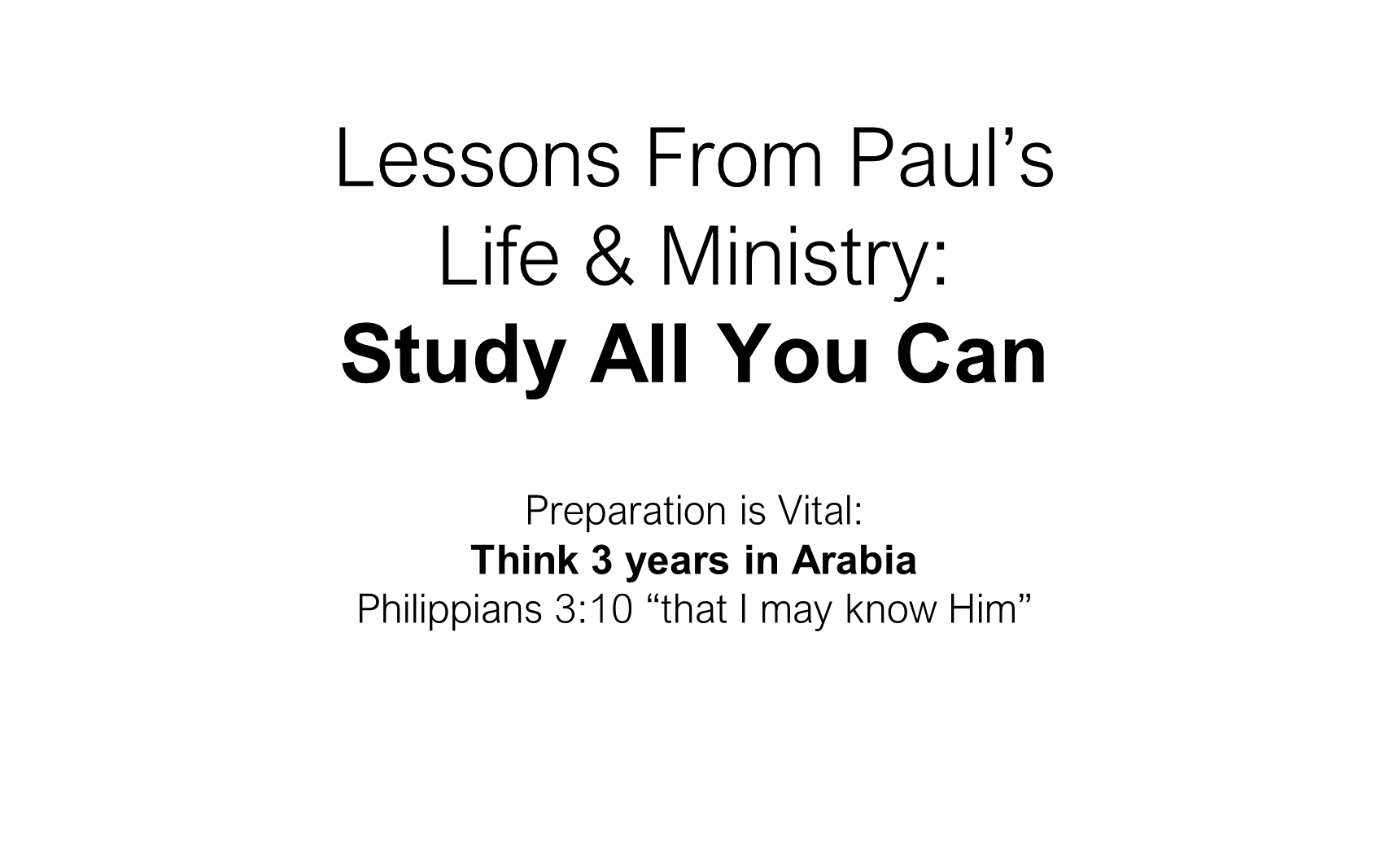
And basically, we can get some lessons. Now, I want you to think about this with me and as we go to communion, I want you to think what does Paul’s life, how can it connect with mine? Number one, study all you can when you have time. Either you and I can waste our time, we can veg, we can just say I need to just not think about anything, I just need to be entertained or we can be like Paul. He studied all he could think of, the preparation that God thought Paul needed. He needed three years in Arabia, which is Nabataean, Southeast of Damascus, where Paul was out there meeting with Christ, seeing the scriptures like he’d never seen them before, with Jesus teaching them to him. Paul comments on that. He says, you know what? That I may know Him. That was the underlying desire. We study, not to get smart but we study all we can so we can know Him.
We’re in a real dangerous time. Nowadays, we have so many copies of the Bible that we feel we have it, we have all the truth we don’t really need to know it very well because we have it. It gets worse with electronic devices. Most people can’t find things in the Bible because they know they can find it with their electronic device. And so, there is a slow diminishing of our knowing this book by personally deeply studying it.
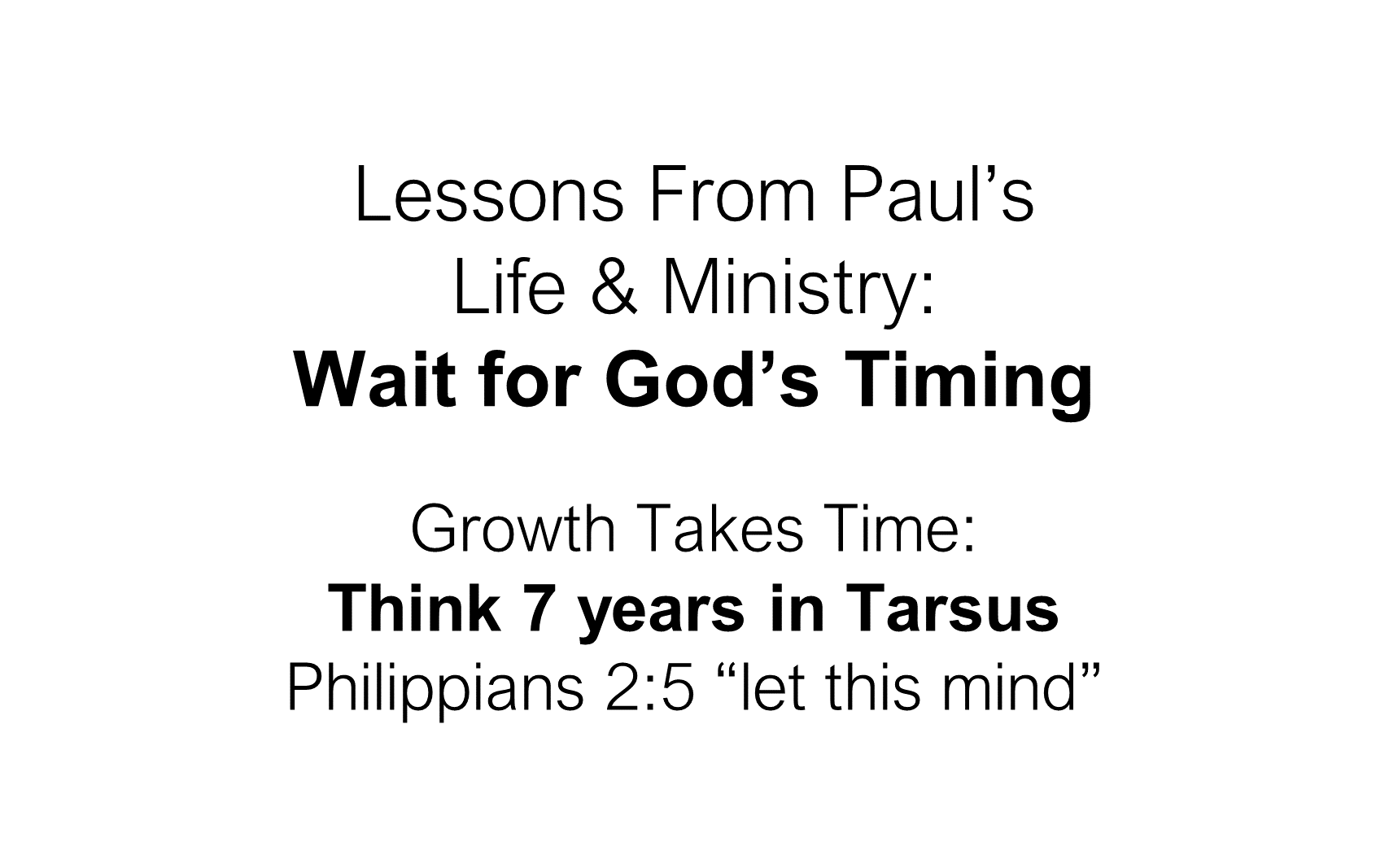
Second principle, we can learn from Paul, this time right here of studying leads to another element. The preparation of 14 years was more than just this study time. He had to wait for God’s timing to be launched into ministry. Think of the seven years he spent in Tarsus. Growth takes time. Did you know God’s not in a hurry? We’re in a hurry. God’s not in a hurry. We think we’ve got to go right now that it’ll fall apart without us. No. God takes His time. Paul was the greatest gifted man the Church has ever seen, and God spends him three years in the desert and seven years home. And what he said is… this is the time Paul got humbled… let this mind be in you. He later tells the Philippians he had to wait for God’s timing, and that is right here. That’s one of the largest segments of all of Paul’s life.
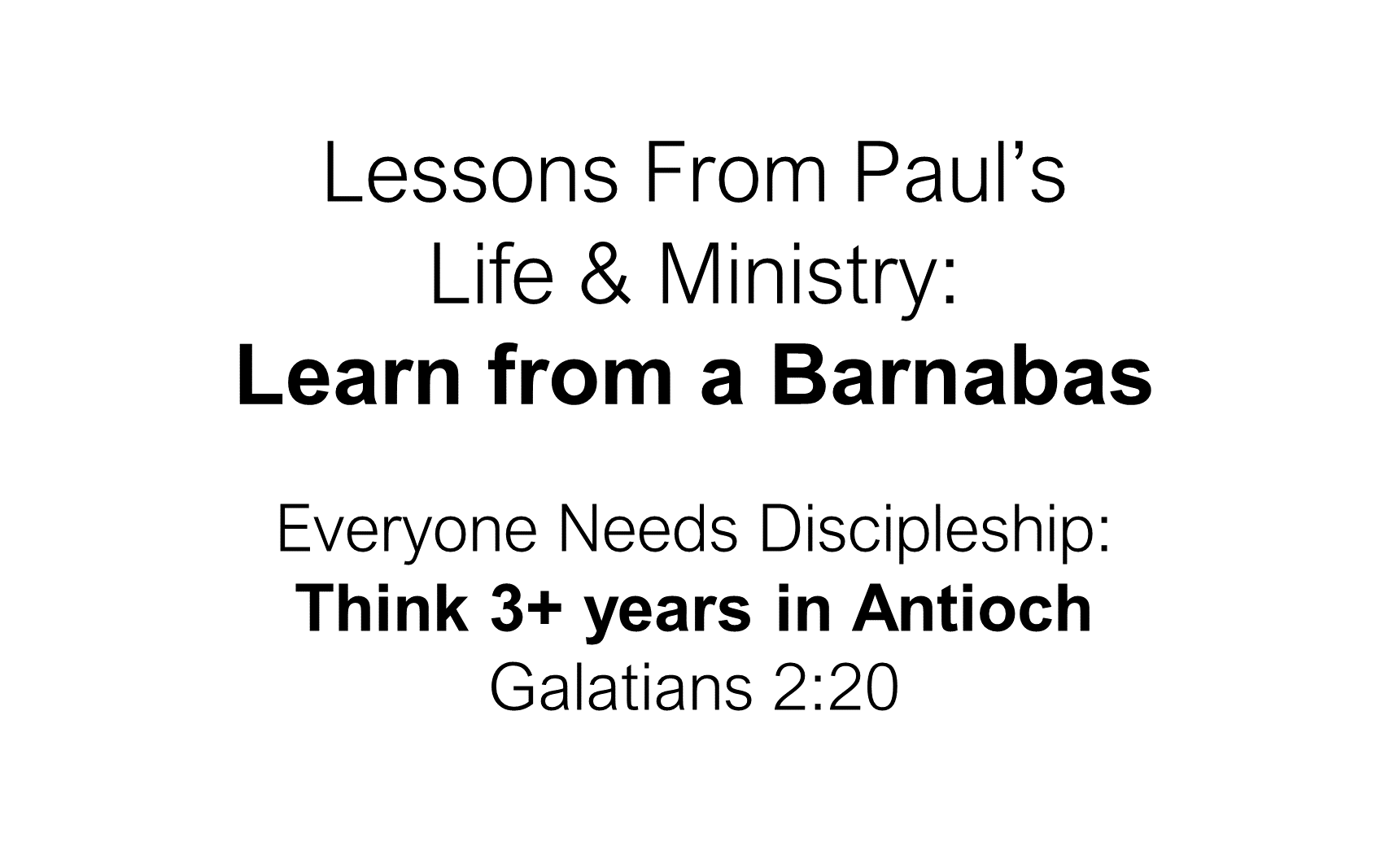
Thirdly, learn from a Barnabas. Everybody needs discipleship. Paul had to spend three plus years in Antioch. It’s like he said in Galatians 2:20 that it’s not I but Christ living in me. And this huge piece, Paul the discipler of the Early Church, had to be discipled.
Think about, have you taken the time to prepare and study? Have you taken the time to really work it out and wait on the Lord’s time? Have you been discipled? See, God is not in a hurry, we are.
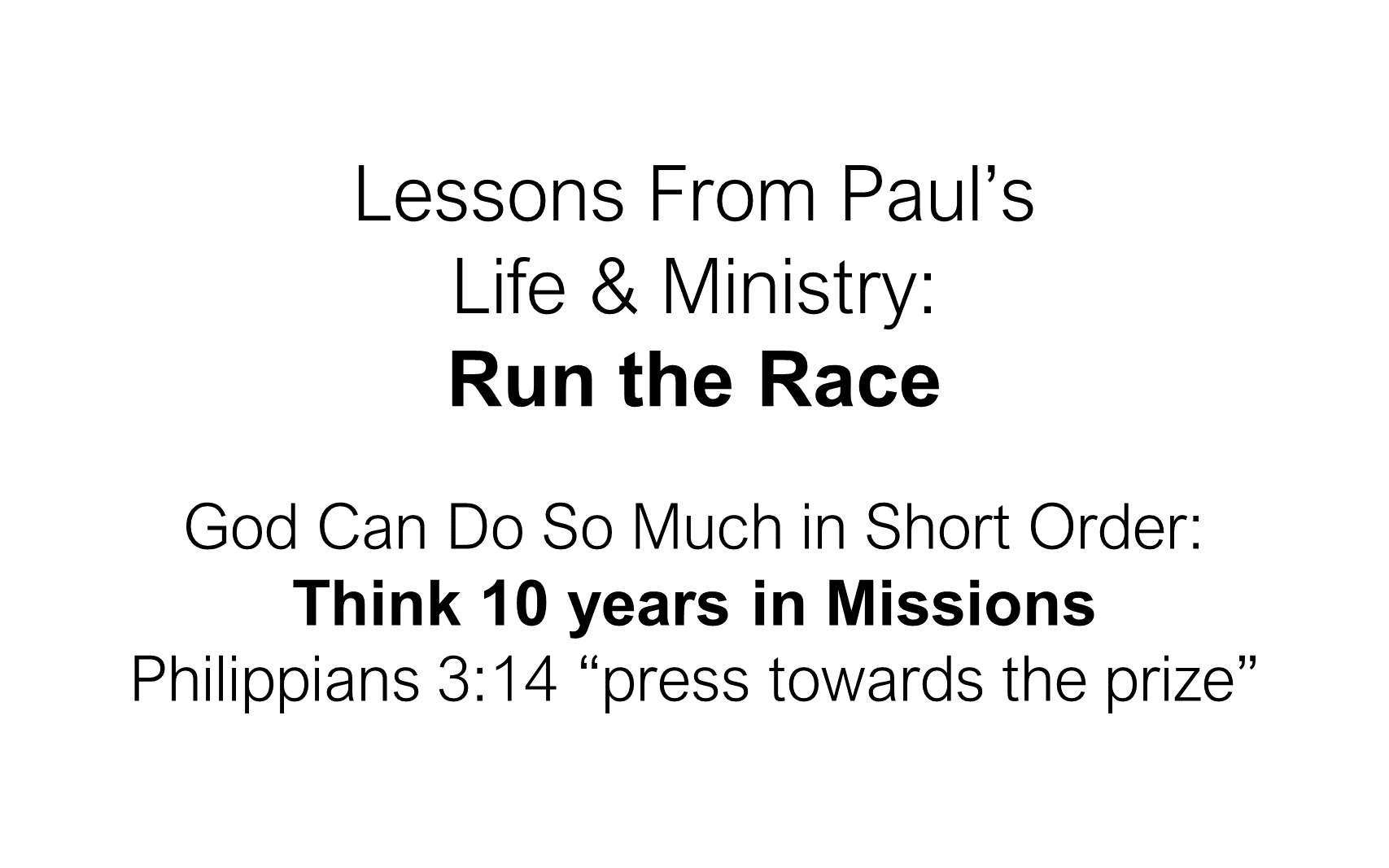
Another one, run the race. God can do so much in such a short time. Think of the 10 years Paul spent in missions. God could have let him go 24 years in missions and not even prepare him. But God wanted to sharpen and focus and refine and prepare a tool that He could use, and that God would get all the glory. And Paul would say, I press toward the mark for the prize of the upward call of God in Christ Jesus. And then, he launches finally. After all of that first missionary journey, second missionary journey, we have the writings from it. The third missionary journey, he writes more. He gets imprisoned and he goes to Rome.
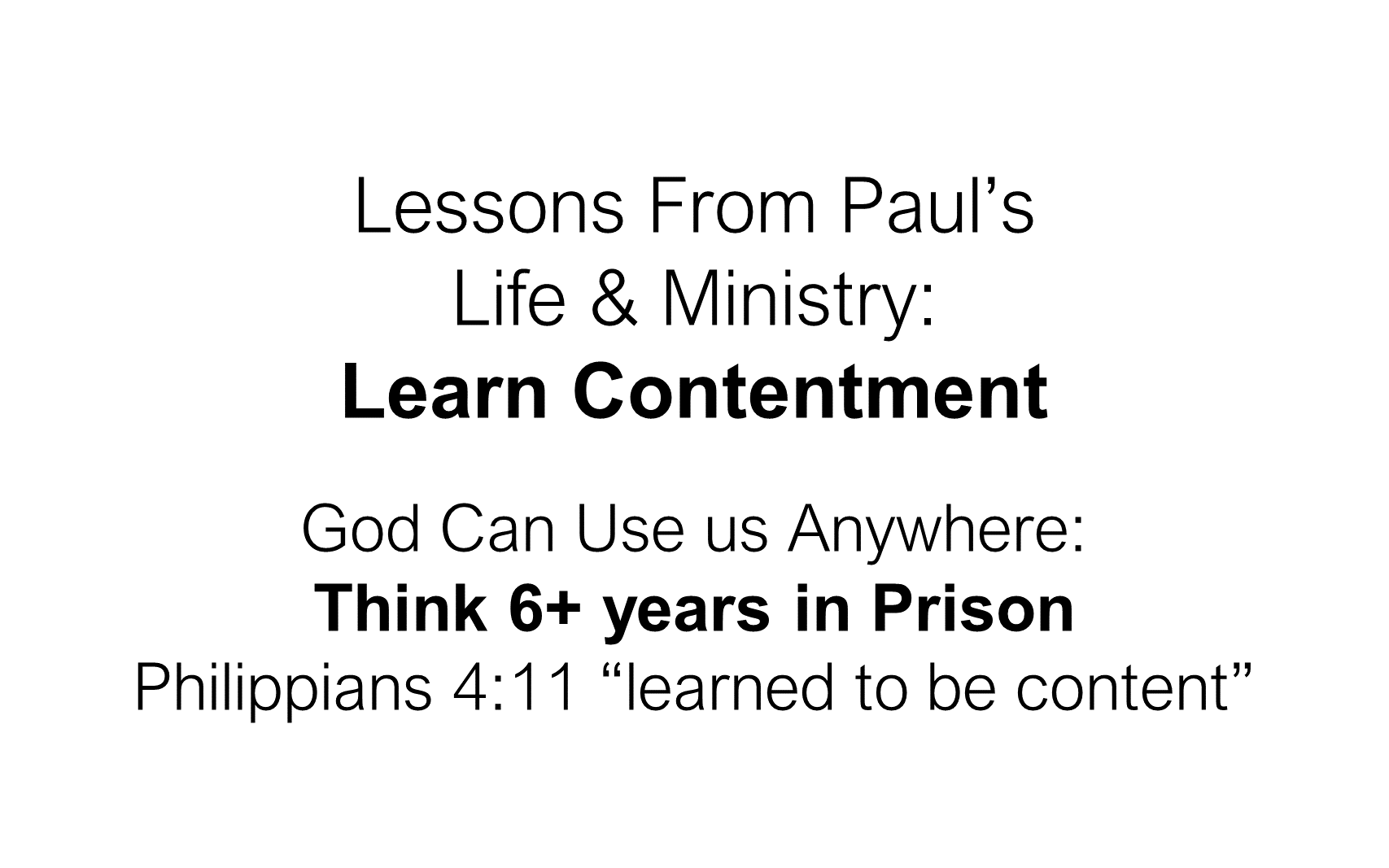
And we need to, we learn another lesson, learn contentment. God can use us anywhere. Paul spent six plus years in prison. And we never see him screaming out the bars, let me out and I want to go tell someone else. He was content. He said, I’ve learned to be content wherever I am. I can abound. I can be abased. He says, I can be in the spotlight and I can be in the prison. I’ve learned to be content. Learn contentment. And by the way Paul had a long time to learn that, two of the big segments of his life.
And then finally, love Jesus more than everything. We should come to the point, and communion is a great time to reaffirm that, I love Jesus more than everything else there is. No one is indispensable, not even Paul. Did you think about that? God kept him from ministry and prepared him for so long then He let him loose for 10 years and basically, he’s in captivity most of the rest of the time. No one’s indispensable. The world does not need us. [Some say,] Without us, it’ll all fall apart. God is the one doing the work. He’s just using the instruments that are willing, humbly in His control. Think prison, loneliness, and death. How did Paul make it through that last huge part of his life? 2 Timothy 4 says he, he said, I’m on a race and I love His appearing, and I love Jesus more than everything that there is in life. And that’s what we should be able to say at this communion.
Let’s bow for word of prayer. And as we bow, the elders and deacons are going to go and prepare to serve us communion. But this is a communion where we, before the Lord, reflect on Paul’s life in ministry.
And before I pray, with your head bowed. Are you studying all you can to know Him or are you studying everything and just a token for Christ? Are you waiting for God’s timing in your life or are you trying to make it happen? Are you learning from a Barnabas? Have you ever been discipled? Are you running the race that God designed for you? Are you confident that you’re pressing toward the prize that He offers? Are you learning contentment? And can you say, today, that you love Jesus more than everything?
Notes
God wants to use people. He provides everything needed. All God wants is willingness mixed with humility. When He finds that mix there is no limit to what God can do.
God Wants to Use Us
Paul is an example of the limitless ways God can, did, and continues to use Paul. As God already told us in 1 Chronicles 16:9, His eyes are searching today, as they have always been, looking for those who will seek Him wholeheartedly. God found a whole-hearted servant in Paul. Just the fact that we are reading this account is quite a testimony to what God can do if we invite Him to control our lives.
From conversion to martyrdom Paul never ceased to serve God. Though Paul like all of us was born a sinner, when he got saved he never seemed to coast. Instead, in his own words, he “ran the race” and “sought the prize”, and “finished the course”.
As we come to the end of Acts, and look at the final of the 22 salvation accounts, we have the opportunity to look through this scene at the most amazing life recorded in the New Testament and one of the two most amazing humans ever described in the Bible.
Join me in Acts 28:23 as we first read this final Gospel explanation.
Acts 28:23-31 (NKJV) So when they had appointed him a day, many came to him at his lodging, to whom he explained and solemnly testified of the kingdom of God, persuading them concerning Jesus from both the Law of Moses and the Prophets, from morning till evening. 24 And some were persuaded by the things which were spoken, and some disbelieved. 25 So when they did not agree among themselves, they departed after Paul had said one word: “The Holy Spirit spoke rightly through Isaiah the prophet to our fathers, 26 saying, ‘Go to this people and say: “Hearing you will hear, and shall not understand; And seeing you will see, and not perceive; 27 For the hearts of this people have grown dull. Their ears are hard of hearing, And their eyes they have closed, Lest they should see with their eyes and hear with their ears, Lest they should understand with their hearts and turn, So that I should heal them.”’ 28 “Therefore let it be known to you that the salvation of God has been sent to the Gentiles, and they will hear it!” 29 And when he had said these words, the Jews departed and had a great dispute among themselves. 30 Then Paul dwelt two whole years in his own rented house, and received all who came to him, 31 preaching the kingdom of God and teaching the things which concern the Lord Jesus Christ with all confidence, no one forbidding him.
Pray
First note with me the final Gospel explanation in v. 28-31. We can say that Paul explains that:
Salvation Is: Entering & Living In God’s Kingdom
MESSAGE twenty-TWO (Paul): is the final Gospel Message in Acts where salvation is described as coming into God’s Kingdom. The opening salvation message in Acts was: repent; and the concluding message is: enter God’s Kingdom, both rarely if ever used today.
Acts 28:28-31 (NKJV) “Therefore let it be known to you that the salvation of God has been sent to the Gentiles, and they will hear it!” 29 And when he had said these words, the Jews departed and had a great dispute among themselves. 30 Then Paul dwelt two whole years in his own rented house, and received all who came to him, 31 preaching the kingdom of God and teaching the things which concern the Lord Jesus Christ with all confidence, no one forbidding him.
Paul’s final proclamation of salvation is so simple (entering & living in God’s Kingdom); and Paul’s final proclamation of salvation is so connected to Christ’s preaching of the Gospel. Jesus often equated salvation to “entering” the Kingdom[1]. Jesus said to Nicodemus in John 3:3,5 that unless a person is born again, they cannot see or even enter the kingdom of God.
Here is Acts 28, Paul is at the end of his public ministry. We have no more detailed accounts of his travels after this. We have no more eyewitness accounts of how he preached the Gospel. Paul’s life in the spotlight of Scriptures is coming to a close. How does God close the curtain on Paul’s public ministry life? Basically we can say that Paul was doing the same thing he had always done:
Proclaiming Christ
Paul is sitting inside a house somewhere in Rome: the most powerful city in the world.
Paul is waiting to be brought before Emperor Nero: one of the most depraved and cruel men in history.
Paul is sharing the Gospel with everyone he can: inviting each to enter the Kingdom of God through the only Door, Jesus Christ. That is how the Book of Acts ends. But what had started in Acts 1, and went onward to Acts 28, is still unstoppably going onward today.
Think about it, we are each connected to Acts 28 in some way through Paul. Nearly every one of us were led to salvation, trained, taught, and encouraged through some part of the New Testament that Paul wrote. So as the curtain closes on Paul in the Book of Acts, pause with me and note the elements God has emphasized for us, about Paul’s life.
Paul: The Man, The Missionary & The Messenger
The best way to summarize Paul’s life, and get some very powerful truths to challenge our lives is to follow the pattern before us in the Bible. Acts introduces us to Paul, and then the next 13 Epistles, (from Romans to Philemon), are written by Paul.
A Snapshot of Paul’s Life
Most of us know a great deal about Paul, but often we don’t have the time to stop and put all of the pieces together. From this book of Acts we can see nearly the entire life of Paul. For a moment, join me in a snapshot of the life of Paul. Paul’s life dominates the second half of Acts. Peter is primarily seen in Acts 1-12, with Saul/Paul variously mentioned in Acts 7-9, 11-12.
In Acts 8:1-3 Paul is introduced as the adversary of Christ’s Church. Then in Acts 9:1-22 Paul is saved laying in the dust at Christ’s feet, called personally by Christ to ministry and commissioned; and then trained in secret alone with Christ in the desert.
Paul stands out unique among all of the Biblical servants of God. In fact the Lord calls Paul His “chosen vessel” (Acts 9:15) to proclaim the Gospel before Gentiles, kings, and Israel. That means both normal humans, and those in special, powerful positions. Paul was called to share the Gospel with everyone possible; and he did.
In Acts 9:23-30; 11:25-30 Paul is “taken” on and discipled by Barnabas.
Then, from Acts 12:25 onward, Paul dominates the Book of Acts, and the ministry that Jesus Christ left for His Church to do in the world. No one worked more tirelessly, widely, and at such personal cost than Paul, who goes on three missionary journeys, plus a journey to Rome that total 3,590 overland miles, plus 5,560 over seas miles.
Then he goes to prison for four years, stands trial, and is released for a final journey.
Then Paul is captured, imprisoned, and according to church history, executed as a Roman citizen by beheading, just outside the city of Rome at Nero’s command.
The Dimensions of Paul’s Life
So we can simply say that God reveals three dimensions of Paul’s life that can impact ours today. Note them with me.
Paul: the Man God Prepared. Acts 8-12.
Paul: the Missionary God Sent. Acts 13-28.
Paul: the Messenger God Used. Romans through Philemon.
First, note with me:
Paul the Man God Prepared
When God saved Paul in Acts 9, He was saving the modern day equivalent of an Ivy League scholar, with the personal discipline of a Special Forces Commander, all rolled up into Communicator that could speak and write in a way that captured people’s hearts and minds.
Paul was one of those unbelievably gifted, talented, and packaged type of guys. But:
God doesn’t need scholars, as He is All Wise.
God doesn’t need discipline, because He is All Powerful.
God doesn’t need communicators, because His Voice is Inescapable.
God can use those qualities; but He doesn’t need them. So to get Paul to where He could use him, God had to prepare him. Paul’s preparation for ministry is actually the longest segment of his life. God takes 14 years to prepare Paul for a nearly non-stop 10 years of public ministry.
If you take the normal conservative dates for Paul’s life and ministry, and map them out across the pages of Acts you can see how much time it took to get Paul ready. We can see the following stages of Paul’s life:
Stage-1: Saved on the Road to Damascus AD 33
Paul is saved on the road to Damascus (Acts 9:1-22). Most date this about AD 33.
Stage-2: Trained in Arabia AD 33-35
Paul is trained for perhaps two years by Christ in Arabia (between Acts 9:22 and 23; see Galatians 1:17-18), in the Nabatean region to the south and east of Damascus.
Stage-3: Home to Tarsus AD 36-43
Paul comes back so enthused that his enemies plot his death (Acts 9:23-30), so he is sent home to Tarsus. Paul is off the record for as much as six years while he grows, suffers, studies, and serves in his hometown. Barnabas comes looking for him in Acts 11:25.
Stage-4: Discipled at Antioch AD 43-46
Paul gets to see the greatest days of the church as Barnabas mentors Paul in ministry at Antioch (Acts 11:26-30). It is during this time that God has prepared Paul enough, and in Acts 13:1-3 God signals that it is time. Paul is ready to be launched, and the church sets apart Paul & Barnabas for ministry. This begins the second dimension of Paul’s life.
Paul the Missionary God Sent
Paul never stopped serving God. This journey was just an enlargement of all Paul had been trained to do. Paul was a non-stop ambassador for the Gospel, who for 30 years traveled for Christ, lived for Christ, and proclaimed Christ.
Stage-5: 1st Missionary Journey AD 47-49
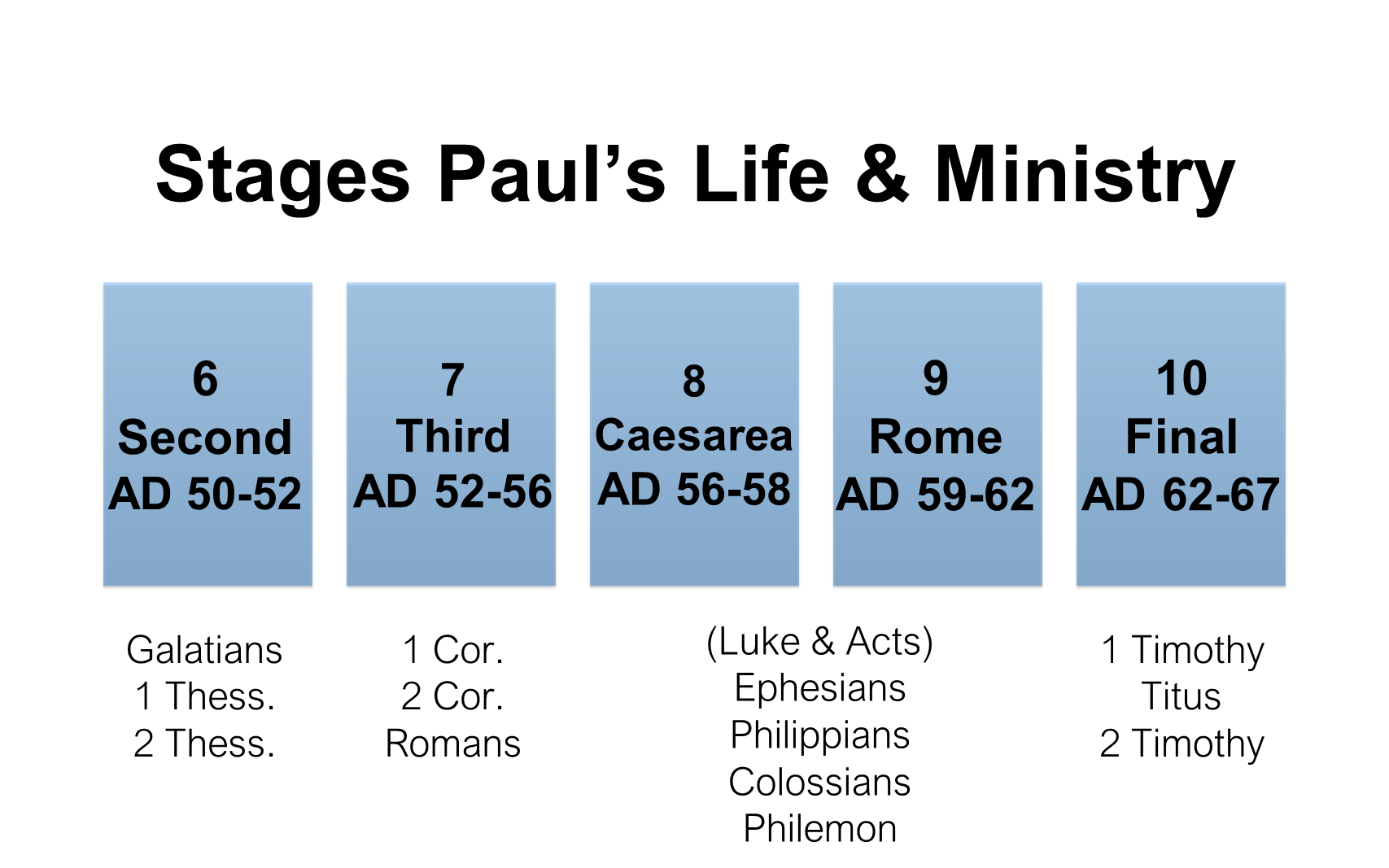
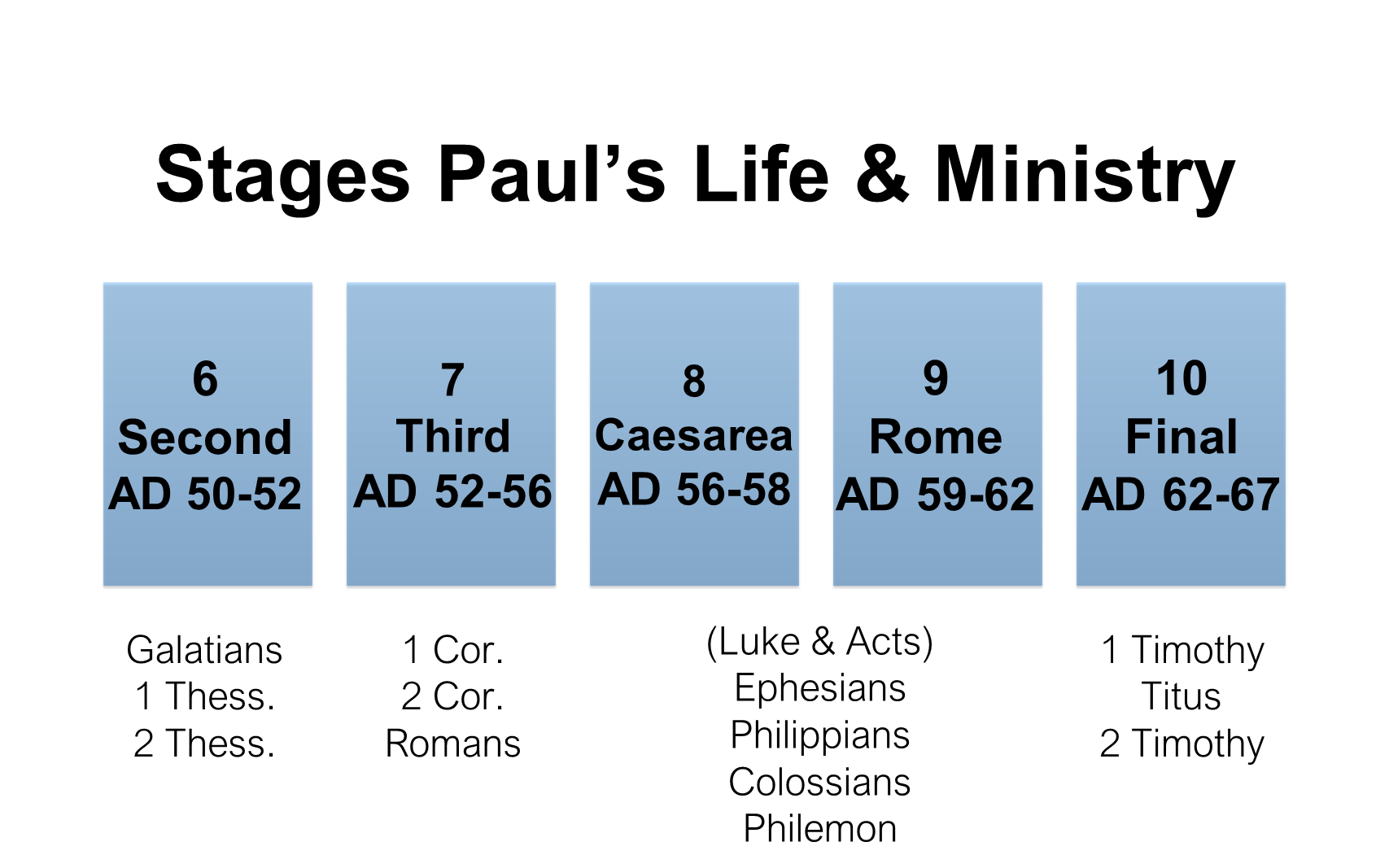
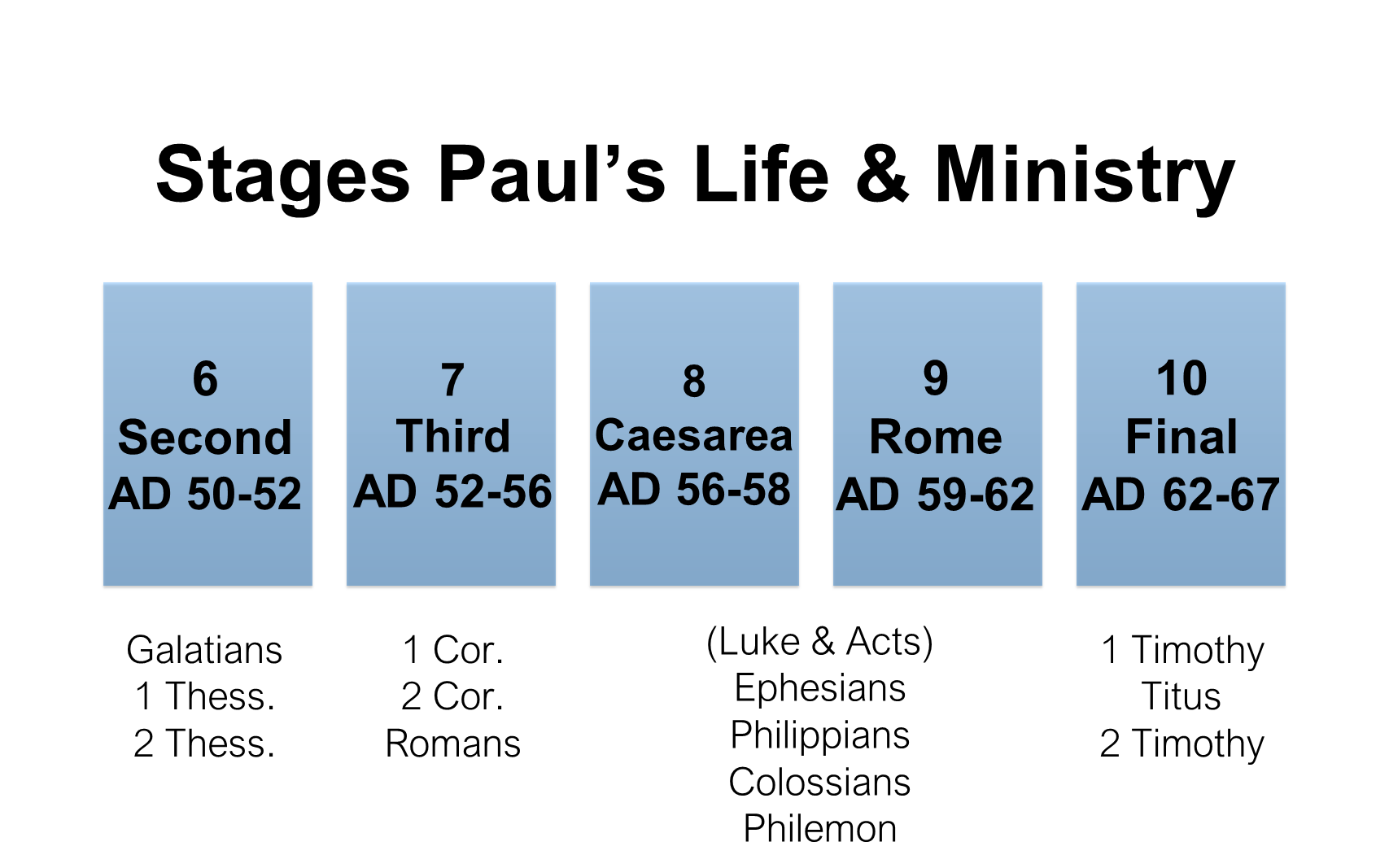
Stage-6: 2nd Missionary Journey AD 50-52
Stage-7: 3rd Missionary Journey AD 52-56
Stage-8: Caesarean Imprisonment AD 56-58
Stage-9: 1st Roman Imprisonment AD 59-62
Stage-10: Release, Final Journeys & Execution AD 62-67
Lessons From Paul’s Life & Ministry
Study All You Can
Preparation is Vital:
Think 3 years in Arabia
Philippians 3:10 “that I may know Him”
Wait for God’s Timing
Growth Takes Time:
Think 7 years in Tarsus
Philippians 2:5 “let this mind”
Learn from a Barnabas
Everyone Needs Discipleship:
Think 3+ years in Antioch
Galatians 2:20
Run the Race
God Can Do So Much in Short Order:
Think 10 years in Missions
Philippians 3:14 “press towards the prize”
Learn Contentment
God Can Use us Anywhere:
Think 6+ years in Prison
Philippians 4:11 “learned to be content”
Love Jesus More than Everything
No One is Indispensable:
Think Prison, Loneliness & Death
2 Timothy 4:6-8 “finished the race”
There is one final dimension to Paul’s life, during all the missionary journeys, imprisonments, releases, trails, and uncertainties we see:
Paul the Messenger God Used
Paul never stopped communicating God’s Truth. Paul was an instrument in God’s Hands to his dying days: he spoke and wrote, he preached and taught, he mentored and trained; and by God’s grace, he continues to do so even to this day through his epistles.
As I read these snippets from Paul’s inspired communications, preserved for us by God, think of how many ways God has used Paul in your life.
Romans 5:1-5
1 Cor. 1:2
2 Cor. 5:21
Gal. 2:20
Eph. 1:3
Phil. 1:21
Col. 1:15-16
1 Th. 2:13
2 Th. 1:7
1 Tim. 1:15
2 Tim. 4:6-8
Titus 3:5
Philemon 1:7
Paul, used by God to change the world, and to touch our lives even to this day!
[1] Mt. 19:24, 21:31; Mk. 9:47, 10:23-25; Lk. 18:24-25; Jn. 3:5.