
Learning from Failures
ACL-21 DAV-12 DSS-38
971116AM DAVID PSALM 32
“LEARNING FROM FAILURE”
PSALM 32
Transcript
.jpg)
It’s going to be a really joyful time looking at Psalm 32. But before we get there, I want you to turn with me to 1 Samuel chapter 13. I’d like us this morning to soberly look at the story of two men. 1 Samuel 13 introduces the topic to us of when David and Saul both confronted their own sinfulness. King David was the second king of Israel. King Saul was the first king of the nation of Israel. When those two men came together, they confronted in their own lives at different times, sin, and they faced sin, and they faced their failure. Amazingly, their response to sin is so utterly, totally opposite of one another.
.jpg)
I just want to paint that picture before we get into David’s life because this morning, as we soberly look at the story of two men, we look at men, David and Saul, who towered over their generations, men who held the highest offices to be had on Earth, and yet from their privileged positions, one was elevated to a heavenly proportion, and the other, King Saul, slips hellishly down from the pinnacle that God had placed him in as king of his people. Yes, King Saul and King David are a striking contrast in so many ways. I’m going to read a few verses before I show you 1 Samuel 13, verse 8.
.jpg)
But the life of David, God picked David, and it says that in 2 Samuel 7, but the people picked Saul. It’s interesting how their lives started. David followed God’s praises, but Saul, in 1 Samuel 18, was always following the people’s praises, and he did everything according to what the people thought. David’s kingdom was immortalized through Christ. Saul’s Kingdom was demonized at his own hands, and we see that in 1 Samuel 15 as he follows the rebellion and ends up in witchcraft.
David’s life in 1 Chronicles 19 is distilled down as a kind and giving man. But 1 Samuel 20 tells us that Saul was a cruel and selfish man. David was a forgiving man. Even those who cursed him, who threw rocks at him, who tried to kill him, he forgave. Saul was a bitter man who never could let go of his bitterness, his whole life. He went to the grave, a dark-hearted, mysteriously haunted, bitter old man. David accused himself of sin. In 2 Samuel 12, he says, I have sinned. He says, I’m the sinner. Saul excused himself. When sin was pointed out, he stepped back and pointed to someone else. He excused himself from taking the blame for sin.
David was full of boldness. Saul was full of fear. In fact, it says in 1 Samuel 17 that he greatly feared the Philistines, Saul did. David was at peace with God. In fact, at the end of his life, his testimony was I will both lie down in peace and sleep for You alone, oh Lord, make me dwell in safety, Psalm 4. Saul was at war with God, and it says in 1 Samuel 16 that the Spirit of God departed from him, and a distressing demon troubled him.
.jpg)
King Saul was a colossal misfit. He refused to learn God’s way to deal with sin. He was a prince of a man outwardly, but he is a demon of a man inwardly.
He was a study in paradoxes. Saul was a total contradiction in God’s sight. Because from man’s perspective, he was tall, he was handsome, he was muscular, but in God’s sight, he was short of His plan. Humanly speaking, outwardly he had such a beauty that people were drawn to him, but when God showed his heart as he saw it, it was ugly and filled with sin. His body was physically strong, but within that body was an incredible spiritual weakness. As King, he was among the richest people of Israel, but his real condition was utter spiritual bankruptcy. Saul looked healthy on the outside, but the cancer of sin was literally rotting him away internally. God said that who we really are spiritually is far more crucial than what we look like on the outside.
1 Samuel 13, where I asked you to turn, look at verse 8, because I want to show you some steps in Saul’s trail of damning disobedience. What eventually made him a classic of what we would call in the Scriptures an apostate. Someone who came close and experienced the power of God, the work of the Spirit of God, speaking the Word of God, and then willfully, consciously by choice, says no to that and refuses a new heart from God and turns to the darkness. An apostate.
.jpg)
It started with this. Verse 8. It says, now he waited seven days, this is Saul, according to the appointed time set by Samuel, but Samuel didn’t come to Gilgal. The people were scattering. He was impatient, you see there. Verse 9, Saul said, bring me the burnt offerings and the peace offerings. We see he was quite irreverent. What we see in this passage is that he was presumptuous with God’s sacrificial offering, with God’s gracious offering.
.jpg)
Because of his impatience, remember Samuel had earlier said, don’t do anything for seven days, and I’m going to come, and I will offer an offering, and I’ll lead the army to victory against the Philistines.
.jpg)
But Saul waited for most of the seven days, but he was impatient with God, and he didn’t like waiting. Then he says, I’m going to presume upon the office of the priest. He intruded into what only the priest could do. He took the offering, and he built an altar, and he offered an offering. Look what happens in verse 10. As soon as he finished offering the burnt offering, Samuel came. See, he was just five minutes short, 10 minutes short. If he’d have just waited, but he was presumptuous. He didn’t want to wait for God’s time. He didn’t want to wait for God’s way that things were to be handled. That was his first step downward.
But look at verse 11. Samuel said, what have you done? And Saul said I saw the people, they were scattering, and you didn’t come. The Philistines are assembling at Michmash. Therefore, I said, now the Philistines will come against me at Gilgal. I have not asked the favor of the Lord. So, I forced myself to disobey God. The second thing we see about him is that Saul was unwilling to subordinate himself. He was unwilling to submit himself. He was unwilling to let someone else tell him what to do in his life. So, he says, I forced myself to disobey God. I forced myself to offer the offering. I forced myself to do what you were not doing, Samuel. You see, he deflects. Samuel comes, and he points his finger and says, you’ve done something wrong here. He says no, the people, verse 11, the people did it. I forced myself to obey the Lord.
.jpg)
Look at verse 13, and Samuel said, you have acted foolishly. You’re foolish, Saul. You have not kept the commandment of the Lord your God, which He commanded you. For now, the Lord would’ve established your kingdom over Israel forever, but now your kingdom shall not endure. The Lord has sought out for Himself a man after his own heart. The Lord has appointed him as ruler over his people because you have not kept what the Lord commanded you. God said you were careless, Saul. You were insubordinate. You were insincere. You said that the people were doing this. That wasn’t why; you just wanted to not lose face. You were irreverent, bringing Me the offering. You’re impatient. He says no, Saul, you’re foolish.
.jpg)
Something that’s not in here, but if you turn back to chapter 10, something interesting happened in Saul’s life prior, which I think is fascinating. 1 Samuel 10, it says that Saul, in verse 6, the Spirit of the Lord will come upon you mightily, and you’ll prophesy and you’ll be changed into another man. So, verse 9, it says in chapter 10, and then it happened when he turned back to leave, Samuel, God changed his heart. What God did was that God reached down and gave Saul a direct touch of the Spirit of God. He reached down, and he gave him what he needed to be king. He changed his heart so that he could be in tune with God. I read that because of what I’m going to read next, and that is in 1 Samuel 15.
Now, turn over there. I want you to see how Saul turns from this new heart, how he turns and willfully chooses to disobey God. That’s what makes him such a colossal failure because he was devoid of a personal relationship with God. Verse 8 of Chapter 15, and this was his great test. God gave him a test, an opportunity to show his heart. The Lord told him to utterly destroy. Actually, I’ll read verse 2. Then the Lord said, I will punish Amalek for what he did to Israel, how he set himself up against Israel when they were coming up out of Egypt. Verse 3, go strike Amalek, this is Saul’s marching orders, utterly destroy everything of Amalek. Don’t spare it. Put to death, man, woman, child, infant, ox, sheep, camel, and donkey. The Hebrew word is ḥērem, which means total ban, destruction. Don’t leave any of them alive at all. Okay? That’s clear. Okay. It said, don’t even question it. Kill everybody in Amalek. Destroy them, these people, because of their disobedience and because of their iniquity.
.jpg)
Now, look at verse 8 because Saul’s obedience to God was a false obedience. It says he captured Agag, the king of the Amalekites, alive. He utterly destroyed all the people at the edge of the sword, but Saul and the people spared Agag, the best of the sheep, the best of the oxen, the fatling of the lambs, and all that was good. They were not willing to destroy them utterly. But everything that was despised and worthless, they utterly destroyed. Look at that incomplete, false obedience. God says, kill everything, everyone, destroy everything. Don’t get any treasure from those people. He says, there’s enough treasure around. I’ll give you another treasure. Don’t take that. Reminds you of Adam and Eve, doesn’t it? You can eat anything, just don’t eat that one. The human heart and the false obedience that Saul had.
.jpg)
Verse 9 tells us that in verse 8, he didn’t destroy them all, but in verse 9, it’s interesting, he spared Agag. It’s interesting. This was a merciful thing. He was being merciful, but what I see in there is that he had compassion on God’s enemy, Agag, instead of on God’s friend, David. Here he is hating David and pursuing David all over the place and eventually trying to kill David. He is showing hatred for God’s friend, and he’s showing compassion for God’s enemy. God says, utterly kill everybody. He had such insincerity. His obedience was false. His mercy was false.
.jpg)
Look at verse 13. His answer before God was false. He spoke untruthfully to Samuel. It says in verse 13, then Samuel went to Saul and Saul said to him, blessed are you of the Lord. Now look at this: I have performed the commandment of the Lord. Liar. Verse 14. But Samuel said, what then is this bleating of sheep in my ears, and the lowing of oxen, which I hear? He says, now I’m old, I know. You know, he was old, but he says, boy, I can hear enough to hear that.
Saul said, verse 15, look at this: they. Now, they didn’t even know the orders of the Lord. God didn’t talk to all of Israel. He told Saul to kill everything. So, Saul says they have brought them from the Amalekites, for the people spared the best of the sheep and the oxen to sacrifice to the Lord. The rest they utterly destroyed. He was waiting for a pat on the back. He says, isn’t that noble? Why, we’re going to sacrifice this to the Lord?
.jpg)
Samuel said to Saul, be quiet. I’ll tell you what the Lord said to me last night. He said to him, speak on.
Verse 17, so, Samuel said, when you were little in your own eyes, when you were humble, when you didn’t have this inflated pride, were you not the head of the tribes of Israel? And did not the Lord anoint you king over Israel? Now, the Lord sent you on a mission and said, go utterly destroy the sinners, the Amalekites, and fight against them till they’re consumed. Why did you not obey the voice of the Lord? Why did you swoop down on the spoil and do evil in the sight of the Lord? And look again for the third time, he lies. Saul said to Samuel, but I have obeyed the voice of the Lord. I have gone on a mission, which the Lord sent me, and I brought back Agag, king of Amalek, and I’ve utterly destroyed the Amalekites. His answer, even in the presence of God, he couldn’t tell the truth. He had such a heart of darkness.
.jpg)
Look at verse 21, because his desire to worship God was false. He said the people took the plunder of the sheep. They took the best of things that should been destroyed. Samuel said in verse 22, has the Lord His great delight in burnt offerings and sacrifices as in obeying the voice of the Lord? Behold, to obey is better than sacrifice. He said, I would rather have you obey me than slaughter 10,000 of these sheep, because that’s not what I want. I want your obedience. I want your heart. Verse 23, for rebellion is as the sin of witchcraft, and stubbornness is as iniquity and idolatry. That’s a very serious verse, and since God doesn’t change, he still feels that way.
God says that if we rebel, and that’s why I tell my children, I say, there’s a lot of things that we’ll overlook, but rebellion will always be punished because God says, as bad as it is to have a child in your house with a Ouija board, a tarot card, a bunch of crystal balls and doing cemetery seances, it’s equally bad to have a rebellious child. God says in My book, witchcraft and rebellion are right beside each other. They’re both heinous in My sight. In our lives, an insubordinate, rebellious attitude, an attitude that we will not be told what to do, and we will do what we want despite what God’s Word says, He says is tantamount to witchcraft. Stubbornness. Some people pride themselves on stubbornness. They say I’m stubborn. Some of the state’s mottos are “The Stubborn People. God says, that’s heinous in my sight. That is iniquitous. Don’t be stubborn. He said, have a soft heart. But look at this at the end of verse 23, because you have rejected the Word of the Lord, the Lord has rejected you from being king. You are stubborn and rebellious. I reject you.
.jpg)
Well, Saul’s confession to God was also false. He had a false obedience. He had a false mercy toward Agag. He had a false answer to God. He had a false desire to worship, and now he has a false confession in verse 24. Then Saul said to Samuel, I’ve sinned. I transgressed the command of the Lord and your Word because I fear it. Now, notice that I feared the people. He excuses himself. You know what David said? I’ve sinned. God waited a second, and he didn’t say, because Bathsheba tempted me. After all, Uriah wasn’t a good husband, because I was getting old and sick and tired of going through a midlife crisis. I didn’t have anything to do that night. David just said, I’ve sinned. He just said to God, I’ve sinned. Saul said, I’ve sinned. The people made me sin.
.jpg)
Now, look at verse 30. Saul had false repentance. He had an ungodly regret rather than godly mourning. A lot of people regret stuff. They regret that their liver is ruined by alcohol. They regret that their body is wasted by their sexual sins. They regret that their marriage has been destroyed, that their family has dissipated. They regret that they’ve lost all their money, like the fellow who murdered his wife in New Jersey because he was spending all the money on the call girls. They regret it. But God says, regret doesn’t count. Ungodly regret means nothing. Godly mourning is all that counts. James says this, be afflicted, be mourning, weeping. Let your laughter be turned to mourning, your joy to heaviness. Rend your heart, not your garments. He says, mourn to Me.
.jpg)
Look what Saul says in verse 30, I have sinned, yet honor me now, please, before the elders of my people, and before Israel. Return with me that I may worship the Lord, look at this, your God. It’s interesting. His repentance was false, and so was his relationship with God. Saul never called the Lord his own God. He said, Samuel, wait a minute. Don’t go away. Don’t turn around. The people will realize something’s wrong here. Walk with me. I don’t want to lose face. I’m sorry I did that. Just let me go worship the Lord your God, together. In the end, he was proud. As you know, Samuel turned from him and didn’t see him again.
.jpg)
Look at chapter 16, verse 7, because I want to show you something else about Saul in the next chapter. The Lord said to Samuel, don’t look at his appearance, this is David, at the height of his stature because David wasn’t very big. He said, I’ve rejected Saul. Because God sees not as man sees, for man looks at the outward appearance, but the Lord looks at the heart. You know the last comment God made about Saul was that his heart was false. His relationship with God was false. His confession of sin was false. His desire to worship was false. His obedience was false. Everything, this man is a rusting portrait of falseness. Someone who had all the appearance but no reality.
.jpg)
Well, Saul dies an apostate, one who experienced the Word of God, the Spirit of God, the power of God, and the leading of God, and he willfully turned from it. An apostate knows the truth, receives knowledge from God, but then they turn from it. Saul the apostate refused the new heart that God had given him in 1 Samuel 13:14.
.jpg)
If you want to turn with me to chapter 28 of 1 Samuel, just before we launch off to Psalm 32, I want to show you the last supper. Now, here’s something for those of you who like to study interesting things in the Bible: look at the last suppers of people. God, that’s one of the things he likes, last suppers. We celebrate the last supper. We celebrate the Lord’s table. Look at the last suppers of different individuals, and you’ll learn a lot about them. This is King Saul’s last supper. At this supper in verse 25 of chapter 28, she brought it before Saul, this witch, and his servants, and they ate, and then they arose and went away that night.
Now, what is this? King Saul had a last supper with demons and with the horrors and the bitterness of death as he was driven by his fear and dogged by his hatred. He’s led by his pride, and he goes to the witch’s cave to eat his last meal. God’s king, God’s anointed man, the one that God in all of Israel gave a brand new heart to turn and goes to a witch to have his last supper.
I think about another apostate, Judas, who had a last supper of deceit and darkness and the bitterness of Hell. As with a heart of darkness, he sat next to the light of the world, and that light never lit his heart. Saul’s last supper was a supper of demons. Judas’s last Supper was a supper of darkness, but Christ’s last supper, and God loves last suppers, was a supper of triumph and a blessing, and a forgiveness, and of hope. From that Last Supper, unlike Christ, King Saul completed his despair and defeat by his death. He lies slain on a hillside, dying in his sin, dying a murderous, a wicked, a bitter, and an angry old man. Interestingly enough, he’s slain by one of the very people he was supposed to exterminate. An Amalekite killed him. Isn’t that amazing? God says, you won’t kill them, I’ll let them kill you. So, Saul dies, and like so many others, he came so close to God, and he ended so far from God eternally.
.jpg)
What about that other man who sinned? What a dismal picture of Saul. What about the other man who sinned? The one who equally sinned, in fact, sinned worse than Saul sinned. What about him? Let’s go to Psalm 32, and we’re going to end there. Let’s look at what happens when you deal with your sin the way God wants you to, and what will happen in our lives when we look at sin the way God wants us to look at sin. We see here that David, in the horrible pit of sin, forever records in Psalm 32, the song about what it means to turn to God and receive, experience, and possess his forgiveness.
You remember the divisions of the Psalm. If you didn’t mark them down last week, I’ll remind you of them again. David sings, first of all, with delight in Psalm 32, verses 1 and 2, because his sins were cleansed. I hope that’s our song this morning. He says this: blessed is the one whose transgressions are forgiven, whose sin is covered. Blessed is the one the Lord does not impute iniquity. There’s no deceit in his spirit.
Secondly, David sings with despair in verses 3 and 4 when he remembers what it was like when he concealed his sin. David was on the same road as Saul when he covered his sin. He was sliding damnably downward, but God intercepted him just as God intercepted Saul. God pointed the finger of His Word at his sin. Saul concealed it and excused it, and David exposed it and confessed it. That’s the difference between those two men.
.jpg)
Verse 5, David sings of deliverance. He was delighted that his sins were cleansed. He was despairing when they were concealed. But he was delivered when he confessed his sins. That’s why 1 John says the characteristic of a truly born-again person is that they are confessing their sins. They’re constantly agreeing with God, constantly exposing themselves to God’s holy sight and saying, God, before You, I’m naked and open, and You can see me. I confess my sinfulness. When we do that, when we don’t cover it, we can prosper. But when we cover our sins, even though God sees them when we try to hide them, He says, you’ll never prosper.
Finally, in verse 8 of Psalm 32, David sings of his desire that his sins be forever crushed and that his sinful ways be abated. That’s what we’re going to look at just briefly.
.jpg)
Let me sketch for you the highlights of the Psalm. Maybe it’ll encourage you to spend a lot of time in it. In verses 1 and 2, we saw last week that David uses three words for forgiveness. He says this in verse 1, how blessed is the one whose transgression is forgiven. That word means pulled off. Our sins are lifted off from us by our Redeemer. He says, secondly, in verse 2, how blessed is the one whom the Lord does not impute. Our words are cleared out. They’re not counted.
At the end of verse 1, he says, also, our sins are covered. We’re shielded from God’s wrath. So, he was delighted at that. What he was saying was this: God cleansed David’s sin that had smothered him, and now they’re forgiven. My sins, he says, are no longer smothering me. God had cleansed David’s sins that had soiled him. They were covered by the cleansing blood of Christ. So, he was no longer covered by his sin; he was covered by the blood. God had cleansed David’s sin that had stolen his blessing, and no longer were those debts were hearkening on his soul.
Finally, he says, in my spirit at the end of verse 2, there’s no deceit. God had cleansed away David’s sin that made him slither around in deceitfulness. He says, there’s no more of that. But look at verse 3. He says, when I kept silent about my sin, my body wasted away. David’s concealed sin sickened him. Now, that’s a biblical concept. Sin sickens Christians. Sin, God’s chastisement, sickens Christians. Now, every time you get sick doesn’t mean it’s because you’ve committed a specific sin. All sickness, decay, old age, and degeneration, and our bodies wearing out is because of the curse.
In fact, I was reading Time Magazine, an article a couple of months ago about the Great Mysteries of the World, and they said aging is a great mystery. At the age of 30, our DNA starts replicating in a little program that doesn’t let the enzyme production continue in such a way as to utterly renew our body. Actually, at the age of 30, we start dying. Everyone says you die from birth. Actually, genetically, in protein production and enzyme production, it’s at the age of 30 that there’s a genetic snap, and we start going down. Man, I didn’t know I was dying at 30. Now I really feel old because I’m past 30.
He says that sin will sicken us. What the scientists say is we don’t understand why it does that. If we could get in there and tinker around, we could live forever. Our bodies wouldn’t wear out. We would just go in there, and we would change that. What they don’t realize is that sin, the fall, and the curse make us decline and degenerate. But even before 30, at any time, if we conceal our sins, it sickens us.
.jpg)
In verse 4, it continues. Actually, he says at the end of verse 3, through my groanings, all the day long. David’s concealed sin saddened him; he groaned. Verse 4, his concealed sin burdened him. Day and night Your hand was squashing me, and his concealed sin stifled him. He says, my vitality was turned to the drought of summer, kind of like the parched brown grass when it’s 120 degrees in the desert. He said I was totally sapped.
.jpg)
But look at verse 5. David acknowledges in his deliverance his personal responsibility. Verse 5 says, I acknowledge my sin to You. Secondly, he says, I acknowledge Your ability to see me, the iniquity I’ve not hidden. You see me. Also, in verse 5. He acknowledges that God desires to forgive him. He says, I’ll confess my transgressions to the Lord. There were thousands of priests in Israel, but he didn’t look up any priests. He says, I want to talk to you, God. God wants to hear us and forgive us. Finally, in verse 5, it says, David acknowledged God’s power to remove his sin because he says, you forgave the iniquity of my sin, and he punctuates it with a selah.
.jpg)
Then David acknowledges his great opportunity. Look at verse 6 of Psalm 32. He understands the Lord is approachable. He says, wow God, I can come to You. Verse 6 says, for this cause, everyone who is Godly will pray to you when they know that You can be found. You’re approachable, God.
Secondly, he says, I can trust You. Surely, in a flood of great waters, they’ll not come near me. God, when it looks like everything is just swirling around me, I can trust You. He also says in verse 7, I can rest in you, oh Lord. You’re my hiding place. Isn’t that neat to be able to rest in the Lord? The end of verse 7. He understands he could delight in the Lord. He says, You’ll surround me with songs of deliverance. He punctuates that one with another selah. He says, wow, the blessing that comes from You, oh God.
.jpg)
Let’s look in closing, starting in verse 8, at how he wanted his sinful ways to be crushed. This is what he says, starting in verse 8 of Psalm 32. He says, I will instruct you and teach you in the way you should go. I’ll counsel you with my eye upon you. David longs, he says, God, You lead me. I blew it. I can’t do it myself. He said, when I was running the show, I was sinning. When You run the show, You bring holiness. He says, God, You lead me.
Verse 9. God, You guard me. I don’t want to be like the horse, the mule, which must be harnessed with a bit and bridle, or else they won’t come near you. Guard me, God. I don’t want to be hard, stubborn, and rebellious. Guard me from that. He continues. He says, teach me, verse 10. He says, many sorrows will befall the wicked. Teach me that. Teach me that when sin looks alluring. Allan Petersen wrote an interesting book, The Myth of the Greener Grass. It was a book chronicling key Christians in the last 50 years who have given up the power of God and the blessing of God in their ministry in order to go off to greener grass. It’s just tragic. Don and I talk about this every time we hear about another man who is willing to give up the blessings of God, the power of God, the intimacy with God, in order to pursue a fleeting pleasure that lasts for a moment, if that long. The book of Proverbs says, and afterward, your mouth is filled with gravel. Stolen bread is sweet for an instant. Sin gives pleasure for an instant. Don’t anybody tell you the sin isn’t fun, but it’s only fun for a moment. Then the venom and the dregs and the poison of guilt and remorse and destroyed lives follow. David says, hey, teach me. Remind me that sorrows will be to the wicked.
Continuing in verse 10, he says, God, surround me. He says, he who trusts in the Lord, mercy will surround him. He says, Lord, I’m not sure I can make it alone. Will You surround me as the bodyguards do? I can still remember the pictures of when Ronald Reagan had that assassination attempt, and Hinckley was shooting at him. Do you remember how the secret servicemen just dove on him? They tackled him. They surrounded him. If fallen sinful humans will have that great a desire to protect someone, God says, I want to surround you. Romans 13:14, I want to clothe you with Christ. I want you to put on Christ. He says, I want you to put on my armor. I’m going to surround you. I’m going to guard you. David says, God, surround me.
Finally, verse 11, God, fill me. Be glad in the Lord and rejoice, you righteous. Shout for joy, you upright in heart. You know, that’s what God will do when we sin. Two men: a colossal failure, and a colossal success. One excused his sin, the other exposed his sin. One refused to accept his sin, the other confessed his sin publicly. One went away to a dark, dingy cave, met with a witch, and died after a demon’s supper on a mountain of despair. The other goes on to start a kingdom that will have no end; and of his kingdom there shall be no end, sitting on the throne of his father, David, Jesus Christ.
.jpg)
What’s the difference? They’re both frail. They’re both fallen. They’re both human. God offered both of them a new heart. King Saul said, I don’t want Your heart. I’m going to use my own. I’m going to live for myself. He died an apostate and went to eternal destruction. The other said, God, I want Your new heart. Create Your clean heart in me. I want You to lead me, and I want You to guard me, and I want You to teach me, and I want You to surround me, and keep me pure. I want You to fill me up so I overflow. Is that your testimony this morning, or are you going your own way? The way of destruction.
.jpg)
Let’s bow for a word of prayer. Then I want to have all of us read something before we go, a confession. I’ll share that with you in just a second, but let’s bow together. Help us to learn from our failures, oh Father. Our sins, may we not excuse them. May we not blame others. May we face them head-on, exposing ourselves to You, and asking You to cleanse us, that You might lead and guard, that You might surround us and fill us up full. If there’s anyone this morning who’s never gotten a new heart, I pray that they would at this service, in the quietness of this moment, cry out to You from where they’re sitting and just say, God, be merciful to me, the sinner. I’m sitting here in front of You, and I know that only You can forgive my sins. I confess to you. I receive Jesus Christ’s sacrifice in my place, His substitutionary atonement for my sins. He gave Himself for me. Jesus, I accept Your sacrifice for my sin. You said that whoever would call out to you, oh Lord, they would be forgiven. You’ll not turn them away. Thank you for what David did. We regret that Saul didn’t. May there be no beauty on the outside, King Saul’s here this morning, who are eaten up with a cancer of sin decaying on the inside and dying in their sins. Oh Lord, bring us back to the marvelous grace of our loving Lord, that You might fill us full. In Jesus’ precious name we pray, Amen.
.jpg)
What David experienced was 201 in your hymn book. What Saul didn’t experience was 201 in your hymn book. Okay. I want you to think about these words as we read them together, the stanzas of 201. Okay. You ready? In unison, okay? Marvelous grace of our loving Lord, grace that exceeds our sin and our guilt. Yonder on Calvary’s mount out poured there where the blood of the Lamb was spilled. The second stanza, sin and despair like the sea waves cold, threaten the soul with infinite loss. Grace that is greater, yes, grace untold points to the refuge, the mighty cross. Third stanza, dark is the stain that we cannot hide. What can avail to wash it away? Look, there is flowing a crimson tide. Whiter than snow you may be today. The last stanza, marvelous, infinite, matchless grace freely bestowed on all who believe. You who are longing to see His face, will you this moment His grace receive? The refrain. Grace, grace, God’s grace. Grace that will pardon and cleanse within. Grace. Grace. God’s grace. Grace that is greater than all my sin. Oh, we’d better read that last line. Let’s get it personal, okay? Grace, that is greater than all my sins. Amen. God bless you.
Notes
 This morning we need to soberly look at a story of two men. Men who towered over their generations. Men who held the highest offices to be had on earth. Yet from their privileged position one is elevated to heavenly proportions and the other slips hellishly down. One started a royal line that shall never end. Even to this day his name is spoken and sung with the joys of heaven. The other ended his miserable earthly life apostate, hardened and distant from God. Blinded by bitterness, driven by pride, shackled by fear he spends his last supper with a witch at Satan’s side, dines on an ox roasting by a fire that would soon roast his tormented soul.
Yes, King Saul and King David are a striking contrast in so many ways.
The Life of David vs. The Life of Saul
GOD PICKED DAVID:
2 Samuel 7:8 “Now therefore, thus shall you say to My servant David, ‘Thus says the Lord of hosts: “I took you from the sheepfold, from following the sheep, to be ruler over My people, over Israel.
PEOPLE PICKED SAUL:
1 Samuel 10:23-24 So they ran and brought him from there; and when he stood among the people, he was taller than any of the people from his shoulders upward.24 And Samuel said to all the people, “Do you see him whom the Lord has chosen, that there is no one like him among all the people?” So all the people shouted and said, “Long live the king!” NKJV
DAVID FOLLOWED GOD’S PRAISES:
Acts 13:22 “And when He had removed him, He raised up for them David as king, to whom also He gave testimony and said, ‘I have found David the son of Jesse, a man after My own heart, who will do all My will.’ NKJV
SAUL FOLLOWED PEOPLES PRAISES
1 Samuel 18:6-8 Now it had happened as they were coming home, when David was returning from the slaughter of the Philistine, that the women had come out of all the cities of Israel, singing and dancing, to meet King Saul, with tambourines, with joy, and with musical instruments.7 So the women sang as they danced, and said: “Saul has slain his thousands, And David his ten thousands.” 8 Then Saul was very angry, and the saying displeased him; and he said, “They have ascribed to David ten thousands, and to me they have ascribed only thousands. Now what more can he have but the kingdom?” NKJV
DAVID’S KINGDOM WAS IMMORTALIZED THROUGH CHRIST:
2 Samuel 7:29 “Now therefore, let it please You to bless the house of Your servant, that it may continue forever before You; for You, O Lord God, have
spoken it, and with Your blessing let the house of Your servant be blessed forever.” NKJV
SAUL’S KINGDOM WAS DEMONIZED AT HIS OWN HANDS:
1 Samuel 15:23 For rebellion is as the sin of witchcraft, And stubbornness is as iniquity and idolatry. Because you have rejected the word of the Lord, He also has rejected you from being king.” NKJV
DAVID WAS KIND AND GIVING:
1 Chronicles 19:2 Then David said, “I will show kindness to Hanun the son of Nahash, because his father showed kindness to me.” So David sent messengers to comfort him concerning his father. And David’s servants came to Hanun in the land of the people of Ammon to comfort him. NKJV
SAUL WAS CRUEL AND SELFISH:
1 Samuel 20:30-34 Then Saul’s anger was aroused against Jonathan, and he said to him, “You son of a perverse, rebellious woman! 33 Then Saul cast a spear at him to kill him, by which Jonathan knew that it was determined by his father to kill David. 34 So Jonathan arose from the table in fierce anger, and ate no food the second day of the month, for he was grieved for David, because his father had treated him shamefully. NKJV
DAVID WAS FORGIVING:
1 Samuel 26:24 “And indeed, as your life was valued much this day in my eyes, so let my life be valued much in the eyes of the Lord, and let Him deliver me out of all tribulation.” NKJV
SAUL WAS BITTER:
1 Samuel 18:9 So Saul eyed David from that day forward. NKJV
DAVID ACCUSED HIMSELF:
2 Samuel 12:13 So David said to Nathan, “I have sinned against the Lord.” And Nathan said to David, “The Lord also has put away your sin; you shall not die. NKJV
SAUL EXCUSED HIMSELF:
1 Samuel 15:21 “But the people took of the plunder, sheep and oxen, the best of the things which should have been utterly destroyed, to sacrifice to the Lord your God in Gilgal.” NKJV
DAVID WAS FULL OF BOLDNESS:
1 Chronicles 18:1-2 After this it came to pass that David attacked the Philistines, subdued them, and took Gath and its towns from the hand of the Philistines.2 Then he defeated Moab, and the Moabites became David’s servants, and brought tribute. NKJV
SAUL WAS FULL OF FEAR:
1 Samuel 17:11 When Saul and all Israel heard these words of the Philistine, they were dismayed and greatly afraid. NKJV
DAVID WAS AT PEACE WITH GOD:
Psalm 4:8 I will both lie down in peace, and sleep; For You alone, O Lord, make me dwell in safety. NKJV
SAUL WAS AT WAR WITH GOD:
1 Samuel 16:14 But the Spirit of the Lord departed from Saul, and a distressing spirit from the Lord troubled him. NKJV
 King Saul was a colossal misfit because he refused to learn God’s way to deal with sin.
He was a prince of a man and a demon of a man. He was a study in paradoxes. Saul was a total contradiction in God’s sight:
- From man’s perspective he was tall but, in God’s sight he was very short of God’s plan;
- Humanly speaking he was quite handsome outwardly, but when his heart was exposed as the Lord sees, he had an ugly heart of sin.
- His body was physically strong but within that body was incredible spiritual weakness.
- As king he was among the richest people of Israel, but his real condition was utter spiritual bankruptcy.
- Saul look healthy on the outside but the cancer of sin was rotting him internally.
- God says who we really are spiritually is far more crucial than what we look like on the outside!
SAUL’S TRAIL OF DAMNING DISOBEDIENCE:
- SAUL WAS PRESUMTUOUS WITH GOD’S GRACE. He intrudes into office of priest 1 Sam 13.8-10.
- SAUL WAS IMPATIENT WITH GOD’S TIMING. There he was alone, his military resources running out, Saul only saw the ritual as important and not the faith that prompts obedience I Samuel 13:11-12. To offer sacrifices was not legal for Saul:
- GOD HAD A CHOSEN TIME: 1 Samuel 10:8 “You shall go down before me to Gilgal; and surely I will come down to you to offer burnt offerings and make sacrifices of peace offerings. Seven days you shall wait, till I come to you and show you what you should do.” NKJV The crisis of the moment revealed what Saul was really like on the inside. It revealed his character. His character was one that disobeyed God in the crisis. He was his own boss, the Lord had not become his Master. His goals were more important than the Lord’s. His reputation was more important than God’s.
- GOD HAD A CHOSEN PLACE Deuteronomy 12:13 “Take heed to yourself that you do not offer your burnt offerings in every place that you see; 14 “but in the place which the Lord chooses, in one of your tribes, there you shall offer your burnt offerings, and there you shall do all that I command you. NKJV
- GOD DEMANDS OBEDIENCE: Saul had plenty of excuses but Samuel gets to the heart of the problem as he says, 1 Samuel 13:13 And Samuel said to Saul, “You have done foolishly. You have not kept the commandment of the Lord your God, which He commanded you. For now the Lord would have established your kingdom over Israel forever. NKJV
- SAUL WAS CARELESS WITH GOD’S TRUTH. HE HAD GOD’S WORDS (he had prophesied under the power of God’s Spirit in (I Samuel 10: ; 19:20) BUT NOT HISTHOUGHTS. Because of this he took everything as a sign for what he had planned to do. He thought (23:7) God had delivered David into his murderous hands. When you are out of touch with the Lord only confusion follows.
- SAUL WAS LACKING GENUINE LOVE. He seeks to kill his own son, Jonathan (14)
- SAUL WAS DEVOID OF A PERSONAL RELATIONSHIP WITH GOD. Saul was false.
- HIS OBEDIENCE TO GOD WAS FALSE. 1 Samuel 15:8 He also took Agag king of the Amalekites alive, and utterly destroyed all the people with the edge of the sword.9 But Saul and the people spared Agag and the best of the sheep, the oxen, the fatlings, the lambs, and all that was good, and were unwilling to utterly destroy them. But everything despised and worthless, that they utterly destroyed. NKJV
- HIS MERCY FOR GOD WAS FALSE. He had compassion on God’s enemies (Agag) instead of God’s friends (David) 1 Samuel 15:9 But Saul and the people spared Agag and the best of the sheep, the oxen, the fatlings, the lambs, and all that was good, and were unwilling to utterly destroy them. But everything despised and worthless, that they utterly destroyed. NKJV
- HIS ANSWER BEFORE GOD WAS FALSE. He spoke to the Lord’s prophet untruthfully. First Samuel 15:13-20 Then Samuel went to Saul, and Saul said to him, “Blessed are you of the Lord! I have performed the commandment of the Lord.”14 But Samuel said, “What then is this bleating of the sheep in my ears, and the lowing of the oxen which I hear?”15 And Saul said, “They have brought them from the Amalekites; for the people spared the best of the sheep and the oxen, to sacrifice to the Lord your God; and the rest we have utterly destroyed.”16 Then Samuel said to Saul, “Be quiet! And
I will tell you what the Lord said to me last night.” And he said to him, “Speak on.”17 So Samuel said, “When you were little in your own eyes, were you not head of the tribes of Israel? And did not the Lord anoint you king over Israel?18 “Now the Lord sent you on a mission, and said, ‘Go, and utterly destroy the sinners, the Amalekites, and fight against them until they are consumed.’19 “Why then did you not obey the voice of the Lord? Why did you swoop down on the spoil, and do evil in the sight of the Lord?”20 And Saul said to Samuel, “But I have obeyed the voice of the Lord, and gone on the mission on which the Lord sent me, and brought back Agag king of Amalek; I have utterly destroyed the Amalekites. NKJV - HIS DESIRE TO WORSHIP GOD WAS FALSE. 1 Samuel 15:21-23 “But the people took of the plunder, sheep and oxen, the best of the things which should have been utterly destroyed, to sacrifice to the Lord your God in Gilgal.”22 Then Samuel said: “Has the Lord as great delight in burnt offerings and sacrifices, As in obeying the voice of the Lord? Behold, to obey is better than sacrifice, And to heed than the fat of rams.23 For rebellion is as the sin of witchcraft, And stubbornness is as iniquity and idolatry. Because you have rejected the word of the Lord, He also has rejected you from being
king.” NKJV - HIS CONFESSION TO GOD WAS FALSE. 1 Samuel 15:24 Then Saul said to Samuel, “I have sinned, for I have transgressed the commandment of the Lord and your words, because I feared the people and obeyed their voice. NKJV
- HIS REPENTENCE TO GOD WAS FALSE. He had ungodly regret rather than godly mourning 1 Samuel 15:30 Then he said, “I have sinned; yet honor me now, please, before the elders of my people and before Israel, and return with me, that I may worship the Lord your God.” NKJV
- HIS RELATIONSHIP TO GOD WAS FALSE. Saul actually admits his lack of a personal knowledge God. 1 Samuel 15:30 Then he said, “I have sinned; yet honor me now, please, before the elders of my people and before Israel, and return with me, that I may worship the Lord your God.” NKJV
- HIS HEART BEFORE GOD WAS FALSE. 1 Samuel 16:7 But the Lord said to Samuel, “Do not look at his appearance or at the height of his stature, because I have refused him. For the Lord does not see as man sees; for man looks at the outward appearance, but the Lord looks at the heart.” NKJV
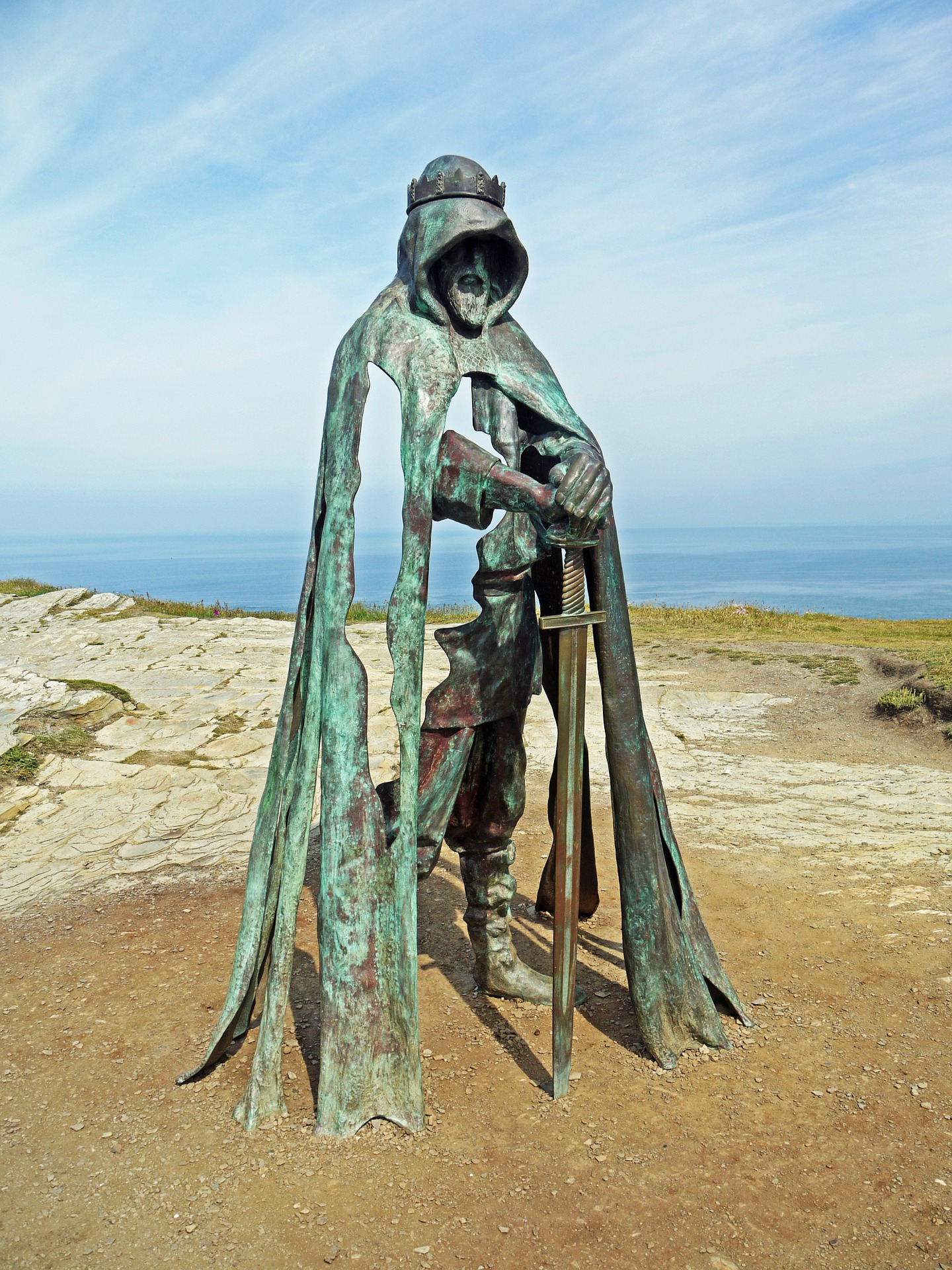 So dies Saul, an apostate.One who experienced the Word of God, the Spirit of God, the power of God and theleading of God – and willfully turns from it! Apostates know the truth and have received knowledge from God, but then turn from it. King Saul the apostate refused the new heart the Lord had given him (I Samuel 13:14). Think of his last supper. ). Last Suppers are important to God; note the last suppers of 3 men:
- Saul’s was a last supper of demons, horrors and the bitterness of death alone in suicide. Driven by fear, dogged by his hatred, led by his pride – he goes to the witches cave (I Sam. 28:25) to eat his last meal.
- Judas’ was a supper of deceit, darkness and the bitterness of hell (Matthew 26) as he eats with a heart of darkess as he sat next to the Light of the World.
- But Jesus’ was a Last supper of triumph, of blessing, of forgiveness and of hope. . .
- From that last supper King Saul completes his despair and defeat by his death. So he dies in his sin, a murderous, wicked, bitter and angry old man. He is slain by one of the very people he was to exterminate, the Amalekites! He like so many others came so close to God and ended so far from God eternally! What about that other man who sinned? How did David do? Where are the lessons David learned in this horrible pit of sin? Forever recorded in Psalm 32 “The Song of a soul set free”
- David sings with DELIGHT when his SINS WERE CLEANSED v. 1-2 Blessed is he whose transgression is forgiven, Whose sin is covered. 2 Blessed is the man to whom the Lord does not impute iniquity, And in whose spirit there is no deceit.
- David sings in DESPAIR when his SINS WERE CONCEALED v. 3-4 When I kept silent, my bones grew old Through my groaning all the day long. 4 For day and night Your hand was heavy upon me; My vitality was turned into the drought of summer. Selah
- David sings of DELIVERANCE when his SINS WERE CONFESSED v. 5-7 I acknowledged my sin to You, And my iniquity I have not hidden. I said, “I will confess my transgressions to the Lord,” And You forgave the iniquity of my sin. Selah 6 For this cause everyone who is godly shall pray to You In a time when You may be found; Surely in a flood of great waters They shall not come near him. 7 You are my hiding place; You shall preserve me from trouble; You shall surround me with songs of deliverance. Selah
- David sings about his DESIRE that his SINFUL WAYS BE CRUSHED v. 8-11 I will instruct you and teach you in the way you should go; I will guide you with My eye. 9 Do not be like the horse or like the mule, Which have no understanding, Which must be harnessed with bit and bridle, Else they will not come near you. 10 Many sorrows shall be to the wicked; But he who trusts in the Lord, mercy shall surround him. 11 Be glad in the Lord and rejoice, you righteous; And shout for joy, all you upright in heart!
David’s Song of DELIGHT when his SINS WERE CLEANSED v. 1-2
THREE HEBREW WORDS FOR FORGIVENESS IN PSALM 32:
1. PULLED OFF: “Forgiven” means literally to have our sin lifted off. As Pilgrim it rolls off and into Christ’s tomb. “My sin oh the bliss . . .”. We are being crushed by any sins we keep around. They suffocate, smother and sqush the very life of our soul. But there is a Redeemer who can set us free. And to his only hope, David fled.
2. SHEILDED FROM: “Covered” speaks of the strong imagery in the events of the day of atonement. On that day the High priest took the blood of an animal and sprinkled it onto the mercy seat. Above the mercy seat was the presence of God portrayed by the outstretched arms of the cherubim. Beneath the lid of the ark was the tablets portraying God’s divine law. In essence, the blood stood between a holy God and the sinners who broke His law, averting His wrath. David cried for joy when the wrath of God was turned away from him. So our sins are covered away by the blood of Jesus shed for us!
3. CLEARED OUT: “Not Counted” speaks of a list of debts no longer held against us. David had become utterly bankrupted by his sin. The bills were piling up, mounting like a flood and drowning him. Desire, deceit, cruel deception, cunning craftiness and shameless murder all charged heavy debts to his soul. And now in sheer delight all the mountain of impossible debt is cleared from the ledger. “My sins are gone, and shall not be remembered, God in mercy tenderly forgives.”
- God cleansed David’s Sin that smothers: now they were forgiven “Blessed is he whose transgression is forgiven”
- God cleansed David’s Sin that soils: now they were covered by the cleansing blood. “Whose sin is covered”
- God cleansed David’s Sin that steals: now they were not imputed to his account as debts. “2 Blessed is the man to whom the Lord does not impute iniquity” ¾ God cleansed David’s Sin that slithers: now there was no guile. “And in whose spirit there is no deceit.”
David’s Song of DESPAIR when his SINS WERE CONCEALED v. 3-4
- David’s Concealed sin sickened him “v. 3 When I kept silent, my bones grew old”
- David’s Concealed sin saddened him “Through my groaning all the day long”
- David’s Concealed sin burdened him “4 For day and night Your hand was heavy upon me;”
- David’s Concealed sin stifled him “My vitality was turned into the drought of summer. Selah” (like sun parched brown grass)
David’s Song of DELIVERANCE when his SINS WERE CONFESSED v. 5-7
- David acknowledged his responsibility for the sin “v.5 I acknowledged my sin to You”
- David acknowledged God’s ability to see “And my iniquity I have not hidden”
- David acknowledged God’s desire to forgive “I said, “I will confess my transgressions to the Lord,”
- David acknowledged God’s power to remove sin “And You forgave the iniquity of my sin. Selah”
- David acknowledged his great opportunity.
1. Now he understood the Lord is Approachable “v. 6 For this cause everyone who is godly shall pray to You In a time when You may be found;”2. Now he understood the Lord is Trustable “; Surely in a flood of great waters They shall not come near him.”
3. Now he understood he could Rest in the Lord “v. 7 You are my hiding place”
4. Now he understood he could Delight in the Lord “You shall surround me with songs of deliverance. Selah”
David’s Song of DESIRE that his SINFUL WAYS BE CRUSHED v. 8-11
- David now longs God YOU LEAD ME “I will instruct you and teach you in the way you should go; I will guide you with My eye.”
- David now longs God YOU GUARD ME “v. 9 Do not be like the horse or like the mule, Which have no understanding, Which must be harnessed with bit and bridle, Else they will not come near you.”
- David now longs God YOU TEACH ME “v. 10 Many sorrows shall be to the wicked;”
- David now longs God YOU SURROUND ME “But he who trusts in the Lord, mercy shall surround him.”
- David now longs God YOU FILL ME “v. 11 Be glad in the Lord and rejoice, you righteous; And shout for joy, all you upright in heart!”
#201 Grace greater than all our sin
Where sin abounded
Slides
Check Out All The Sermons In The Series
You can find all the sermons and short clips from this series, Authentic Christian Living – James here
Looking To Study The Bible Like Dr. Barnett?
Dr. Barnett has curated an Amazon page with a large collection of resources he uses in his study of God’s Word. You can check it out here.