
BIO-09 EBG-13 NR2-31 WTB-02
030928PM
 I have a 20-year battle with my appetite. The problem is that food never seemed that good until I get married and tasted Bonnie’s cooking. Last night as I was at my desk studying – the over powering fragrance of Bonnie’s hot fresh baked bread and rolls came up the stairs and to my office.
The reason I tell you that is because I am not the only one afflicted with that struggle. I have five wonderful sons – and all of them love to eat. One of the favorites is Bonnie’s hot dinner rolls, smothered in butter and layered with her jams and jellies.
It was about ten days ago that I saw something happen. We sat at dinner, the air was fresh with smells of turkey, mashed potatoes, and there they were – heaped up in the breadbasket, those hot grapefruit sized homemade dinner rolls. That was a delight to smell and wait for. But as I watched the basket go around the table I noticed each one of the small children look them over, even moving some aside – and picking THE BIGGEST AND BEST for themselves.
The problem is that the habit of picking the biggest and or the best for me is fine if you are shopping for sweaters, or fresh produce or good meat at the market. But it is deadly if that becomes the way to make decisions throughout life.
We all are in danger of turning out like Lot. And that is what we will learn tonight as we go to the World of the Bible, stopping in Abraham’s World tonight!
| Lot | Abraham |
| Took The Best (13:11) | Trusted God |
| Lost His Wife (19:26) | Kept His Wife who became a Mother of God’s People |
| Lost His Kids (19:14) | Blessed His Children |
| Cursed His Descendents (19:38) | Blessed His Descendents |
| Lust Of Eyes (13:10) | Contented |
| Settled Gay Community (13:12-13) | Settled God’s Country |
| Defiled Daughters (19:36) | Blessed Sons |
| Descendents God’s Enemies (19:37) | Descendents God’s People |
| Lot’s Line Ended | Abraham’s Line Never Ends |
| Competitor/ Opportunist | Peacemaker (13:8) |
| Took/ Grabbed | Trusted God’s Choice (13:9) |
To get to the World of Abraham, open with me to Genesis 12.
- God appeared to Abraham or spoke to him seven times in Genesis. Each time was such a wonderful revelation of the Goodness and Kindness of the Lord.
When I used to go on wilderness trips with my dad he taught me to mark my path so that when the time came I could remember just where I had come from and return safely to base camp. The same is true in all our lives, we all mark our trail by the choices we make in life. Mark with me Abraham’s trail – it is the trail of a godly man who made wise choices that shaped his life here and in Heaven!
 Genesis 12:7 Then the Lord appeared to Abram and said, “To your descendants I will give this land.” And there he built an altar to the Lord, who had appeared to him.
Genesis 12:8 And he moved from there to the mountain east of Bethel, and he pitched his tent with Bethel on the west and Ai on the east; there he built an altar to the Lord and called on the name of the Lord.
Genesis 13:3-4 And he went on his journey from the South as far as Bethel, to the place where his tent had been at the beginning, between Bethel and Ai, 4 to the place of the altar which he had made there at first. And there Abram called on the name of the Lord.
Genesis 13:18 Then Abram moved his tent, and went and dwelt by the terebinth trees of Mamre, which are in Hebron, and built an altar there to the Lord.
Genesis 22:9 Then they came to the place of which God had told him. And Abraham built an altar there and placed the wood in order; and he bound Isaac his son and laid him on the altar, upon the wood.
The Hebrew word for altar means “a place of slaughter or sacrifice.” In all but four of the OT occurrences of the word ‘altar’, the Heb. is mizbeµah, which means ‘place of sacrifice’ (from zaµb_ah, ‘to slaughter for sacrifice’), and one of the remaining occurrences (Ezr. 7:17) is simply its Aram. cognate mad_bah.
Wherever Abraham[1] went in the land of Canaan, he was marked by his tent and his altar (Gen. 12:7–8; 13:3–4, 18).
- THE TENT MARKED HIM as a “stranger and pilgrim” who did not belong to this world (Heb. 11:9–16; 1 Peter 2:11), and
- THE ALTAR MARKED HIM as a citizen of heaven who worshiped the true and living God.
He gave witness to all that he was separated from this world (the tent) and devoted to the Lord (the altar). Whenever Abraham abandoned his tent and his altar, he got into trouble.
Look at one interesting example in Genesis 12. Abraham pitched his tent with Bethel on the west and Ai on the east (Gen. 12:8). Bible names sometimes have significant meanings, though we must not press them too far. Bethel means “the house of God” (28:19), and Ai means “ruin.” Figuratively speaking, Abraham and Sarah were walking in the light, from east to west, from the city of ruin to the house of God! This world system is in ruins, but true believers have turned their backs on this world and have set their faces toward God’s heavenly home. “The path of the righteous is like the first gleam of dawn, shining ever brighter till the full light of day” (Prov. 4:18, NIV).
Now turn to Genesis 13. Tonight as we go into the World of Abraham we are looking at one of the clearest contrasts their can be in all of God’s Word of the joys of a spiritual believer and the heart aches of a fleshly or carnal believer.
If you were in the sheep business what would you need? Grazing land, and a market for your sheep – right? Remember how we were raised as humans? Pick the best whenever possible – FOR YOURSELF!
Abraham was the Friend of God (James 2.23); Lot was the Friend of the World (James 4.4), and lived a life conformed to the world (Rom. 12.2) – paid the dearest price there is to pay for doing so!
Both were righteous (as in under God’s grace and assured of eternal forgiveness and life).
Abraham made decisions in view of his friendship with God; Lot made decisions in view of his friendship with the world.
Abraham made choices based on what was best for the Lord; Lot made decisions based on what was best for himself.
Abraham met the Lord, followed the Lord, remembered the Lord, and built everything in life for the Lord.
Lot met the Lord, somewhat followed the Lord, started forgetting about the Lord, and began a life built for self. He chose the best way to advance his career. He chose the best place to have his home. Lot chose the best place to educate his children. But there was one problem – when the bread basket of life came by Lot picked the biggest and best for HIMSELF, and left the Lord out. That was a big mistake!
The turning point in Lot’s life is seen as he looked at Sodom (the world) in Genesis 13. The next thing we see is that he has moved his tent down the mountainside, into the valley away from Abraham’s and turned it to face Sodom (Genesis 13.10-13). By Genesis 14.12 Lot is living in Sodom. He came, he saw, and he joined,
The saddest moment is when God asked Lot to flee the destruction of Sodom and go up the mountains to his uncle Abraham’s home area – and he pleaded to not have to. He ended up with a wife struck dead by the Lord, living in a cave of licentiousness, and fathering some of God’s fiercest enemies the Ammonites and Moabites.
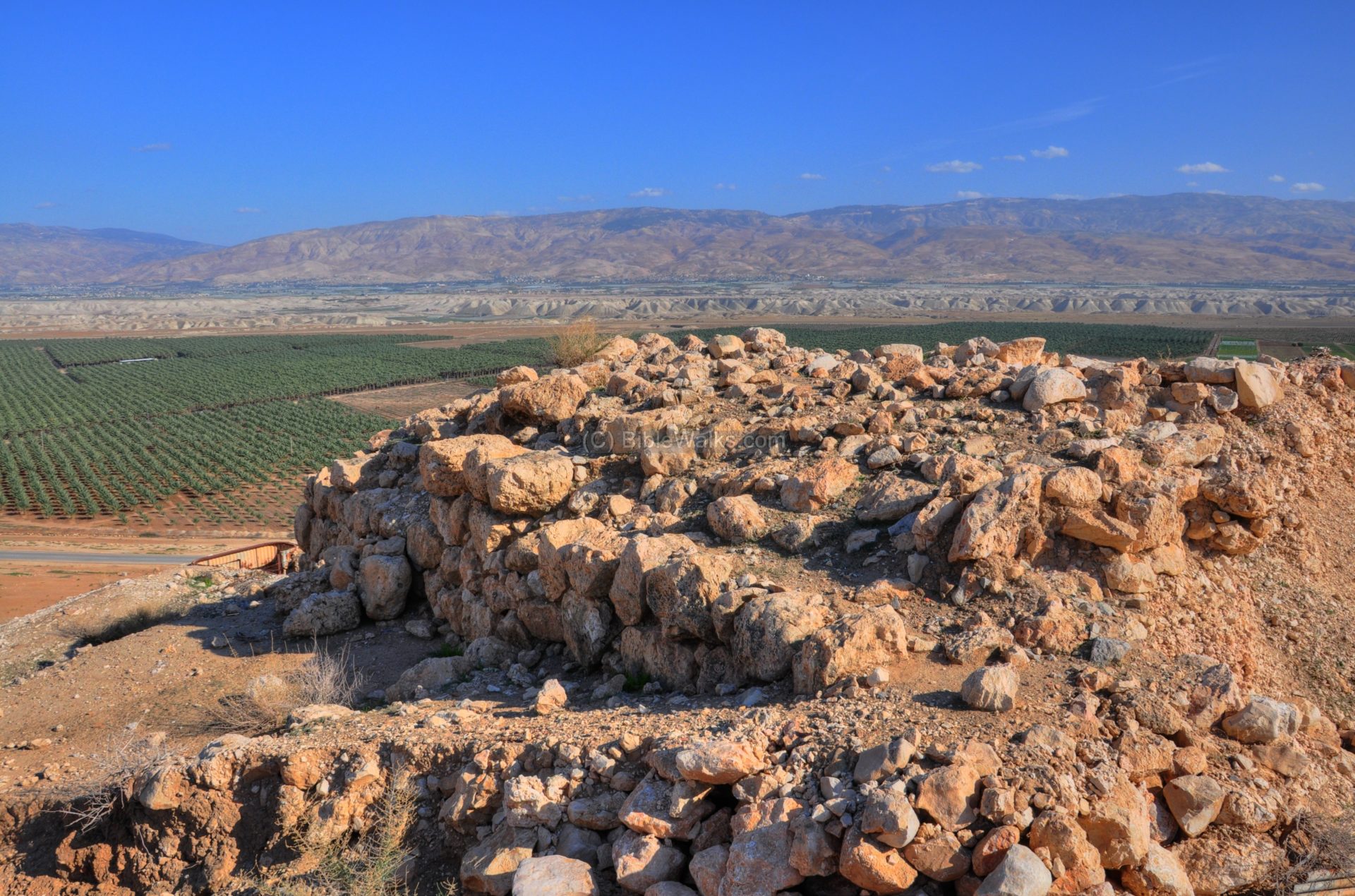
What led to Lot’s downfall? Simply this – Lot lived for Lot. Lot chose what was best for himself and not best for God. Did he lose his salvation? No. Did he
Charles R. Erdman correctly notes: “Yet the life of faith does not consist of one act of obedience in a single journey to some distant scene. It is an experience continually related to the unseen and the eternal. Its symbol is a tent, its secret is an altar. So it was with Abraham.” (The Book of Genesis, p. 52.);
Houses were usually constructed of burned mud brick, whitewashed or plastered on the outside; many were two stories high. The archaeological data give the impression that Abraham’s Ur was a sophisticated, well-designed, wealthy city, one that provided the best available comforts. It is in this light that the nature and implications of Abraham’s call to a land about which he knew nothing must be evaluated;
Now turn to Genesis 14 and Melchizedek.
From here he journeyed to Bethel, twenty miles farther south, pitched his tent on a hilltop between Bethel and Ai, again built an altar to the Lord, and called upon His name (v.8). the nature of Abraham’s existence in the land is very nicely reflected in the two verbs pitched and built. He pitched a tent, a temporary structure, for his own comfort; he built an altar, a permanent structure, for worshiping God. Abraham left behind him in Canaan no sign of his wealth or prestige, only the altars he had constructed to worship his God.
By this act, Abram made an open confession of his religion, established worship of the true God, and declared his faith in God’s promise. This was the first true place of worship ever erected in the Promised Land. Isaac would later build an altar also to commemorate the Lord’s appearance to him (26:24,25), and Jacob also built one in Shechem (33:18–20).[1]
Abraham determined his present lifestyle and behavior not on the basis of where he lived, but on his destination in the City of God.
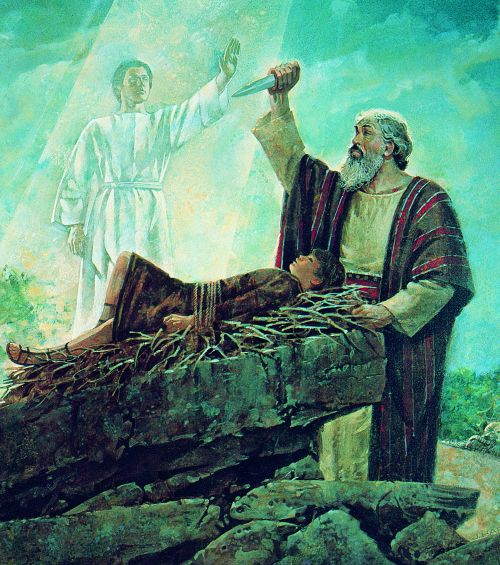 This holy communion between man and God is more evident from the time of Abraham whose track may be traced by the altars which he built. This is true also, in measure, of Isaac and Jacob.
Thus, as he responds to God’s call, leaves home, and travels through the land which his descendants are to possess (Gen 12:7)—though not he himself, note: Abraham never possessed any more of Canaan than a grave (Gen 25:9–10)—we observe in him a new meekness, as he declines to claim his due precedence over his nephew Lot (13:8–9). We see also a new courage, as he sets off with a mere three hundred men to rescue Lot from the combined forces of four kings (14:14–15). We see a new dignity, as he deprecates keeping the recaptured booty, lest it should seem to have been the king of Sodom, rather than God most high, who made him rich (14:22–23). We see a new patience, as he waits a quarter of a century, from the age of seventy–five to one hundred, for the birth of his promised heir (12:4; 21:5). We see him becoming a man of prayer, an importunate intercessor burdened with a sense of responsibility before God for others’ welfare (18:23–32). We see him at the end so utterly devoted to God’s will, and so confident that God knows what he is doing, that he is willing at God’s command to kill his own son, the heir for whose birth he waited so long (chap. 22). How wisely God had taught him his lesson! And how well Abraham had learned it![2]
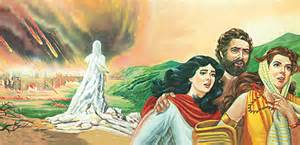 Remember Lot’s wife. What doesn’t God remember for us – intentionally left out of the record.
Her name, her family, her upbringing, her hobbies, her looks, her talents, her accomplishments…
No record of her parents, we won’t answer for our parents.
No record of where she was from, we won’t answer for our heritage.
No record of even her name, we won’t answer for what is remembered about us.
No record of her family, we won’t answer for our brothers and sisters.
No record of her marriage to Lot, we won’t answer for whether we had a happy or sad marriage.
No record of her schooling, we won’t answer for our academics.
No record of her athletic or artistic achievements, we won’t answer for our talents.
What do we remember about Lot’s wife? Only what the Lord does – and that is in God’s Word.
She had at least 4 children: two unmarried daughters ( that went with them) and at least two other daughters “sons in law” Genesis 19.14. There may have been more, the angelic messengers who are ancient, well traveled and get to be around the Lord said in Genesis 19:12 for Lot to go warn – “The two men said to Lot, “Do you have anyone else here—sons-in-law, sons or daughters, or anyone else in the city who belongs to you? Get them out of here”. So he probably had other relatives unmentioned in the text.
She had not cultivated the fear of the Lord in her children. They mocked Lot’s warnings in Genesis 19:14 So Lot went out and spoke to his sons-in-law, who were pledged to marry his daughters. He said, “Hurry and get out of this place, because the LORD is about to destroy the city!” But his sons-in-law thought he was joking. (NIV)Genesis 19:14 And Lot went out, and spake unto his sons in law, which married his daughters, and said, Up, get you out of this place; for the LORD will destroy this city. But he seemed as one that mocked unto his sons in law. (KJV)
She had not trained her daughters in holiness, they connived and seduced their own father. Genesis 19:32 Come, let us make our father drink wine, and we will lie with him, that we may preserve the lineage of our father.”
She had not stopped her own heart from seeking after what was evil in God’s sight. Genesis 19:26 But his wife looked back behind him, and she became a pillar of salt.
Check Out All The Sermons In The Series
You can find all the sermons and short clips from this series, Energized By Grace here.
You can find all the sermons and short clips from this series, Scriptural Biographies – Peter here.
You can find all the sermons and short clips from this series, The Message Of Jesus here.
You can find all the sermons and short clips from this series, World of The Bible here.
Looking To Study The Bible Like Dr. Barnett?
Dr. Barnett has curated an Amazon page with a large collection of resources he uses in his study of God’s Word. You can check it out here.